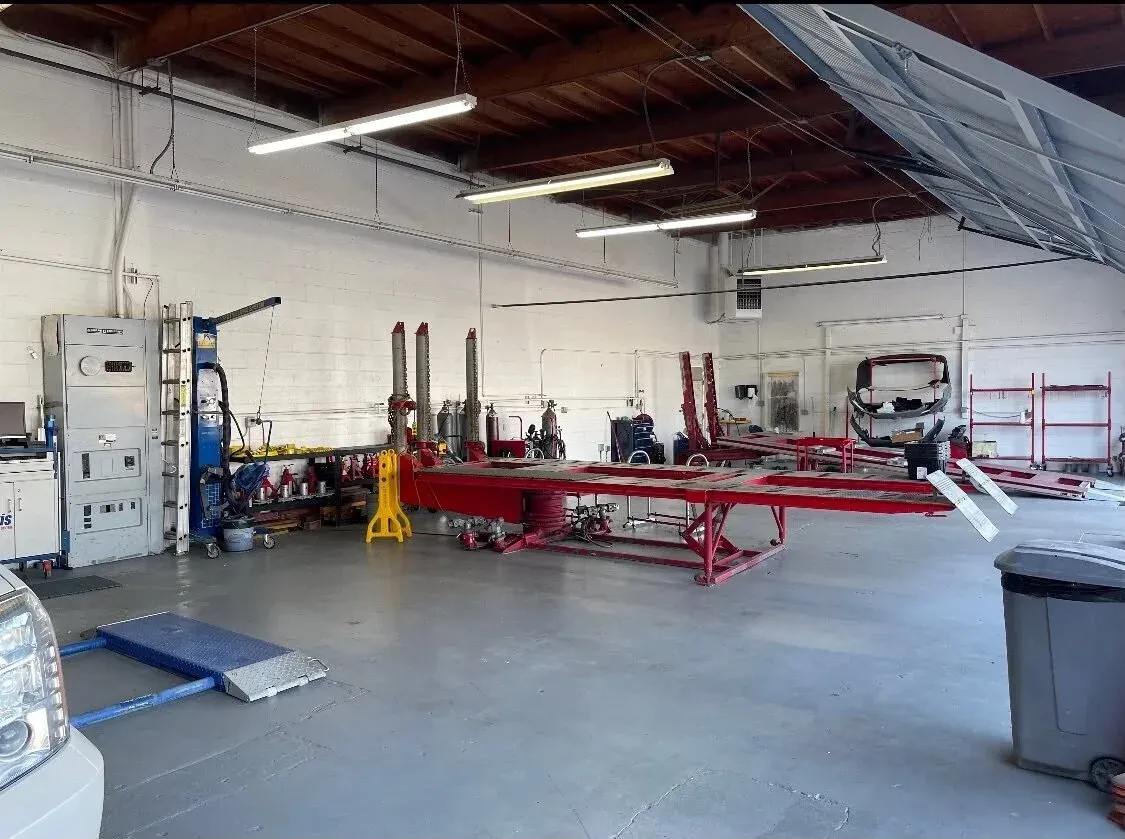
The hits that bend structure happen at Vaughan’s speeds
Structural damage needs energy, and Vaughan’s road network supplies it. Traffic on the 400 moves at highway speed right up until it abruptly does not — the transition zones south of Rutherford and approaching the 401 produce the kind of hard rear-end impacts that shove a rear body structure forward, not just a bumper. The wide arterials do their share too: Major Mackenzie, Rutherford, and Highway 7 carry fast cross-traffic through big signalized intersections, and a T-bone at 60 km/h loads the door ring and rocker in ways a visual inspection cannot clear. Winter black ice adds the slid-into-a-curb impact that bends suspension pickup points without touching a panel.
Almost every vehicle Vaughan drives is unibody construction — the body shell itself is the structure — so “frame damage” really means the shell has moved somewhere it should not have. The symptoms are quiet: panel gaps that changed, doors that latch differently, a steering wheel that sits off-centre on a straight road, tires wearing unevenly weeks later. Any of those after a hit is a reason to measure, not to hope.
Measured, pulled, measured again
Straightening is not a matter of feel. The vehicle goes on the bench, reference points across the structure are measured against the manufacturer’s specifications, and the readout shows exactly which points moved and by how many millimetres. The correction is made in controlled pulls — gradual, sequenced, monitored — because metal that gets yanked back in one heave is metal that has been overworked. When the points read true, the after-measurements go into the file beside the before-measurements, so the correction is documented rather than asserted.
Modern structure also carries modern complications: high-strength steels that tolerate limited reworking, crush zones designed to fold once, sensor and camera mounts that must sit exactly where the driver-assist systems expect them. Where a section is beyond safe correction we replace rather than straighten, and we push your insurance company toward OEM structural parts — this is precisely the category where safety justifies the argument.
- Reference points measured against factory data before any pull
- Controlled, sequenced corrections — never one big heave
- Replacement instead of straightening where the metal is done
- Before-and-after measurements documented in the repair file
The total-loss question, answered honestly
Serious structural damage always raises the same question: will the insurance company repair it or write the car off? Ontario sets no fixed percentage — the decision weighs the vehicle’s actual cash value against repair cost plus salvage value, case by case. We will tell you early which way your file is likely to lean, because a Vaughan family should not wait three weeks to learn the answer was obvious on day two. If the car is repairable, the measurements make the case; if it is not, you want to know before rental days burn down.
Cars with structural damage rarely drive, so logistics start with the tow. Wherever the vehicle sits — the 400 shoulder, a compound, a Rutherford intersection — Ontario law puts the destination in your hands, and we coordinate the pickup to our shop directly. From there the owner manages the claim, the adjuster, and the supplements, and keeps you informed without you chasing a status line.