The 400 corridor writes most of Vaughan’s repair orders
Vaughan’s collisions cluster where its traffic does. The 400 approaching the 401 is a daily compression zone, and every sudden slowdown produces the same result: a queue of rear-end hits that fold bumper covers, crush the absorbers behind them, and sometimes nudge a rear body panel out of line. Summer makes it worse — Wonderland traffic pours off at Rutherford, and Friday cottage convoys stack the southbound lanes from Major Mackenzie down. Off the highway, the Highway 7 rapidway complicates left turns enough that intersection hits along the corridor are a steady part of what Vaughan sends us.
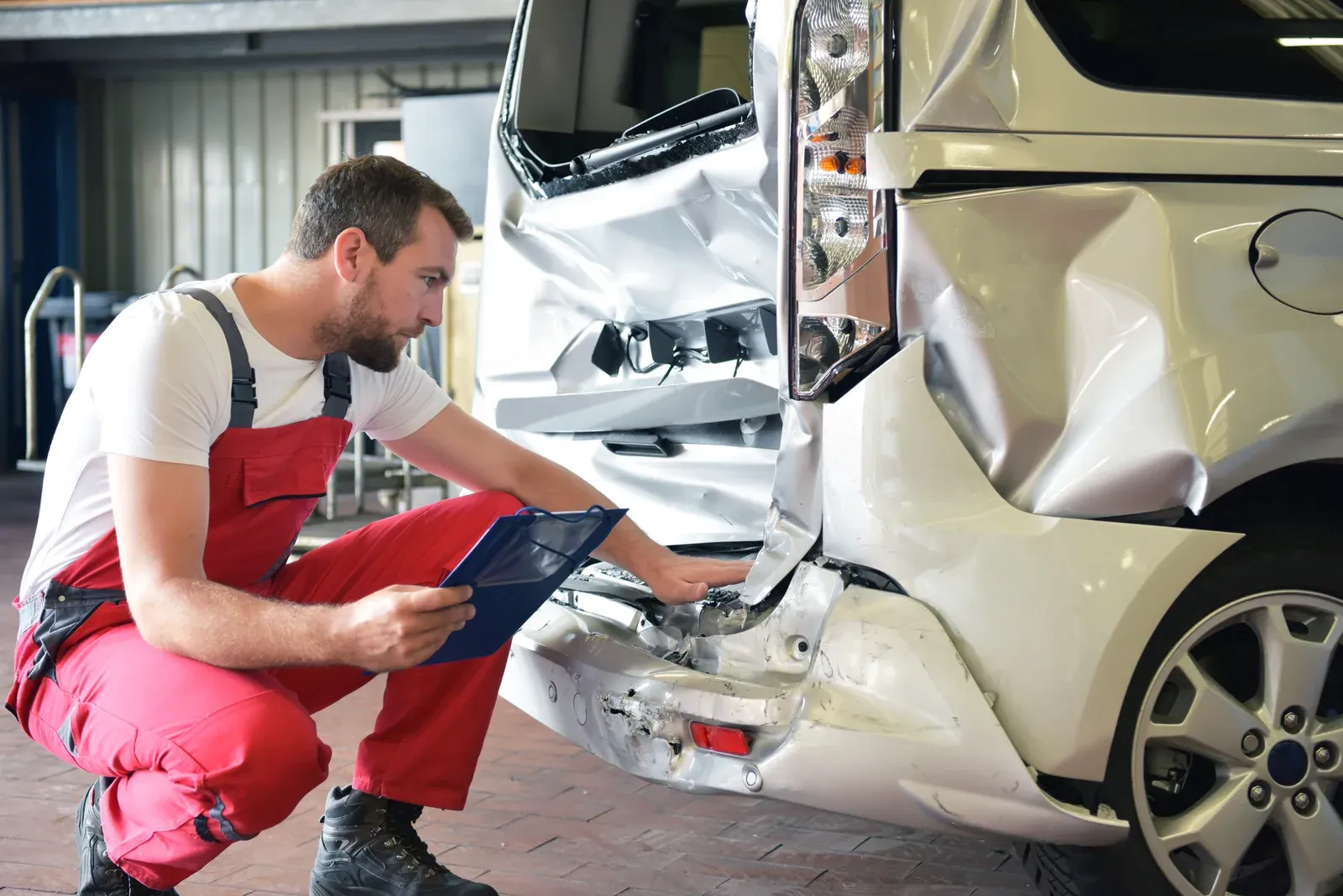
None of that damage can be priced from the outside of the car. A cover that shows a scuff can hide a cracked bracket, a pushed absorber, or a radar sensor knocked off its aim, which is why the number you get from a parking-lot glance is rarely the number the repair actually costs. Our estimates start from photos but finish after teardown — covers and trim off, hidden damage photographed, the repair plan built against what is really there.
How the repair itself gets done
Once the damage is documented, the sequence is deliberate. Anything structural is measured against factory specification, corrected in controlled pulls, and measured again — the numbers go in the file, not in anyone’s memory. Panels are saved where the metal allows and replaced where it does not, and when a replacement touches safety or fit we press your insurance company for OEM parts rather than settling quietly for the lowest-bid equivalent. Ontario has no rule forcing OEM, so someone has to make that argument, and here that someone is the shop.
Refinishing is matched to your paint code, adjusted to how your panels have actually aged, and blended into the neighbouring surfaces so the repair has no visible edge in sunlight. The paint and refinish work carries a lifetime warranty, and replacement parts carry their own parts-and-installation coverage. Before the keys come back the car is inspected and road-tested — the drive back up Keele should not be the first time anyone has driven it.
- Photo estimate to start; final figure after the damage is opened up
- Structural corrections measured and documented against factory spec
- OEM parts argued for wherever safety or fit is on the line
- Lifetime warranty on the paint and refinish work
Who pays, and who does the arguing
If another driver caused the crash, Ontario’s DCPD system sends the vehicle-damage claim to your own insurance company, with fault split under the provincial Fault Determination Rules — you do not chase anyone else’s adjuster. The exception is rare but real: drivers who removed DCPD with the OPCF 49 endorsement gave up that coverage. Either way, we open the claim, speak with the adjuster, and file the supplement ourselves when teardown finds more than the first estimate covered. The owner handles the file personally.
The logistics stay simple for Vaughan. A drivable car comes down Keele on your normal commute; one that is not drivable gets towed here on our coordination, with the destination legally your call. Drop off in the morning, ride Line 1 back to the VMC, and collect the car when we call — Monday to Saturday until 7 PM, Sundays by appointment.