The symptoms show up before the damage does
Structural damage announces itself sideways. The steering wheel sits a few degrees off-centre after the alignment shop swears everything is in spec. A door that closed with a click now needs a shove. The gap between hood and fender is wider on one side than the other, or the front tires start wearing their inside shoulders weeks after a hit you thought was cosmetic. Any of those, following an impact, is the car telling you that force reached past the sheet metal — and it is a measurement problem now, not an opinion problem.
High Park generates those impacts in three reliable ways. Parkside Dr rear-ends carry commuter speed into stopped queues, which is exactly the load path that shortens rear rails. The freeze–thaw window from February to April opens genuine craters on The Queensway, Parkside, and the streets that fall away toward Grenadier Pond, and a wheel dropped hard into one at speed can shift suspension pickup points without leaving a visible mark. And the neighbourhood’s tight geometry — streetcar-track lane changes on the Roncesvalles side, icy turns onto Bloor, kerbs hidden inside windrows — sends wheel-first loads straight into the structure that locates the suspension.
Measured against the factory, corrected in steps
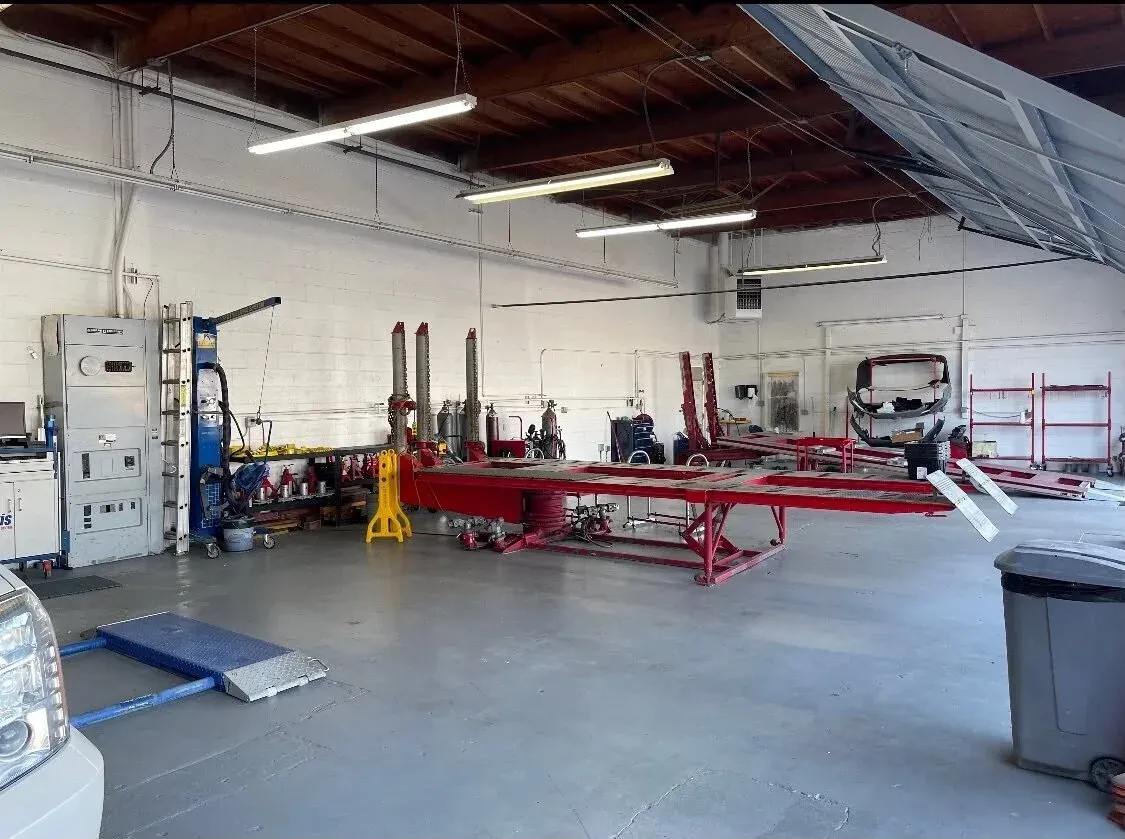
Straightening starts with data. The car goes on the bench, and its structural reference points are measured against the manufacturer’s specifications — actual millimetre numbers for where every rail, apron, and mounting point should sit. That map tells us what moved, how far, and in which direction, and it becomes the baseline the whole repair answers to. Corrections happen as controlled pulls in sequence, re-measured as they go, because metal that was pushed in one event rarely comes back true in one motion.
When the geometry is back within specification, we re-measure and record the final numbers, so the file shows the before and the after side by side. That documentation matters twice: your insurance company sees precisely why the structural hours were necessary, and a future buyer of the car can see the repair was verified rather than eyeballed. Structural steel and any replaced components carry our parts-and-installation warranty, and the refinish over the repair carries the lifetime paint warranty like every other panel we spray.
- Reference points measured against manufacturer specifications
- Controlled pulls in sequence, re-measured throughout
- Final geometry documented — proof for the claim and for resale
- Parts-and-installation warranty on replacements, lifetime warranty on refinish
Getting a bent car from High Park to the bench
A car with suspect structure should be measured before it commutes. If yours is drivable but symptomatic, the run up Keele at city speeds is reasonable; if the hit was hard or the car tracks visibly wrong, tell us where it sits and we coordinate the tow — Ontario’s rules leave the destination with you, and a flatbed ride costs far less than driving misalignment into your tires and steering. Either way, send photos to (647) 594-3401 first and we will tell you honestly which category you are in.
The claim side runs on our desk. Structural findings become teardown documentation, the owner walks the adjuster through the measurements, and supplements go in directly when the bench reveals movement the first estimate never priced. If the numbers climb toward the car’s value, we tell you early — the total-loss decision belongs to the insurance company weighing value against repair cost, but you deserve to see it coming, not be ambushed by it. Hours are 8 AM to 7 PM Monday to Saturday, Sundays by appointment.