Where the Allen ends, the hard hits begin
The Allen delivers expressway speed straight into a surface intersection at Eglinton, and the queue that forms there absorbs some of midtown’s heaviest rear-end impacts. Mount Pleasant does something similar in miniature: the open run through the cemetery invites a pace that the Davisville merge then has to cancel, and a front corner takes the difference. Add Avenue Road left turns, black ice on the Oriole Parkway grades, and the February-to-April pothole season hammering wheels into curbs, and midtown supplies a steady file of vehicles whose damage did not stop at the panels.
Nearly every modern vehicle is a unibody — the shell is the frame — so structure can be out of position while the car looks merely bruised and still drives. The tells arrive sideways: a steering wheel that will not centre after an alignment, hood gaps that taper, a door needing a shove to latch, a tire wearing one shoulder bald. Those millimetres matter because crash structure is engineered to collapse in a planned sequence, and airbag timing assumes the geometry the factory built. A shell left out of specification protects you differently the second time.
The bench has no opinions, only numbers
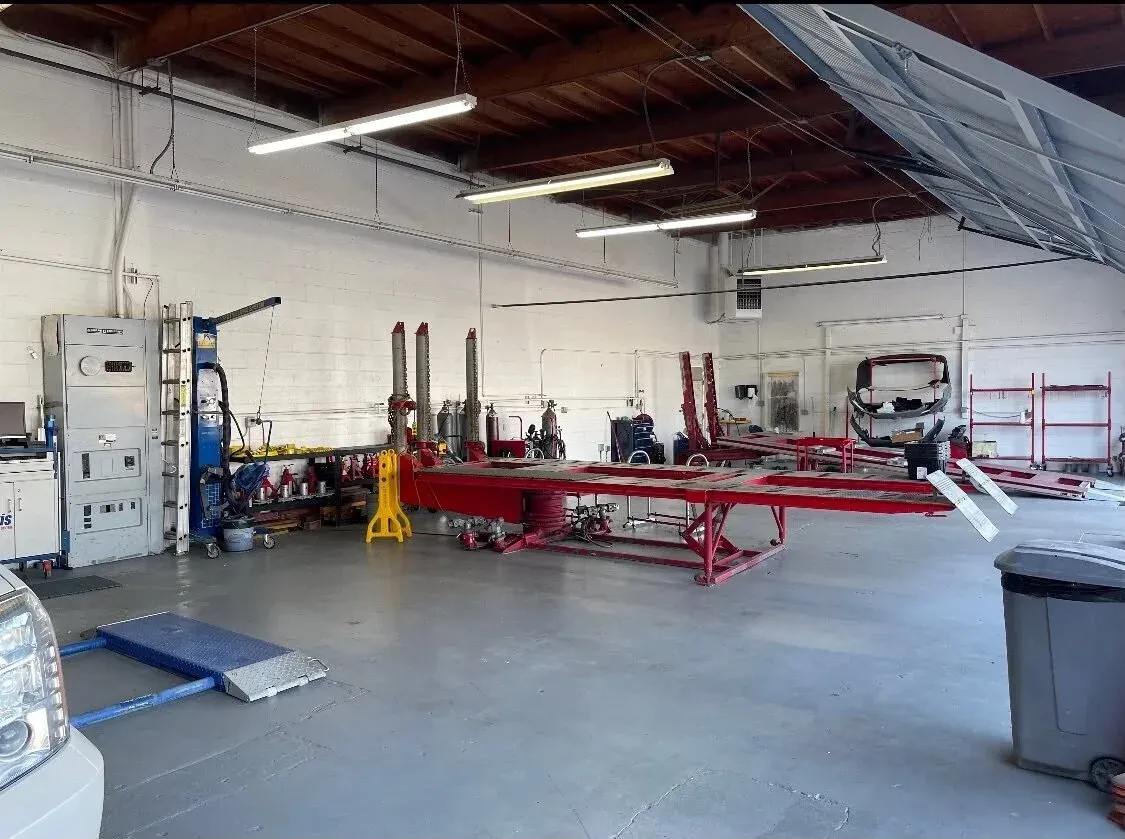
Structural repair here begins with measurement, not muscle. The vehicle goes on the bench, its reference points are read against the manufacturer’s published dimensions, and the printout says precisely which points sit where — no squinting down a rail, no “looks close enough.” Pulls happen in increments: load applied, released, re-measured, repeated, because metal hauled past its target in one heroic tug has been damaged twice. When every point reads within specification, you receive the documentation showing exactly that, dated and kept with the file.
That paperwork earns its keep twice — once with your insurance company during the claim, and again years later when you sell, since a private sale in Ontario comes with a UVIP and a buyer full of questions a measurement printout answers. Structural repairs are also where we argue hardest for OEM parts: a rail section or reinforcement is exactly the wrong place for like-kind-and-quality economics, and we make that case to the insurance company in writing. Alignment follows the structural work, and a road test precedes your pickup call.
Tow it once, to the right place, and hear the truth early
A car with suspected structural damage should not attempt the Allen. Leave it where it stopped — a garage level under Broadway, the shoulder at Eglinton, a Forest Hill kerb — and call (647) 594-3401. We coordinate the tow, and Ontario’s towing rules put the destination under your control: name our shop, because a detour through a storage yard adds daily fees and zero progress. Provincially certified operators must give you an itemized invoice; keep it for the claim.
The second thing you get early is the write-off conversation. Ontario sets no fixed percentage that totals a car; the insurance company weighs actual cash value against repair cost plus salvage, case by case, and structural work is costly enough to push some vehicles near that line. We tell you which side of it your car sits on before the claim drags, not after. When repair wins the math, we straighten to specification and stand behind it; when it does not, we say so plainly and help you close the file cleanly.