Frame straightening · Yorkville

Frame Straightening in Yorkville

When a Yorkville collision goes past panels into structure, Collision Auto Center measures the unibody against factory dimensions, pulls it back in controlled, documented steps, and proves the result with before-and-after records. We are about 16 to 25 minutes north via Avenue Rd and the 401 — and if the car should not make that drive, we coordinate the tow.

  • Drivable or not
  • At fault or not
  • Free written estimates
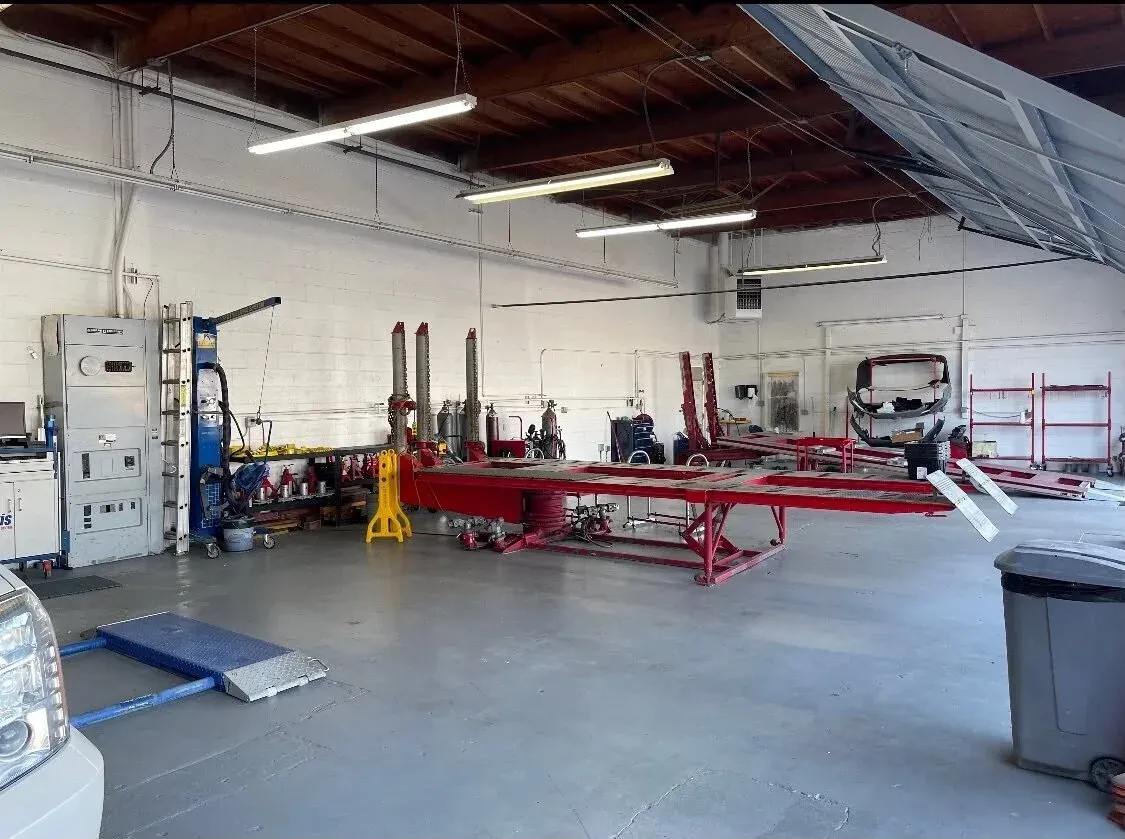
Unibody from a Yorkville vehicle set up on the frame machine at Collision Auto Center
Onecall
We take it from here — claim, tow, rental, adjuster
Fast
Photo estimates — a written number back the same day
OEM
OEM parts preferred on every replacement
Lifetime
We guarantee our work — paint warranted for life

The hits that reach structure start where Yorkville speeds up

Inside the retail blocks, nothing moves fast enough to bend a rail. The structural jobs come from the edges: Avenue Rd carrying real speed down the hill into Davenport, Mount Pleasant traffic feeding across from the east, the ramps at Avenue Rd and the 401 where a lapse meets a merge, and the 401 itself on the way to a weekend north. A front corner that meets another vehicle at those speeds does not stop at the bumper — the crash energy runs into the rails, the aprons, and the suspension mounting points, exactly as the engineers intended it to.

That is the part that surprises people: a modern unibody is designed to crumple, sacrificing measured zones to protect the cabin. It works. But it means a car can look repairable from the outside while carrying rails that sit millimetres off their factory positions — and millimetres at the rails become degrees at the wheels. A car like that tracks subtly wrong, wears tires oddly, and, most seriously, may not manage the next crash the way it managed this one. Structure is the one repair category where “looks fine” means nothing.

Measured, pulled, measured again — and all of it on paper

Structural repair here follows one sequence. First the car goes on the bench and every relevant control point is measured against the manufacturer’s published dimensions — not eyeballed against a straight edge. Those numbers are recorded. Then the pull: controlled force, applied in stages, with the metal relaxed and re-measured between stages rather than dragged to a number once and called done. High-strength steels in modern structures tolerate limited correction, and where a section has passed that limit, the correct repair is sectioning or replacement to the manufacturer’s procedure, not a longer pull.

When the structure is back within specification, the after-measurements go into the file next to the before-measurements. That documentation serves you three ways: it satisfies the insurance company’s file, it answers the diminished-confidence question honestly if you ever sell the car, and it is the difference between a shop saying the frame is straight and a shop showing it. Suspension geometry is verified afterward, because a corrected body with an uncorrected alignment still drives wrong, and the road test happens before the phone call that says the car is ready.

  • Every control point measured against factory data before work begins
  • Staged pulls with re-measurement between stages
  • Sectioning or replacement where high-strength steel forbids pulling
  • Before-and-after records kept in your file, alignment verified after

Structure, total-loss math, and getting the car here safely

Structural damage is where repair costs climb fastest, so it is also where the total-loss question appears. Ontario sets no fixed percentage: the insurance company weighs the repair cost against the vehicle’s actual cash value with salvage in the balance. Our teardown-first documentation gives that decision honest inputs early, instead of a lowball photo estimate that grows in supplements until everyone has wasted three weeks. If the car is worth repairing, you will know quickly; if it is not, you will know that quickly too.

Do not drive a car with suspected structural damage down to us to find out. If the steering pulls, a wheel sits visibly wrong in its arch, or a door has stopped closing cleanly, park it and call (647) 594-3401 — we coordinate the tow, and Ontario’s rules put the destination in your hands, so direct it to our shop rather than a daily-fee storage yard. The claim runs through DCPD where you are not at fault, we handle the adjuster from our office, and a rental through your coverage is arranged while the bench work is done.
Good to know

Common questions

Straight answers before you commit to anything — and a human on the phone when you want one.

How do I know if my collision bent structure and not just panels?

Warning signs: the steering wheel sits off-centre, the car pulls on a road it used to track straight on, a door or the hood no longer closes with its old sound, or panel gaps have visibly changed width. Any of those after a hit means measurement, not guesswork. Absence of symptoms is not proof either way — the bench tells the truth, so we measure whenever the impact was hard enough to plausibly reach the rails.

Is a car ever the same after frame straightening?

Done to procedure, yes — the structure is returned to the manufacturer’s dimensions and verified, with sections replaced where the steel’s design forbids correction. What makes the difference is documentation and discipline: staged pulls, re-measurement, factory repair procedures for high-strength steels. That is exactly the record we keep in your file, before and after, so the answer is shown rather than promised.

The repair estimate is close to my car’s value. What happens now?

The insurance company compares repair cost against actual cash value with salvage factored in — Ontario has no automatic threshold. Our job is to make the inputs honest early: full teardown, complete parts list, structure measured, so the decision is made once, on real numbers. If it repairs, we repair it properly. If it writes off, you negotiate the valuation knowing the file is complete.

Reviews

What customers say

The line we hear most: “I couldn’t tell where the damage had been.”

★★★★★

Honestly, I thought my car would never look the same again — but they completely proved me wrong. I couldn’t even tell where the damage had been repaired or repainted. The paint matched perfectly, and the bodywork was flawless.

Obaid S.
★★★★★

My car was in an accident and the entire rear was damaged. They replaced the rear bumper and tailgate, and the paint job was perfect — matched flawlessly. The quality of work exceeded my expectations.

Dewa J.
★★★★★

Very quality service and fair rates. The staff was professional, honest, and kept me updated throughout the whole process. My car looks brand new again.

Abdisalan A.
★★★★★

Absolutely the best auto body shop I’ve ever used. The paint matched perfectly and the car looked brand new again. They handled everything smoothly and finished on time.

Shahsawar M.

Get started

Two questions.
One written estimate.

First the car, then a number to reach you. A written estimate comes back within 1 hour.

What does your car need?

Pick all that apply — “not sure” is a fine answer.

Reply within 1 hour · free, no obligation · prefer to talk? (647) 594-3401

Photo estimates cover what the camera can see — hidden damage is documented and cleared with you (and your insurance) first. Your info goes to our estimator, never sold or shared.

Been in an accident?

We’ll take it
from here.

Mon–Sat · 8 AM–7 PM · Sundays by appointment · Keele St & Sheppard Ave W, North York