Why King City hits reach the structure more often
Speed is the reason. A parking-lot tap in the village stays cosmetic; the same geometry at 80 km/h on the 15th Sideroad or 100-plus on the 400 drives energy through the bumper system into rails, aprons, and mounting points. Deer strikes are the local signature — the moraine carries a real population, and an animal that size taken at rural speed folds the front structure around the radiator support. Ditch excursions are the other: King Township’s roads drop off hard past the gravel shoulder, and a car that goes in nose-first loads the front rails and the suspension mounting points in ways the visible damage barely hints at.
The deceptive part is that a structurally damaged vehicle can still drive. It tracks slightly crooked, eats a tire edge, or needs a touch of steering input on a straight road — easy to rationalize for weeks. But structure is what manages the next crash, and crumple zones only work from their designed shape. That is why anything from a sideroad or highway hit gets measured here before anyone declares it cosmetic.
Numbers before the pull, numbers after it
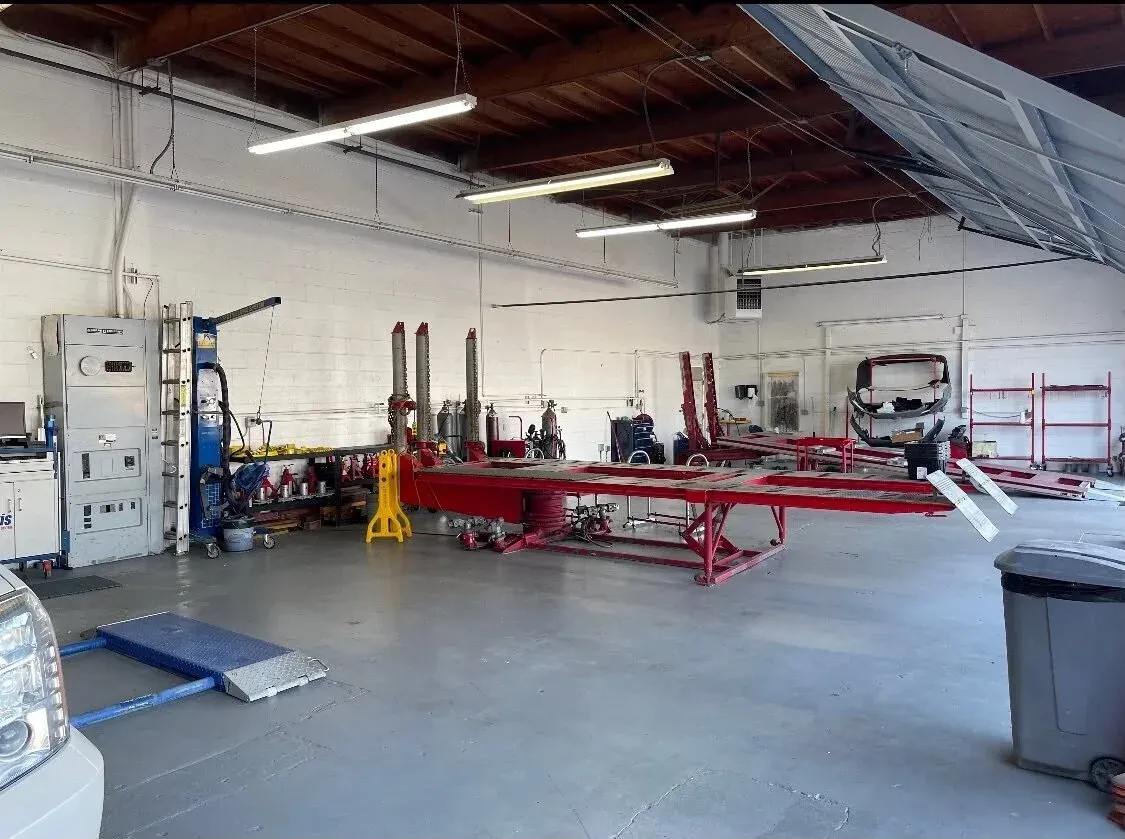
Straightening at this shop is a measurement exercise with hydraulics attached, not the other way around. The vehicle goes on the bench, reference points are measured against the manufacturer’s specifications, and the printout shows exactly which points sit out of tolerance and by how many millimetres. Corrections are pulled in controlled stages — metal moved gradually returns to shape without new stress — and the structure is measured again afterward, with both sets of numbers kept in the file your insurance company sees.
Where a rail or mounting point is kinked past safe correction, the section is replaced using the manufacturer’s prescribed method and materials, and we push for OEM structural parts because dimensional accuracy is the entire point of the exercise. After correction come alignment and, where the vehicle needs it, recalibration of driver-assist sensors whose aim assumed a straight car. Then a road test, before the keys come back.
- Reference points measured against factory specifications first
- Staged, documented pulls — never one violent yank
- Sectioned replacement by the manufacturer’s method where correction is unsafe
- Alignment, sensor recalibration, and a road test to finish
Total-loss talk, towing, and the King City claim
Structural repairs are where repair cost and vehicle value meet, so we put the total-loss question on the table early instead of after your patience is spent. Ontario sets no fixed percentage — the insurance company weighs actual cash value against repair cost plus salvage — and from your photos we can usually tell you whether the file will be close. If it will be, you hear that before the car is torn down, not after.
A car with structural damage should travel on a truck, not on its own wheels down the 400. Tell us where it sits — a sideroad shoulder, your driveway, a storage yard after a police tow — and we coordinate the flatbed; Ontario’s towing rules require an itemized invoice and put the destination in your hands, which matters because storage yards bill daily. The DCPD claim, the supplements, and the adjuster meetings run from our desk, with the owner keeping you updated at every step.