The hits that reach the structure
Structural damage out of Aurora has a few signatures. The 404 supplies the highest-energy version: a rear-end at highway speed can shove the rear body panel and floor forward even when the bumper cover looks merely cracked, and a front hit in the commuter crawl can travel through the crush zones into the rails. In town, the left-turn conflicts where Wellington crosses Bayview and Leslie produce side impacts, which are the hits modern unibodies tolerate least — B-pillars and rocker sections carry the passenger cell. And on the dark sideroads north of town, a deer at 80 km/h lands squarely on the rad support and the front rail ends.
The warning signs matter more than the visuals. A car that tracks slightly sideways, steering that no longer centres, doors that catch on their strikers, new wind noise, tires wearing on one shoulder — any of those after a hit says the structure moved, whatever the panels look like. Driving a structurally bent car does not improve it; the geometry loads suspension parts unevenly, and the crumple zones will not behave as designed in a second collision.
Measured, pulled, measured again
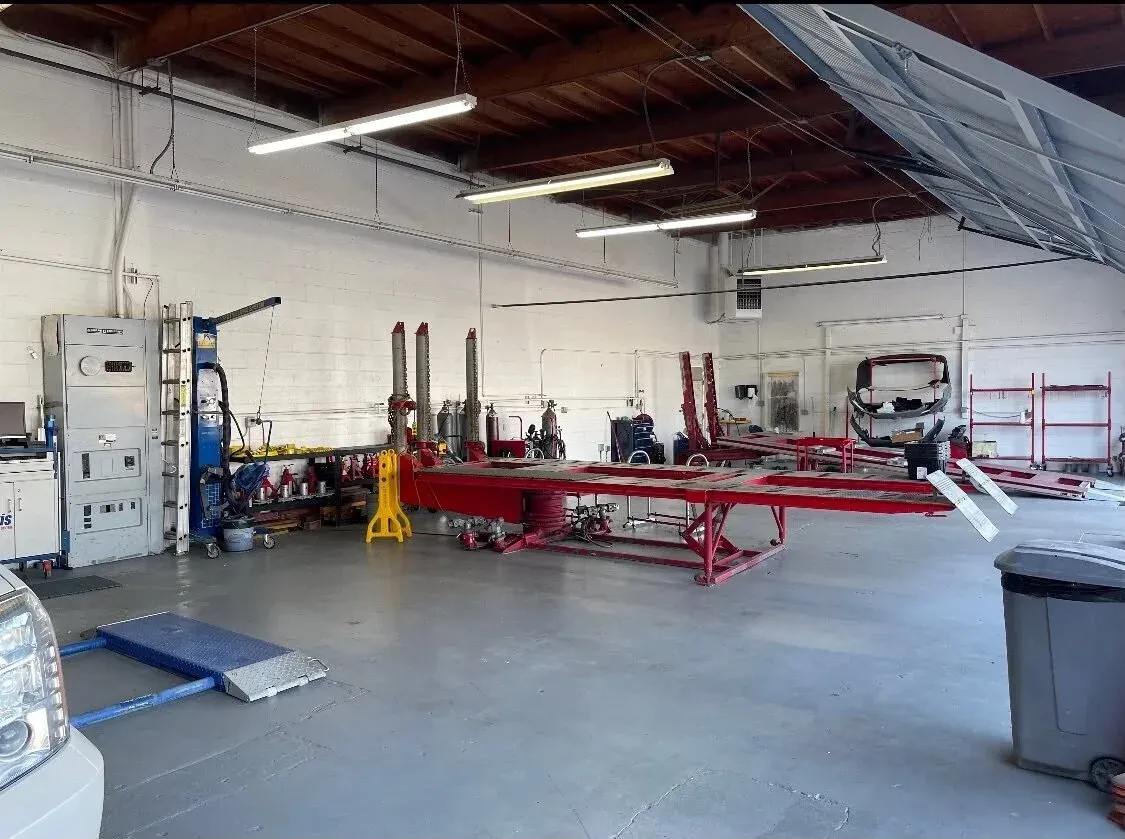
Guesswork has no place in structural repair, so the process here runs on numbers. On the bench, every control point on the car gets compared with the manufacturer’s data, and the resulting map shows exactly which sections moved and by how many millimetres. Corrections happen as controlled pulls, in sequence, rechecking as the structure comes back rather than dragging everything at once and hoping. Sections that are kinked or torn past correction get replaced at factory seams instead of stretched thin and painted over.
When the geometry is back, the file shows it: before-and-after measurements, photographed and kept. That documentation is not bureaucracy — it is what protects the car’s future. It gives your insurance company the evidence behind the invoice, it answers the question honestly when you sell the vehicle with a UVIP in hand, and it means the alignment that follows actually holds. Suspension and steering components that took the hit are checked and replaced under our parts-and-installation warranty, and the refinish over any structural repair carries the lifetime paint warranty.
- Structure measured against factory data before any pull begins
- Controlled, sequenced pulls — re-measured at every stage
- Sections replaced at factory seams when metal is past saving
- Before-and-after documentation kept in the repair file
Total-loss honesty, towing, and the claim
Structural jobs are where the total-loss question lives, so we address it early. Ontario sets no fixed percentage — the insurance company puts the car’s actual cash value on one side of the scale, the repair bill and salvage value on the other, and a borderline car can go either way. From photos we can usually tell you which side of borderline you are on before the car leaves Aurora; after teardown and measurement, the numbers make the case one way or the other. If repair makes sense, we argue for it with documentation, not adjectives.
A car with structural damage should travel by tow truck, and in Ontario the person who owns the car names the drop-off point — from a 404 shoulder, a sideroad ditch, or your driveway, the truck brings it to us because you said so, and the invoice has to be itemized. We open the claim, meet the adjuster’s questions with measurements, and keep you updated at every stage. The rental through your coverage starts when the car arrives, not after a week of phone tag.