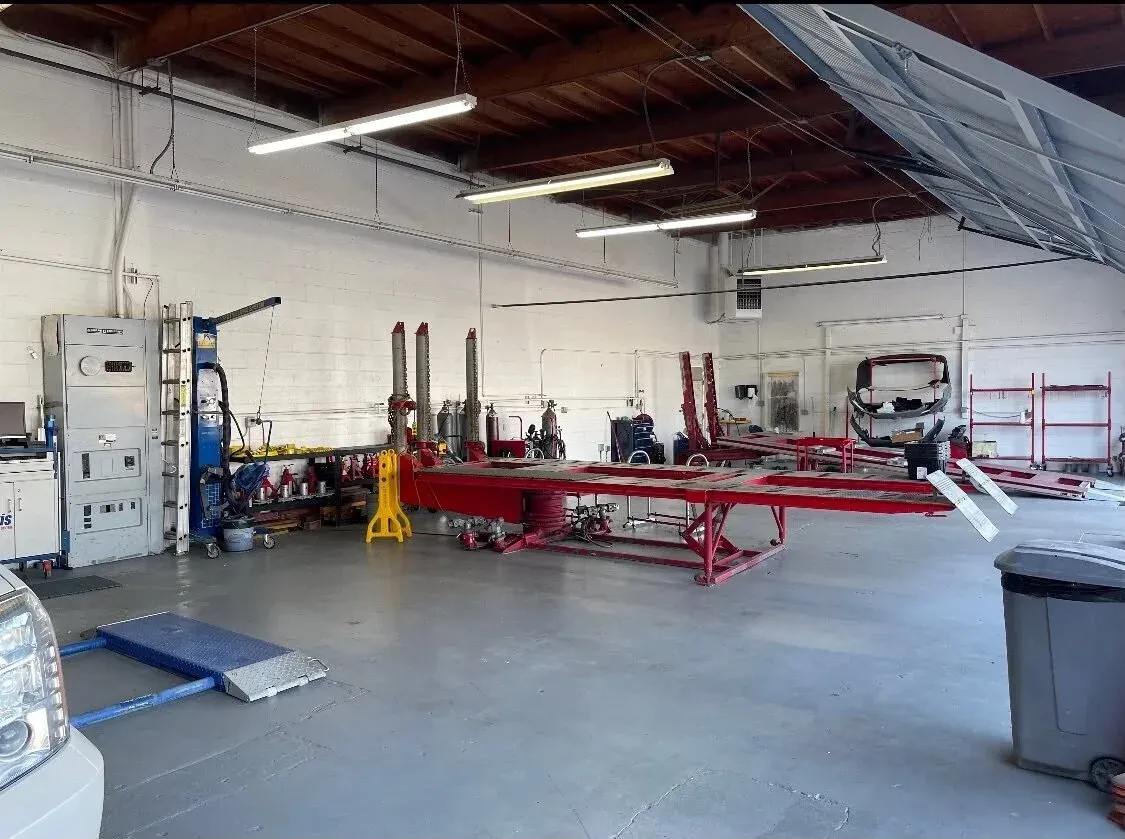
The hits that reach past the sheet metal
Structural damage needs energy, and Malvern’s geography supplies it from two directions. The 401 along the neighbourhood’s southern edge delivers the classic cases — a full-speed stop in the express lanes that ends three cars deep, a collector-transfer sideswipe that pushes a wheel into the strut tower. The Rouge side delivers the other kind: a deer on Old Finch or Sewells at 60 km/h lands hard enough to shift a radiator support and shorten a frame rail, and the dark, curving descent to the one-lane Sewells bridge has put more than one car into the guardrail avoiding exactly that.
Winter adds its own structural mechanism. The freeze–thaw potholes that open along Neilson, McLevin, and Morningside between February and April can bend more than a rim — a square-edged hit at speed drives force through the suspension into its mounting points. If the car pulls, wanders, or wears a tire strangely after a hard pothole strike, the question is structural until measuring proves otherwise.
Measured before, pulled in stages, measured after
Nearly everything Malvern drives is unibody: the body shell is the structure, engineered with crumple zones meant to fold in a controlled way exactly once. Straightening it is therefore a measuring exercise before it is a pulling exercise. The car goes on the bench, reference points are measured against the manufacturer’s dimensions, and the pull happens in controlled increments with the numbers checked at every stage — because steel dragged past specification is weaker, not straighter. The before-and-after measurements go in the file, and they go to your insurance company as evidence rather than assertion.
Structure is also where the parts argument matters most. Where a rail section or an apron is beyond saving, we push for OEM replacement and put the safety reasoning in writing, because crash behaviour is engineered into the exact geometry and grade of those parts. Everything structural is finished before any cosmetic panel or refinish work begins.
When straightening is the wrong answer
Ontario sets no fixed percentage for a write-off: your insurance company weighs the vehicle’s actual cash value against repair cost plus salvage value, case by case. Structural labour is expensive, so frame damage is where that calculation gets close — and you deserve the arithmetic before the verdict, not after. When a repair would be technically possible but economically foolish, we say so plainly and help you understand the total-loss number you are being offered.
Logistics for a car with structural damage are simple, because the car should not be driving anyway. Call (647) 594-3401 from wherever it sits — a Malvern court, the 401 shoulder, a Collision Reporting Centre lot — and we arrange the flatbed; Ontario’s towing rules let you name the destination. From there the claim runs on our side: teardown, measurements, supplements, adjuster. You get updates in plain language, and you make the one decision that is actually yours: repair or not.
- Reference-point measuring against factory dimensions, documented in the file
- Controlled, staged pulls — never dragged past specification
- Written OEM-parts case to your insurance company where structure is replaced
- Honest repair-versus-total-loss arithmetic before you commit