The Brampton hits that reach the structure
Panel damage is what you see; structural damage is what the crash physics decide. Brampton generates the deciding kind in three places. The 410 at speed, where even a braked-down rear-end hit can shove a rear body panel into the floor structure. The wide arterial intersections — Bovaird, Sandalwood, Queen at their big cross-streets — where T-bones load the door ring, the B-pillar, and the rocker. And the Mayfield growth edge, where country-speed roads meet new stop signs and the front rails take the consequence. Add the truck corridors on Steeles and Airport Rd, where a trailer sideswipe can push a quarter panel into the wheelhouse behind it.
The tell-tale signs after a hit are worth knowing: doors that need a lift or a slam to latch, panel gaps that changed width, a steering wheel that sits off-centre on a straight road, tires wearing one shoulder, or new wind noise at highway speed. Any of those after a collision is a measuring job, not a guessing job — and driving on a shifted structure wears parts and compromises how the car crashes next time.
Measured, pulled, measured again
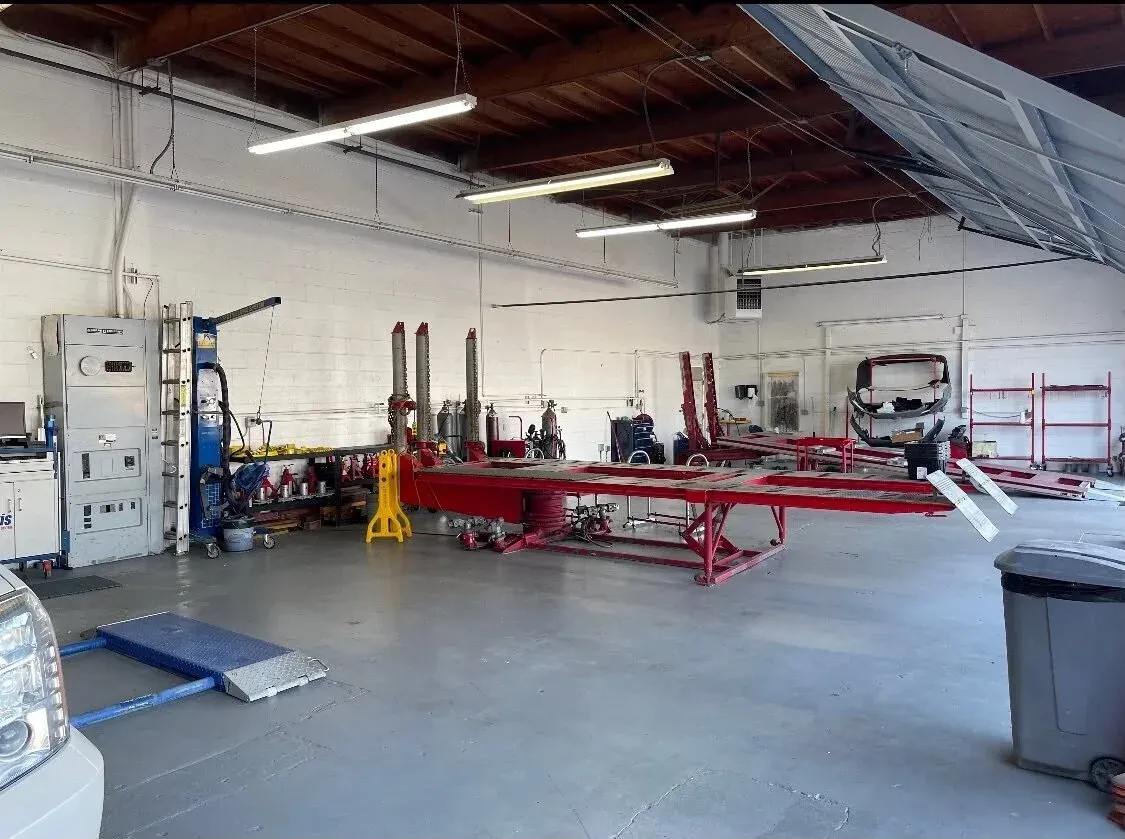
The process is deliberate. The car is anchored, laser targets go on the reference points, and the readings are compared against the manufacturer’s dimension data — that comparison, in millimetres, is the diagnosis. Correction happens in staged pulls, re-measuring as the structure moves, because metal that went out of place under one force comes back honestly only under controlled, opposite force. Modern vehicles complicate this in an important way: many high-strength steels cannot simply be heated and dragged without losing the properties the crash engineers designed in, so some members are sectioned or replaced to the manufacturer’s procedure instead of pulled.
Everything is documented — before-readings, after-readings, photos of the corrected structure — and the file goes to you and to your insurance company. That paper trail matters twice: it supports the claim while the work happens, and it answers the questions honestly if you sell the car later with a UVIP in hand.
And when straightening is the wrong answer, we say so
Not every bent car should be fixed. Ontario has no fixed write-off percentage; the insurance company weighs the vehicle’s actual cash value against repair cost plus salvage value, and a structural repair bill can push a high-kilometre commuter over that line even when the car looks saveable. Our job in that conversation is honesty in both directions — we will not talk you into repairing a car the numbers have already condemned, and we will document thoroughly when a repairable car is being written off too casually.
Logistics from Brampton are simple even when the car is not drivable: you choose the tow destination under Ontario’s rules, we coordinate the truck, and the rental through your coverage starts when your car arrives here. If the structure is repaired, replaced components carry our parts-and-installation warranty, the refinish carries the lifetime paint warranty, and the car is road-tested before it goes back up the 410.
- Laser measurement against factory dimension data, in millimetres
- Staged, documented pulls — never heat-and-hope on modern steels
- Sectioning or replacement to manufacturer procedure where required
- Straight talk on repair versus total loss, with the numbers shown