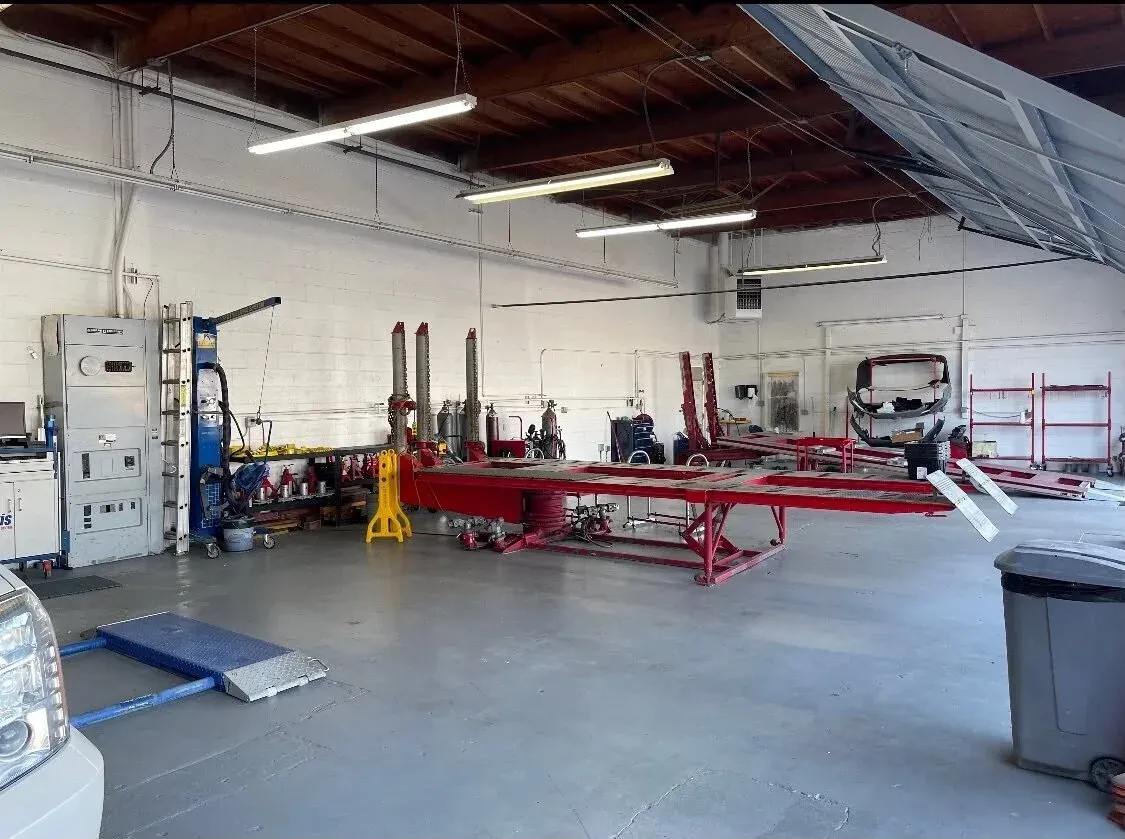
Structural damage hides behind ordinary-looking hits
The hits that bend structure in this neighbourhood are rarely dramatic. A queue collapse on Lake Shore near Coxwell puts a car into the one ahead at 40 km/h — the bumpers do their job, and the rails behind them quietly take a few millimetres of set. A February slide down Beech or Glen Manor ends against a hydro pole, which concentrates the impact into a strip narrow enough to fold a frame horn while the fender looks merely wrinkled. Even a hard windrow strike under the front crossmember can move mounting points enough to matter.
The symptoms show up later and sideways: a hood gap wider on one side, a steering wheel that sits slightly off-centre after the alignment shop gave up, doors that need a firmer pull than they used to, tires wearing on one shoulder. A car doing any of that after a collision has not been repaired yet, whatever the outside looks like — it has been made presentable.
Measured, pulled, measured again
Structural repair here is a numbers exercise from start to finish. The vehicle goes on the bench, reference points are measured against the manufacturer’s specification, and the printout tells us exactly what moved and by how much — no eyeballing, no assumptions. The pull happens in controlled stages, re-measuring as the metal comes back, because steel that is dragged past its target is steel that has been worked twice. Modern high-strength structures also have limits on what may be straightened at all; where the manufacturer calls for sectioning or replacement instead of a pull, that is what happens.
The finished repair is documented with the same rigour it was planned with: before-and-after measurements on file, photographs of every stage, and OEM structural parts requested wherever the repair touches crash performance. That paper trail protects you twice — once with your insurance company during the claim, and again years from now when a buyer’s inspection asks what exactly was done after the accident.
The claim, the tow, and the total-loss question
Structural jobs are almost always insurance jobs, and they are where a shop’s claim-handling matters most. We open the file, walk the adjuster through the measurements, and file supplements with evidence attached when teardown finds movement the first estimate never priced. Ontario has no fixed percentage that makes a car a write-off; the insurance company weighs repair cost against actual cash value and salvage, and we give you our honest read early — sometimes the right advice is that the car is not worth saving, and you deserve to hear that before weeks go by.
A car with structural damage should travel by flatbed, not by hope. Call (647) 594-3401 from the scene on Lake Shore or from your street and we coordinate the tow — under Ontario’s rules the destination is your decision, and naming our shop from the start avoids a second move and a second bill. From the Beaches that is one tow up the DVP to Keele and Sheppard, and from then on the file, the adjuster, and the updates are ours to manage.
- Factory-specification measurement before any repair decision
- Staged pulls with re-measurement, never a single heave
- Sectioning or replacement where the manufacturer requires it
- Full documentation for the claim and for resale