The junction on the neighbourhood’s doorstep
Don Mills has the misfortune of sitting beside one of the busiest highway junctions in the country. Where the 401, the 404, and the DVP trade traffic at the neighbourhood’s northeast corner, lane changes stack up at combined speeds that turn a moment’s hesitation into a structural repair. Southbound, the Parkway’s ravine curves catch drivers in the first icy week of winter, and the grades down into the valley off Lawrence hold black ice longer than the flat streets above them. The occasional deer wandering up from the Don Valley rounds out a list no other Toronto neighbourhood quite matches.
What these hits share is that the damage rarely announces itself. Modern vehicles are unibody — the body shell is the frame — and a rail or strut tower can be pushed millimetres out of position while the car still starts, drives, and looks fixable. The tells are indirect: an alignment that will not centre the steering wheel, hood gaps wider on one side, a door that needs a shoulder to latch, a tire wearing one edge bald. Millimetres matter because the shell’s crumple sequence and the airbag timing were both engineered around geometry the factory assumed would still be there.
Numbers before muscle
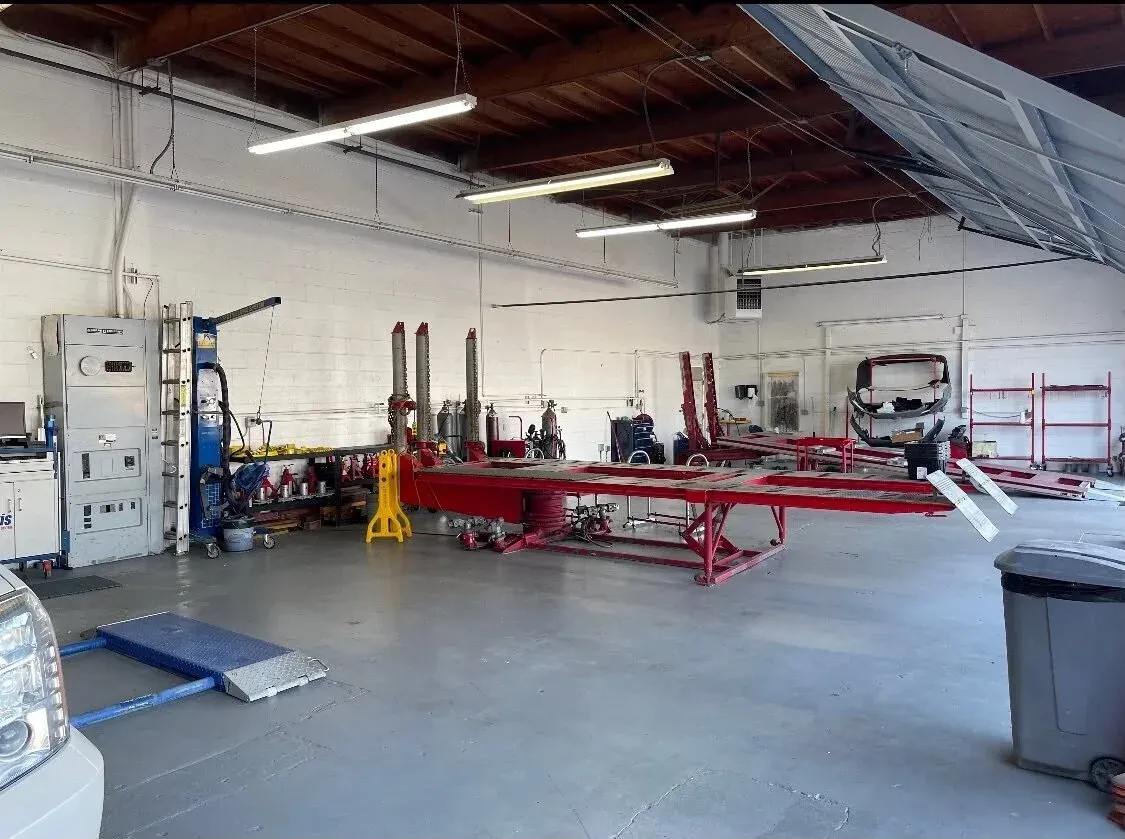
Structural repair in this shop is bookkeeping first. The vehicle goes onto the bench, its reference points are measured against the manufacturer’s published dimensions, and the printout shows exactly which points sit where — no eyeballing, no “looks close.” Corrections are pulled in small, deliberate stages: load applied, released, measured again. Metal hauled past its target in one dramatic pull has been damaged twice, so we refuse the drama. The job is finished when the measurements match specification, and you receive the before-and-after documentation for your records and your insurance company’s.
Structure is also where the parts conversation gets serious. When a rail section or a reinforcement is replaced, we advocate hard for OEM components, because crash management is the one place like-kind-and-quality is a false economy — and Ontario lets you request OEM and cover any difference where the insurance company will not. Suspension that took the same hit is measured and aligned after the structure is true, and the car is road-tested before anyone calls you to pick it up.
Getting it here, and the write-off question
A car with suspected structural damage should usually not attempt even ten kilometres of the 401. If a wheel sits visibly wrong, the steering pulls, a door binds, or anything drips, leave it and phone (647) 594-3401. We coordinate the tow from wherever the car stopped — a Donway parking row, a Parkway shoulder — and Ontario’s towing rules put the destination in your hands: certified operators, itemized invoices, and the truck goes to the shop you name rather than a yard charging storage by the day.
The other conversation we start early is the honest one. Ontario sets no fixed percentage for a total loss; your insurance company weighs the vehicle’s actual cash value against repair cost plus salvage, file by file. Structural work is costly enough to push older vehicles near that line, and you deserve the realistic picture in week one, not week four. When repair wins the math, we fix the car to specification and document it. When it does not, we say so plainly and help you plan the next step.