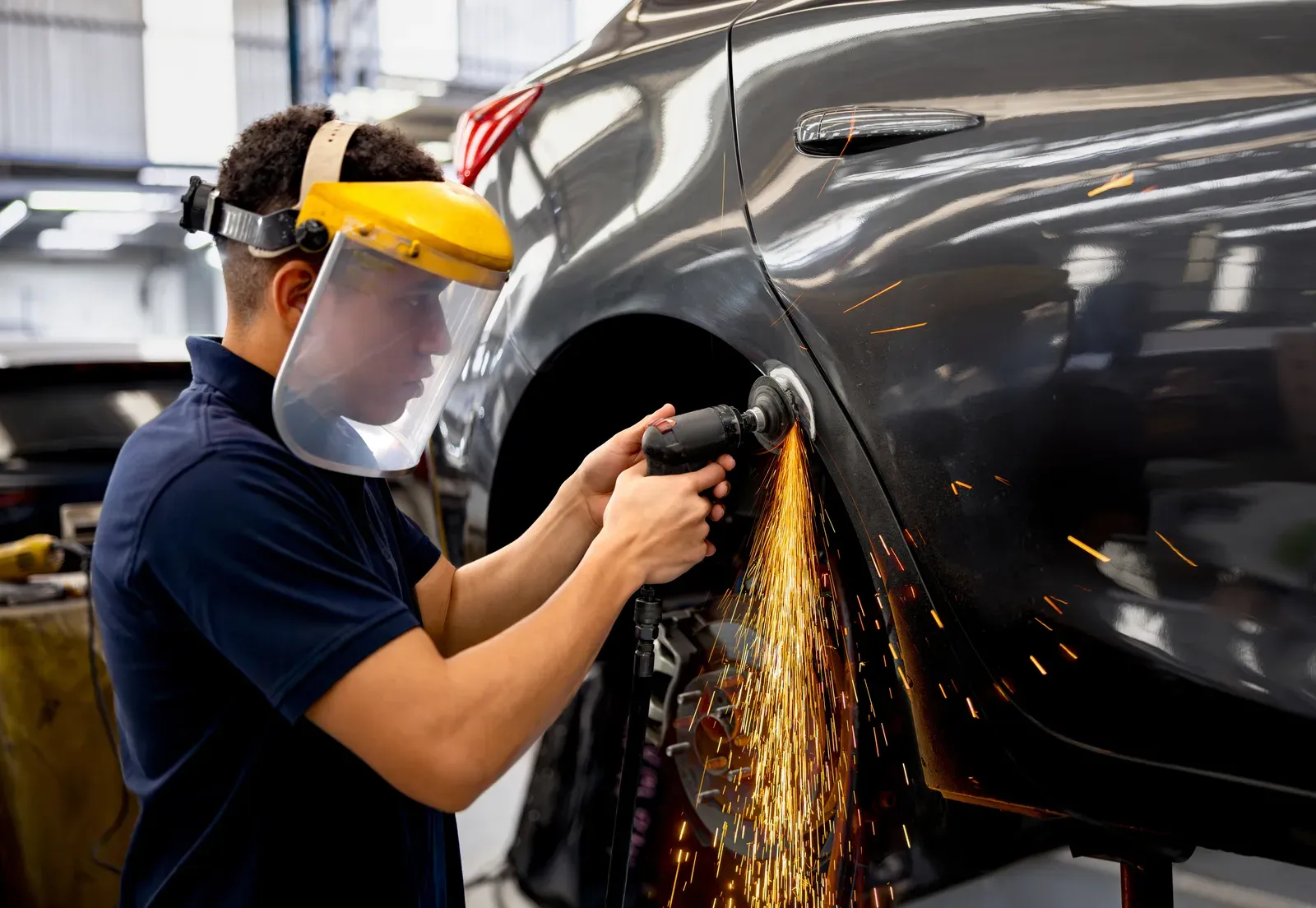
Highway-speed geography, structural-grade damage
Structure bends when speed is involved, and Rexdale supplies the speed. A misjudged merge through the 427–401 basketweave, a rear-end hit in the 409 airport queue, a left-turn impact on Highway 27 where crossing traffic arrives at 80 km/h — these are the collisions that push a rail, wrinkle an apron, or shift the rear body a few millimetres off its factory dimensions. The cruel part is how ordinary the car can look afterward: a modern unibody is designed to crumple in specific zones, and a hit that spent its energy there can leave the paint almost untouched.
The tells show up in the details instead. A hood gap that tapers from one side to the other. A door that needs a lift or a slam it never needed before. A steering wheel that sits straight only when the car drifts. Tires wearing one shoulder within a month of the crash. Any of those after a real hit means the geometry deserves measuring — and measuring is the only honest answer, because the human eye cannot see three millimetres of rail movement, and three millimetres is enough to matter for how the car crashes next time.
Measure, pull, measure again — and write it all down
Structural repair here follows a fixed discipline. The vehicle goes on the bench, reference points are measured against the manufacturer’s specifications, and the result is recorded before anyone touches a pull. Then the structure comes back in controlled stages — never one violent yank — with measurements repeated as the metal moves, because steel that was overpulled is as wrong as steel that was never pulled at all. Where a section is kinked past saving, it gets replaced rather than straightened, using OEM structural parts and the manufacturer’s specified joining methods, then corrosion protection goes back into every cavity the repair opened.
The paperwork is not an afterthought; it is half the product. Before-and-after measurements, photographs at every stage, and a documented repair plan give your insurance company evidence instead of assertions — which is what gets a structural supplement approved without a fight. It is also what lets us hand you the car afterward and say, with data rather than confidence, that the frame sits where the factory put it. Suspension geometry gets checked at the end, because a straight frame with a bent control arm still drives crooked.
- Baseline measurement against factory specification before any pull
- Controlled, staged pulls with re-measurement as the metal moves
- Kinked sections replaced with OEM structural parts, not straightened past their limit
- Full photo and measurement record supplied to your insurance company
The repair-or-total decision, without the fog
Structural damage is where the total-loss question usually appears. Ontario sets no fixed percentage — your insurance company weighs the actual cash value of the vehicle against the repair cost plus what the salvage would bring. Our role is to make that decision honest: a complete teardown and measurement means the repair estimate reflects everything, so the vehicle is not totalled on a guess or repaired on a number that later doubles. If the math genuinely says total, we tell you before anyone burns weeks pretending otherwise.
Most structurally hit cars should not be driven, so logistics start where the car stopped. Call (647) 594-3401 from the shoulder of the 427 or a Rexdale side street, and we help arrange the tow — Ontario’s rules put the destination in your control, so the flatbed brings it to us rather than to a yard you will pay to retrieve it from. From there the owner opens the claim, meets the adjuster over the measured evidence, and keeps you updated while the rental through your coverage keeps you moving.