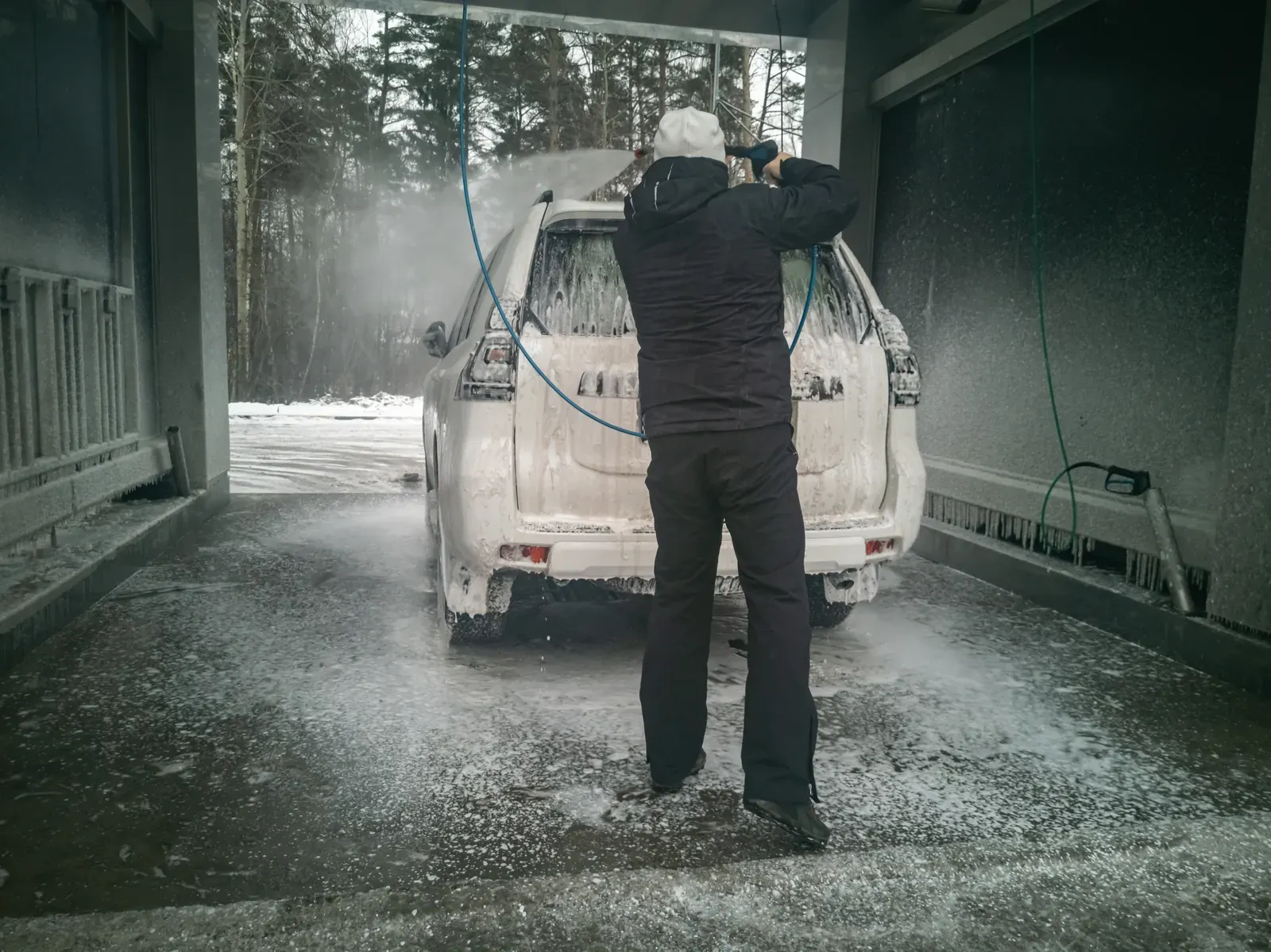
Time washes to thaws, not to a calendar
Salt chemistry does the deciding for you. Through a deep-freeze stretch of −15 °C, the residue on your car sits mostly dormant; when the temperature swings above zero and everything melts — as it does over and over in a Toronto winter — that residue dissolves back into brine and returns to work on your metal. The valuable wash is the one during or just after a thaw: it removes salt at the exact moment it turns active.
A fixed weekly habit beats nothing, but a weather-triggered habit beats a schedule. Big slushy storm followed by a mild stretch? That is your cue, every single time it happens.
The season’s final wash matters most of all. After the last storm, once real rain has rinsed the streets, give the car the full treatment — underbody, wells, jambs — because whatever salt survives into spring gets months of warm, damp weather to work with. Ending the season clean is worth more than any single wash during it. Put it on the calendar the way you would an oil change; it is the one wash with a genuine deadline.
The underbody rinse is the whole point
The panels you can see get rinsed by every wet drive down the 401 and eventually by rain. The underside is where the season piles up: wheel wells, rocker undersides, subframe pockets, and seams hold a damp pack of salty grit that no drive-through breeze ever reaches. A winter wash without underbody spray cleans the part of the car that needed it least.
Give the wheels a pass of their own while you are down there. Salt bakes onto inner barrels and hardware, and the same spray that protects the arches keeps winter grime from bonding to the wheel finish — the difference between a spring wipe-down and a spring restoration project on darker wheels.
So pick washes that advertise an underbody pass, and let that option be the reason you choose one wash over another. At home on a mild day, a hose wand angled up into the wells and along the rockers does honest work — keep strong close-range pressure away from wiring, sensors, and seam sealer, and flood the area rather than blasting it.
Touchless, soft-cloth, or driveway?
Winter film is loaded with grit, and grit dragged across paint is how a finish collects its haze of fine scratches. When the car is visibly caked, a touchless wash with a good pre-soak is the kind choice for your clear coat. Friction washes with well-kept soft media are reasonable between storms, when less abrasive is riding on the paint. Match the method to how dirty the car is, and the finish will thank you in spring.
Hand washing earns its keep on days above freezing: plenty of rinse water before anything touches a panel, clean wash media, and a proper rinse of the wells while you are there. Whatever the method, finish by wiping the door seams and seals — trapped water is how doors freeze shut on the next −20 °C night.
Do not forget the surfaces no wash reaches from outside: door jambs, the trunk opening, the sill you step over. Slush rides in on boots and drips off door bottoms into painted channels that hold it for days — doubly so for cars that sleep in a warm condo garage where nothing ever quite dries. A damp cloth across those channels whenever you vacuum the interior covers ground no wash package touches.
The heated garage question, honestly
A warm garage speeds up the same chemistry a thaw does: a brine-soaked car parked in warm, humid air corrodes faster than one frozen solid in the driveway. That is the kernel of truth in the old warning that garages rust cars out — and it applies with full force to the heated underground parking half the GTA sleeps in.
The fix is not surrendering the garage — it is the rinse. A car that goes down the ramp reasonably clean gains all the benefits of dry storage with none of the accelerated chemistry. If a rinse is impossible after a storm, even kicking the slush pack out of the wheel wells before parking helps more than it seems like it should.
And none of this needs to be perfect. Salt protection is cumulative — every rinse that removes brine is a win even when the schedule slips, and a mostly-kept routine beats a flawless plan abandoned in February. The car does not grade your effort; it just records total exposure. Ventilation helps as well: a garage that can breathe dries the car instead of steaming it.
Close the loop: chips are the doorway
All of this effort protects a finish that is sealed. Brine slides off intact paint; it feasts at any opening — and winter manufactures openings constantly, as sand and pothole gravel chip leading edges, arch lips, and rockers. The wash routine and the chip habit are one system, and the second half is the one people skip.
So make it a ritual: every wash, walk the car once and look for fresh chips and scratches, then get the bright-metal ones sealed before they brown. Insurance is not part of this either way — corrosion is excluded as wear — but a chip refinished this month is trivial next to the rust repair it becomes by spring. Photos to us, a free written estimate back fast, and the doorway closes.
If a chip has already browned by the time you spot it, the routine still did its job by making you look — hand it to the playbook in our caught-rust-early guide. What matters is refusing the third option: the one where the chip gets noticed, filed under later, and rediscovered in April as a bubble.