Why you can trust this particular take
Collision Auto Center has no undercoating package to sell you. We are the shop that repairs corrosion after the fact, which is an unusual vantage point: if these products worked perfectly we would see less rust work come through the door, and if they were useless we would watch coated cars rot right on schedule. We see neither — we see outcomes that track how well and how early the product went on.
So this guide has no thumb on the scale. Where undercoating earns its money, we will say so; where it is a fear purchase, we will say that too. The only thing we sell in this story is the repair you would rather never need, which makes us the rare party with no stake in which way you decide.
Your car already has factory armour
Modern vehicles leave the assembly line far better defended than the cars that built undercoating’s reputation in the first place. Galvanised panels, full-immersion corrosion coatings applied before paint, seam sealers, and wax injected into cavities are industry standard now, which is why a late-model car shrugs off winters that dissolved its ancestors.
The factory armour has known thin spots, though: hem flanges and pinch welds where panels fold together, spot-weld flanges, and any underbody surface that gravel traffic slowly sandblasts bare. Those are the places aftermarket protection can genuinely add something — and the places a careless application can make worse.
This is also why blanket advice ages badly. A contractor’s truck running gravel concessions north of Aurora and a garaged commuter crossover doing Keele-to-downtown runs are two different experiments, and the factory protection fits one of those lives better than the other. Undercoating is neither a scam nor a must — it is a product whose value hangs almost entirely on the vehicle, the exposure, and the years you intend to ask of it.
The aftermarket menu, without the pitch
Oil- and lanolin-style films — the annual-spray culture Ontario knows well — are the flexible option: they creep into seams and hems, they self-heal around stone strikes, and they wash off gradually, which is why they need renewing, typically every year. Expect some dripping at first and a slightly dustier underside. Their strength is reaching the folded seams factory coatings miss. Book the reapplication for a dry fall week, so the film sets on clean metal before the brine trucks roll.
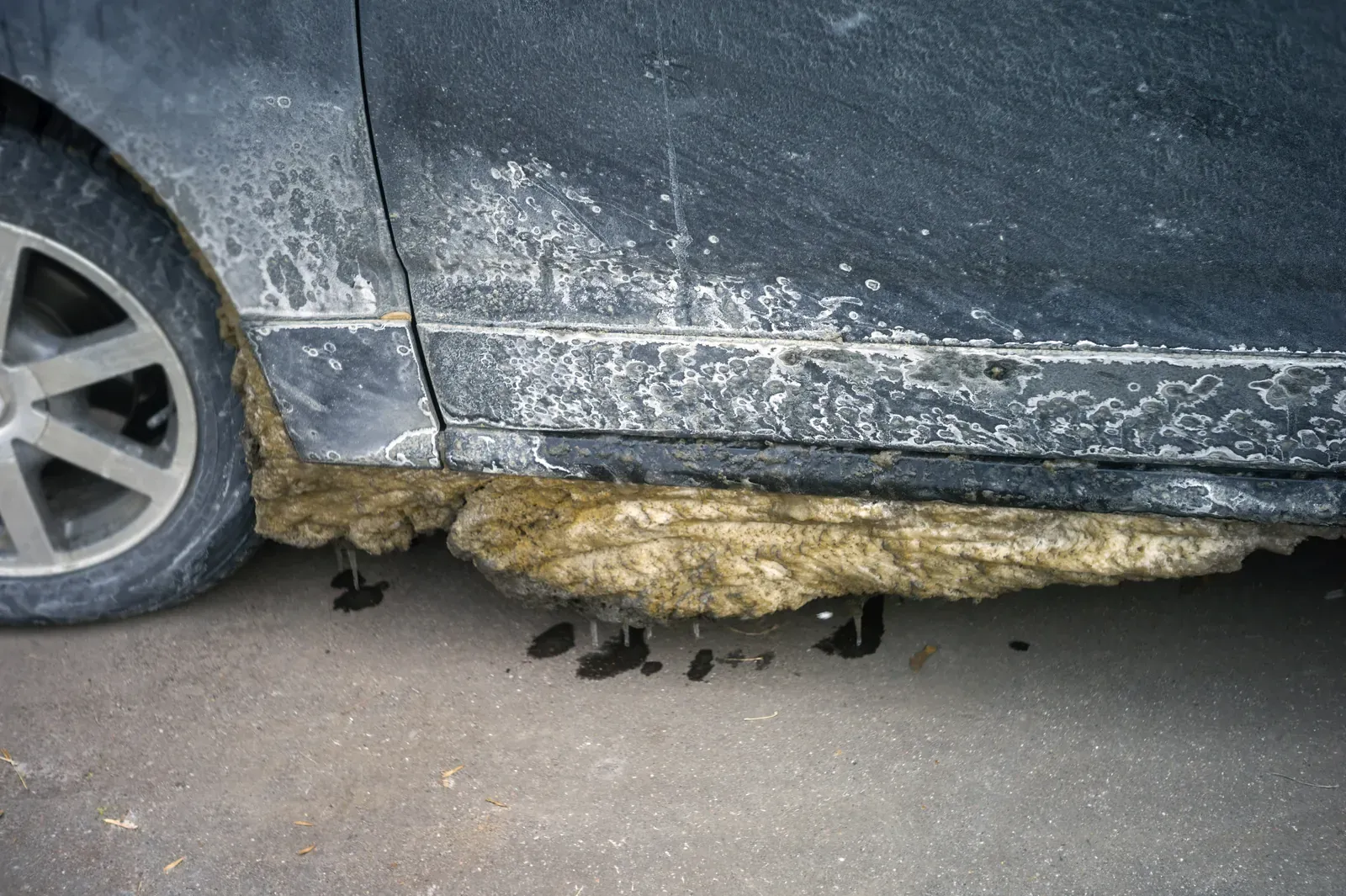
Hard rubberised or asphalt-style coatings are the opposite bet: a one-time barrier bonded to the underbody. On clean, dry, new metal they wear well. Applied over damp, dirty, or already-oxidising steel, they can seal moisture against the metal and hide whatever happens next — which is how a coated car surprises its owner years down the road. Electronic rust modules round out the menu; we have not seen results on customers’ road cars that would make us recommend one.
When it genuinely helps
The strongest cases share one theme: clean metal, long horizon, heavy exposure. If most of the list below describes you, undercoating is a reasonable spend — ideally applied before the first winter, by an installer who preps the surface instead of fogging product over road grime.
Timing beats brand. The same product applied to a clean, dry, new underbody and to a gritty, road-worn one produces two different outcomes, and the difference has nothing to do with the promises on the label. If you decide to do it, do it early in the vehicle’s life, in dry weather, at a shop that washes and dries the underside before spraying anything.
- A new or nearly new vehicle you intend to keep for many winters
- A truck or SUV with an exposed steel frame
- A rural, gravel-road, or heavily brined commute
- A vehicle that sleeps outside rather than in a garage
- An owner who will actually keep up the annual renewal, if choosing oil-based
When to skip it and do this instead
Skip it if the car already has active rust — coating over corrosion seals the problem in and disguises its progress, and repair has to come first. Skip it on a short ownership horizon, where the protection mostly benefits the next owner. And be wary of any hard-sell version bundled into a dealership purchase under deadline pressure.
The unglamorous alternative outperforms its reputation: rinse the underbody during winter thaws, keep the arch liners fastened, and seal stone chips while the metal beneath them is still bright. That routine costs attention rather than money, and it addresses the way most body rust actually starts — from the painted side, at an opening, not from the frame up.
One more honest wrinkle: undercoating changes inspection, not just protection. A coated underside is harder to read — for you, for a buyer’s mechanic, and for us — because the coating hides healthy steel and trouble with equal skill. That is not a reason to skip it on the right vehicle; it is a reason to photograph the clean underside before application and keep the pictures with your records.
Already seeing rust? Different conversation
If bubbles or brown spots are already showing, the prevention question has expired for those panels and the repair question has begun. Caught before the metal is perforated, that is standard collision-shop work — cut back, weld, seal, refinish under warranty. Past perforation it drifts toward restoration, which is a different trade we will steer you to honestly.
Budget for it knowing no insurance company will share the bill; policies treat corrosion as wear across the board. Photos of each spot get you a free written estimate back fast, and an honest read on whether protection, repair, or neither deserves your money this year.