What paint transfer actually is
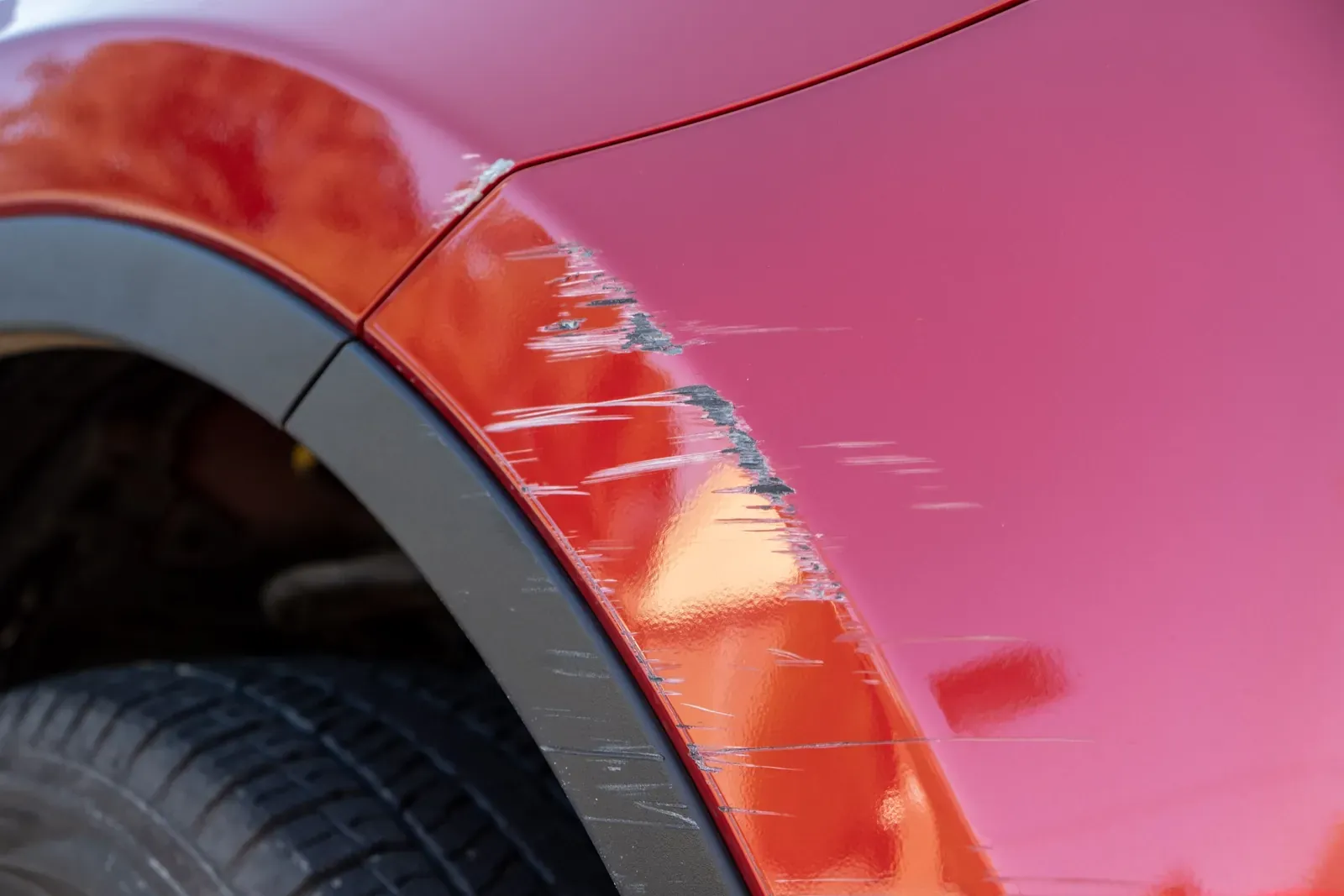
When two painted things meet, the softer surface gives up material. The white streak across your blue door is a thin film of the other object's paint — sometimes with a sliver of its clear coat — sitting on your finish rather than cut into it. Because it rests on the surface, transfer very often comes off completely, which is why a scrape that reads as a repaint in the first shocked minute can end up costing almost nothing.
The streak's colour tells you which way the paint moved. Their colour on your panel is the direction you want. Your colour missing — primer or a different shade peeking through — means your finish lost the exchange, and that is a scratch conversation covered in our scratch cost answer, not a transfer one. Bumper corners collect more transfer than any other spot on a car, since they lead every tight manoeuvre in every underground garage in the city — which is why most of this guide takes place at knee height.
Removing it safely at home
This is genuine DIY territory, and we will say so plainly. Wash the area first — compound worked over road grit grinds that grit into the finish. Then work a small amount of mild automotive polishing compound over the transfer with a clean microfibre applicator: light pressure, small circles, frequent checks. Most transfer surrenders within a few passes, and you will watch the streak shrink as colour lifts onto the cloth.
Two cautions keep the job from turning on you. Do not reach for aggressive shortcuts — abrasive kitchen pads and machine-grade cutting compounds take the transfer off along with a layer of your clear coat. And stop short of edges and body lines, where clear runs thin and burns through easily under hand pressure. Transfer sitting across a sharp crease belongs to someone with a machine and the hours behind it.
Finish with wax or sealant. Compounding strips whatever protection that patch of panel carried, and an unprotected patch weathers on its own schedule through a Toronto summer — fix a streak, inherit a dull spot. Work in shade on a cool panel as well, because compound misbehaves on sun-heated paint. The wax step takes five minutes and keeps the repair invisible in every sense.
Reading what the transfer was covering
With the streak gone, crouch and sight along the panel against the light. Best case: a faint scuff in the clear that polishes away on the spot. Middle case: scratching that catches a fingernail — real, fixable, and sorted by the depth test in our scratch decision guide. Being honest brokers about it: the majority of bumper transfer we see lands in those first two buckets.
Use your fingertips as well as your eyes. Hands find shallow waves that vision misses, particularly on white and silver cars where shape hides in the glare. Any distortion you can feel means the impact moved more than paint.
When a streak is hiding a dent
Bumper covers are flexible plastic: they can take a knock, deform, and mostly spring back, leaving transfer stretched over a low spot you only catch at one angle. Steel panels are more forthright about their dents. Sight down the body line from both ends of the car — a break or wobble in the reflection means the panel moved, and no amount of polishing repairs that.
A dent beneath transfer upgrades the job from cleanup to bodywork, and it changes the money conversation with whoever caused it. Photograph everything before and after your cleanup so the complete picture exists on record — insurance conversations go far better with a before photo than with a description.
Cart streaks, pillar paint, and other impostors
Not every streak is automotive paint. Shopping carts leave grey rubber and galvanized scuffs, and the yellow paint on condo-garage pillars and parkade posts sheds a soft, powdery coating that behaves nothing like a car's finish — half the bumper corners in North York wear a little of it. Road tar flicks up as brown-black specks along the rockers. Rubber and tar answer to a dedicated tar-and-adhesive remover better than to abrasives: dissolve them first, and save the compound for whatever survives the solvent wipe.
Pillar yellow is the stubborn one. Oil-based and soft, it smears into the texture of your clear coat and shrugs off a casual polish. Short repeated passes beat force — leaning on it just heats the panel and dulls the gloss around the streak. If yellow survives two sensible attempts, that is a machine-polish errand, not a test of character, and steel wool, razor blades, and solvent-soaked scrubbing have destroyed more clear coats than any parking garage ever has.
When to hand it over
Broad areas of transfer, transfer on textured plastic, streaks crossing an edge, or any streak paired with distortion — all shop territory. Machine polishing removes even baked-in transfer without thinning the clear unevenly, and if refinishing does turn out to be necessary, we can show you why on the panel itself before anything is decided. The same applies to transfer sitting over previous paint work: a refinished panel can carry thinner coats than factory, and it deserves a machine in experienced hands rather than a determined afternoon of hand-compounding.
Send photos before you commit a weekend. Daylight shots beat garage shots, every time. The written estimate costs nothing, and sometimes it honestly reads "this will polish out — here is what to buy." We would rather win the bigger jobs later by telling the truth about the small ones now.