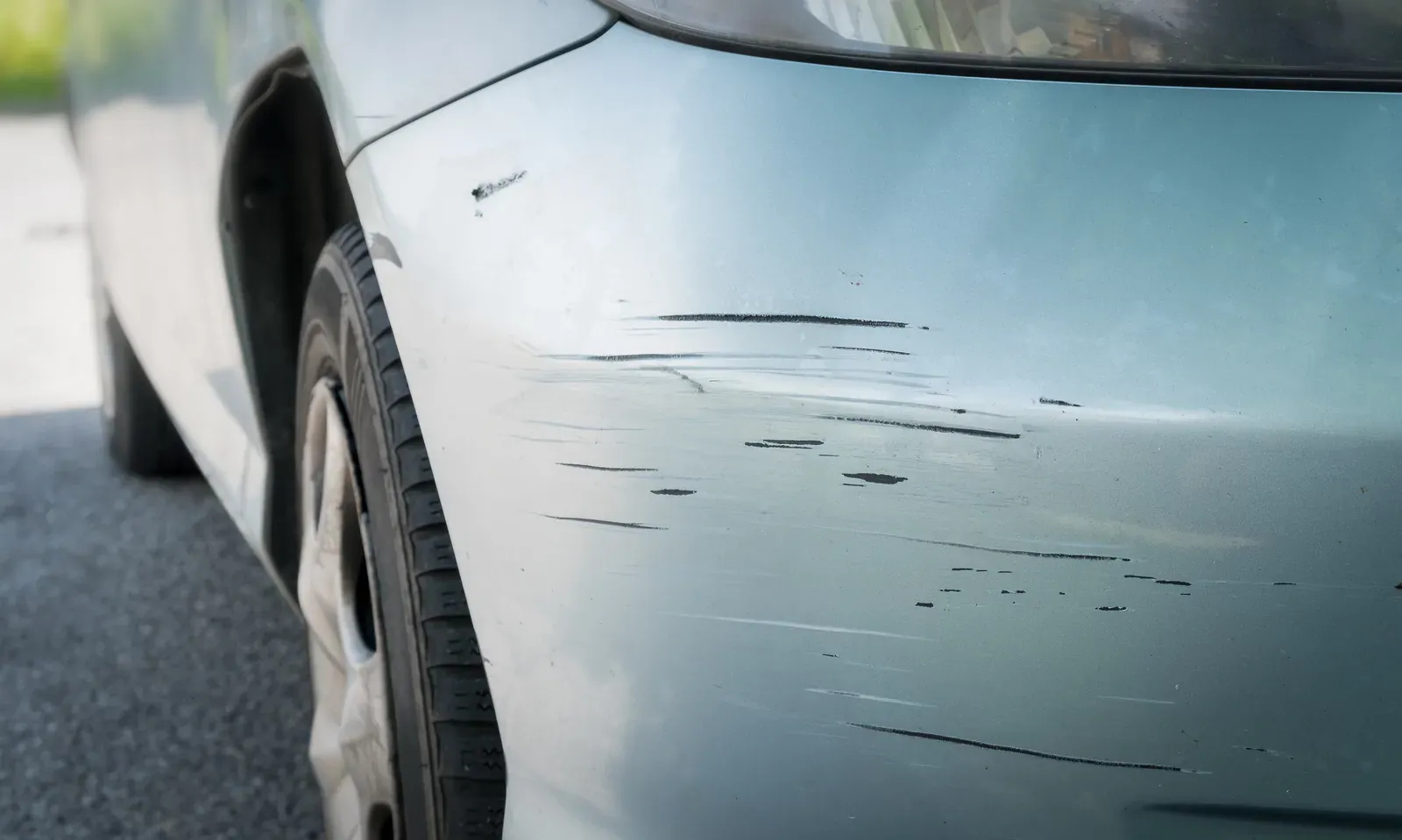
Four layers of paint, four different answers
Automotive paint is built up in layers, and a scratch is really a question about how many of them got cut. At the bottom sits steel or aluminum. Over that goes a primer whose job is fighting corrosion, then the basecoat that carries your colour, then a transparent clear coat that supplies every bit of the gloss. Each layer has its own repair, so the depth of the mark decides everything — and the encouraging truth is that the scratches people panic over most often live entirely in the clear.
Testing depth takes ten seconds and nothing from a toolbox. Rinse the spot clean, then pull a fingernail slowly across the mark at ninety degrees. No catch at all points to clear-coat damage. A faint catch with your colour unbroken means the groove went deeper into the clear or just kissed the basecoat. A solid catch with grey, white, or shiny silver at the bottom means primer or metal is open to the weather, and that changes both the repair and the urgency.
The scratches that polish out — try this at home first
When only the clear coat is marked, the cure is levelling: polishing shaves an invisible amount of clear from around the groove until light no longer catches in it. A decent rubbing compound, a clean foam applicator, and some patience will genuinely handle light marks in your own driveway or condo garage, and we would rather tell you that than book you in for something you can do yourself. Keep the pressure gentle, work a hand-sized area at a time, and follow up with a finishing polish so the repaired spot carries the same gloss as the panel around it.
Where driveway polishing fails is on edges and with over-enthusiasm. Clear coat runs thinnest along creases and panel edges, and holding a machine polisher in one place can burn straight through — converting a five-dollar problem into a refinish. There is also a natural stopping point: if two careful sessions have not improved the mark, it is deeper than the clear, and harder rubbing only thins the surrounding finish. A professional machine polish still costs a small fraction of paint work, so handing it over is economy, not surrender.
What touch-up paint can and cannot do
Touch-up paint is a sealant that happens to be your colour. Dabbed into a stone chip or a short, deep scratch, it closes the door on moisture and brine before they reach primer and steel — which, in a city that salts every road from November to April, is most of the battle. Built up in thin coats with a toothpick or fine brush rather than painted across the surface, it can look respectable from a metre or two away.
What it will never do is disappear. The dab sits down in the groove with no clear coat over it, so it catches light differently than everything around it, and a brushed line running the length of a scratch usually looks worse than the scratch did. Use touch-up where protection outranks appearance — hood chips, door edges, the leading edge of the roof — and skip it on a long mark across a visible panel. For those, get a written number first and decide with real information.
When the honest answer is refinishing
Primer showing, bare metal glinting, a groove you can feel with a fingertip, or damage that crosses a body line — those are refinish territory. Proper repair means sanding the area, priming exposed spots, spraying colour, then clearing and blending into the neighbouring surface so no edge or halo betrays the work. That blending step is the difference between a repair you can find later and one you cannot.
Depth is only half the decision; size and placement carry the rest. A deep chip the diameter of a pea can be spot-repaired, while the same depth stretched across a full door means refinishing the panel. What drives the dollars is covered in our scratch cost answer, so we will keep it to one line here: you are paying for the paint process, not the scratch — which is why two very different-looking marks can carry the same estimate.
Why a GTA winter shortens the timeline
Any scratch that reaches primer or steel is an opening, and Toronto winters exploit openings. Meltwater sinks into the groove and freezes, levering the surrounding paint loose a little at a time, while road salt reaches the metal and starts corrosion underneath the finish where nobody can watch it spread. A mark that would have been a simple autumn spot repair can come back from March needing rust work. The whole guide, compressed into a decision tree:
- Nail glides over with no colour change: polish it — a rubbing compound at home is a fair first attempt
- Slight catch, your colour intact at the bottom: professional polish or a small spot refinish
- Chip or short scratch down to primer: seal it with touch-up now, refinish when appearance matters
- Primer or metal along a longer scratch: refinish the panel before the salt trucks roll
- Brown staining or bubbled paint beside the mark: corrosion is already under way — book it soon
Not sure which category yours is?
Text photos to (647) 594-3401 and you will get a straight answer with a written number back fast — including the times the honest answer is a bottle of compound and a free Saturday. Estimates cost nothing, and we would rather earn your trust on a small call than talk a polish job into a paint job.
One more reason to ask before you start sanding: sometimes a scratch is the visible corner of a longer story. A shallow crease you had not spotted, an old repair hiding under the surface, or a door edge somebody touched up years ago can each change the right approach, and every one of them is easier to read before an afternoon of compounding smears the evidence. A quick look — over photos or in person at the shop off Keele just south of Sheppard — costs you nothing and now and then saves a panel.