Step one: pictures before anything else
Do not wipe, rub, or rinse — shoot first. Take a wide frame showing where the car sat, whether that was a Yorkdale parking row, a street spot, or your building's underground garage. Add mid-range shots that identify the panel and close-ups of the mark itself with a key or coin beside it for scale. If a driver, a runaway cart, or a vandal did this, those frames are your record of the scene, and if a claim follows, they become its foundation.
Look past the mark itself. Another vehicle's colour on your panel, the grey rubber streak a cart leaves, or scuffing at bumper height each point toward a cause. Write down the date, time, and exact location while it is all fresh — none of this survives the first rainstorm or trip through a car wash, and none of it can be recreated later.
If this happened at a plaza, your workplace, or a condo garage, notice which cameras face the spot. Footage is the one form of evidence you cannot photograph after the fact, and buildings overwrite it on their own schedule whether you ever ask or not. You do not need to request anything today; simply knowing which lens covers the space keeps the option alive if the damage turns out worse than it first appeared.
Step two: scratch, or the other car's paint?
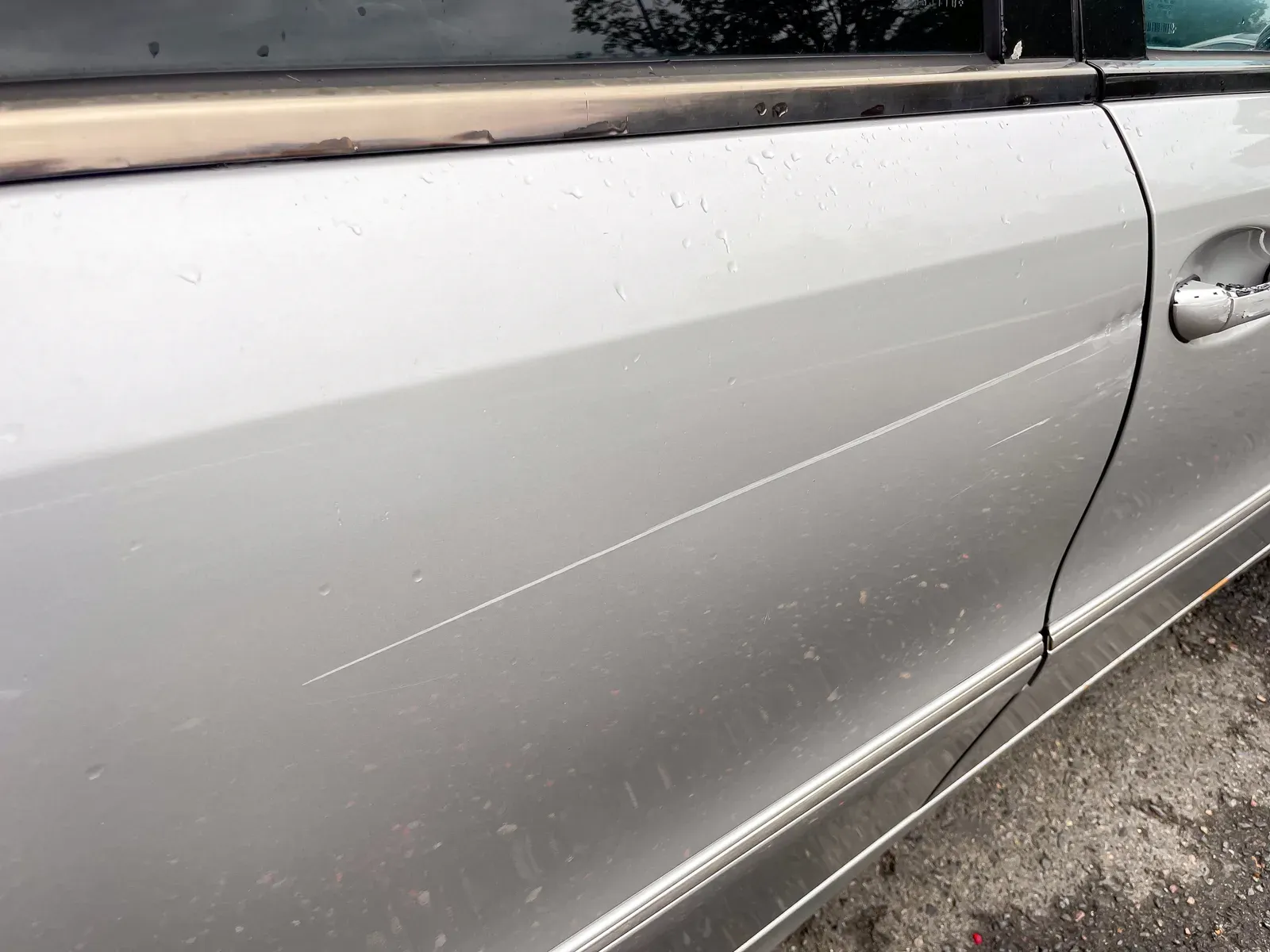
A remarkable share of parking-lot "scratches" turn out to be paint donated by the other vehicle. Transfer looks alarming — a white or red streak slashed across your door — yet it frequently sits on top of your clear coat rather than inside it. With the photos taken, gently wipe one small section using a clean, damp microfibre cloth. Colour lifting onto the cloth means transfer, and your odds of a cheap outcome just climbed sharply.
The preview is good news: mild polishing compound clears most transfer, and what hides beneath is often minor. Plenty of hit-and-run scrapes that read as repaint jobs at first glance finish as an unhurried polish — worth knowing before you decide whether a claim is even needed.
Read the height of the mark, too. Carts, bumpers, and swinging doors each hit a panel at their own characteristic level, and matching the mark to its likely source tells you whether to expect hidden trouble beneath. A door-edge ding at mid-panel height is nearly always cosmetic; a scrape down at bumper level deserves a careful sighting along the panel for a low spot behind the streak.
Step three: run the depth test
Once you are sure the mark is in your own paint, drag a fingernail across it. Gliding over means clear-coat damage that usually polishes out. A catch with your colour still visible means it went deeper, though a polish or small refinish covers it. A catch with grey primer or bright metal at the bottom means real paint work — and in this climate, exposed steel should not be left to face a winter of brine.
Depth also answers the claim question, since a polish and a panel refinish live at very different lines on an estimate — and the written number is what tells you whether the damage clears your deductible. When you come in, bring the photos rather than a memory of the mark; depth is precisely the detail that memory rounds off, and it is the first thing an adjuster wants pinned down.
Two things not to do while you decide
Fight the urge to improve it a little. Scrubbing an unknown mark with whatever rag lives in the trunk drags road grit across the finish, and picking at a lifted flake of clear peels it wider. The damage is stable as it sits; an impulsive fix might not be. Give the internet hacks a pass as well — household solvents and cleaners soften automotive coatings faster than people expect. Until depth is known, the only safe contact is a gentle wash and that one damp-cloth wipe.
And do not accept a stranger's cash on the spot. A scuff that looks trivial under garage lighting can reveal a dented door edge in daylight, and once that driver leaves the lot, the offer usually leaves too. Exchange contact and insurance details, hold onto your photos, and let a written estimate set the figure — not the adrenaline of the moment.
Claim, deductible, or the other driver on the hook
Who pays follows from what you found. When a known driver caused it, Ontario's system routes the vehicle damage through your own insurance company under DCPD when you were not at fault — you deal with your company, not theirs, and the fault split follows the Fault Determination Rules. When the culprit is unknown, vandalism runs under your comprehensive coverage, and a hit-and-run on a parked car is worth reporting even when nobody saw a thing. The owner walks claim paperwork through with customers every week — you are not doing this part alone.
For a shallow scratch, the estimate can land near or below your deductible, and skipping the claim is the smarter call. Get the written number first, then choose with a real figure in front of you. Our estimates are free, and when damage is genuinely too small to be worth a claim, we say exactly that. Where a claim does make sense, keep one caution in mind: coverage depends on your policy, the deductible, repair approval, and the insurance company's decision — nobody should promise you more than that.
If someone did it on purpose
A continuous line at door-handle height running the length of the car did not happen by accident — that is a keying. Deliberate damage deserves a police report even when catching anyone seems unlikely, because comprehensive claims for vandalism move faster with a report number attached, and Toronto lets you file minor property-damage reports without a station visit. Our keyed-car page covers the whole situation, including how the repair differs from an everyday scratch.
A word on expectations: people who scratch parked cars rarely leave notes. Plan on handling it yourself, treat a note as a pleasant surprise, and check whether a storefront or garage camera covers the space before that footage cycles away. Then send the photos over — you will have a written number back fast, and you will know precisely what you are dealing with.