Why does winter make dents and cracks worse?
Quick answer
Because water finds the break, freezes in it, and expands. Any dent or crack that opened the paint film admits moisture to bare steel and lets it creep under the surrounding finish, where every freeze–thaw cycle levers up a little more. Cold also embrittles plastic, so hairline bumper cracks spread — and salt is waiting inside every one of those openings.
- Drivable or not
- At fault or not
- Free written estimates
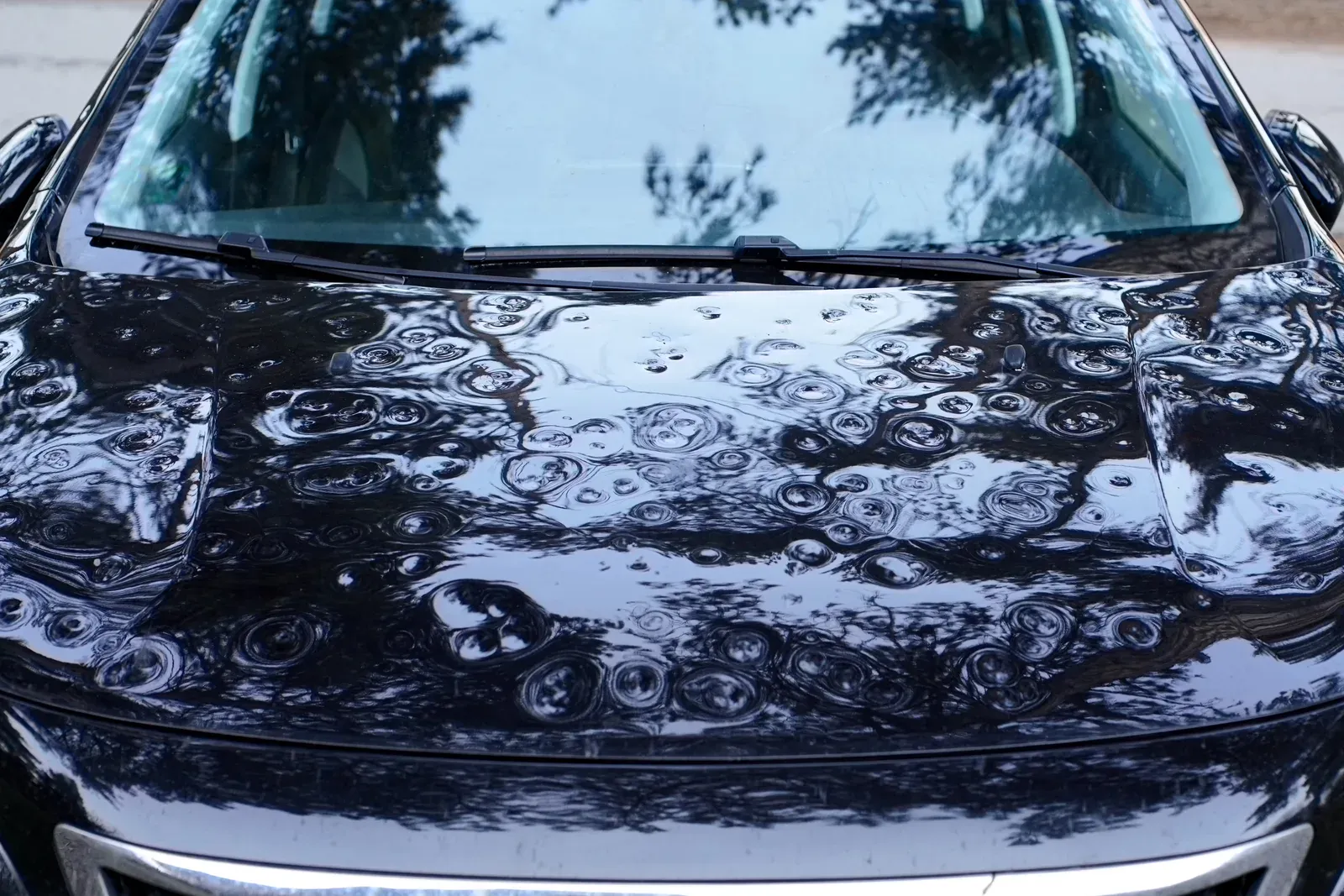
Freeze–thaw is a pry bar, not a figure of speech
Freezing water expands by about nine percent, with force enough to crack granite. On a car, that force applies itself at the most vulnerable point available — the lifted paint edge beside a chip, the base of a crease, the seam behind a dented panel.
The cycle runs like this: meltwater and brine seep beneath the raised edge of paint around the damage; overnight cold freezes it and jacks the edge a little higher; the afternoon thaw admits slightly more water into the slightly larger gap. Toronto crosses the freezing line dozens of times each winter, and the cycle runs on every crossing.
What you find in April — a chip grown into a flaking patch, a crease cracked along its whole length — required no second impact. The damage simply had four months of hydraulics working on it.
The same jack operates inside closed sections. Water pooled in a door bottom or a rocker with blocked drains freezes against seams and spot welds instead of open air, and something has to give.
Rust runs its own expansion racket
The moment steel is exposed, corrosion contributes a second outward force: iron oxide occupies considerably more volume than the metal it replaces, so rust forming under a paint edge physically shoulders the film off from beneath.
That is why rust announces itself as a raised blister long before it becomes a hole — by the time the surface breaks, the colony underneath is far larger than what shows.
Salt keeps the whole operation running. Chloride holds the surface wet and conductive between freeze cycles, so the reaction never gets its winter pause.
And the two forces feed each other: freeze–thaw widens the opening, corrosion enlarges the bare area, the bigger wound collects more water for the next freeze. Nothing in the loop is self-limiting.
It is also why spring reveals damage nobody remembers causing. The ding happened in November; what surfaced in April is the winter that followed it.
- Water gains roughly nine percent volume when it freezes
- Iron oxide occupies more space than the steel it consumed
- Both forces push outward from beneath the paint film
- Chloride keeps everything wet and conductive between cycles
- The GTA crosses 0 °C dozens of times every winter
Cold turns plastic and adhesive brittle
Bumper covers, grilles, trim, and lamp housings are thermoplastics, and their toughness collapses as the temperature drops. The parking-garage nudge that would flex harmlessly off a cover in July can split it outright at -15 °C — and the same goes for backing into a windrow that froze solid overnight after falling as powder.
An existing crack behaves worse still. Cold concentrates stress at the crack tip, and every door slam, speed hump, and frigid morning start advances it a millimetre. The hairline you noticed in November is routinely a full split by March — converting a cover that could have been plastic-welded into one that gets replaced.
The soft parts suffer alongside. Emblem tape releases, moulding clips shatter during removal, and stiffened weatherstrip tears rather than flexing — which is how a minor trim complaint matures into wind noise and a water leak.
Frozen doors deserve their own warning: hauling on a door iced into its opening rips weatherstrip, strains the latch mechanism, and occasionally leaves the handle in your glove. It is a small winter repair whose root cause is thirty seconds of impatience.
What deteriorates over a GTA winter
If any of the following is on your car today, it is not holding steady out there — it is compounding:
- Stone chips and scratches down to primer or metal
- Dents with cracked paint, above all along a crease line
- Any rust blister at an arch, rocker, or door bottom
- Bumper-cover cracks, including hairlines
- Clear coat that is hazing or lifting, exposing the base coat to water
- Missing or damaged seam sealer from an old repair
- A windshield chip, which defroster heat and cold will run into a crack
- Loose trim or lifted mouldings channelling water where it should not go
- Plugged door or rocker drains, freezing water inside the panel itself
Where this lands, practically
The identical repair costs less in November than in April — not as a promotion, but as a description of what four months of freeze–thaw and brine do to an open wound in the paint.
A chip sealed in the fall is a minor line item. By spring it can be corrosion repair with metalwork and a blended refinish. A hairline in a bumper cover is weldable; a split cover is a part order.
The pattern generalizes: winter rarely creates new problems, it finishes existing ones — and it is exactly as diligent about the small ones as the large.
So the sorting question for anything on your someday list is simple: is the paint film broken? If yes, it just moved to the now list.
Cold never stops the work itself. Repairs happen indoors and paint cures in a heated booth with a proper bake, so a January job carries the same lifetime refinish warranty as a June one. And if the damage came from a crash or another covered incident, open the claim now rather than in April — insurance companies can deduct unrepaired damage from a later claim, and the evidence of what happened is freshest today. Send photos and a written estimate comes back fast.
A closing note for street parkers: windrows are the season’s quiet vandal. The banks the plows build beside parked cars cure overnight into abrasive concrete, and pulling out through one drags it down the rockers and doors like a scouring pad. Walk the curb side of any street-parked car in March and you will usually find the whole winter written there.