The hits that go deeper than the panel
Structural damage out of Markham comes from three places. The first is speed: the 404 and the 407 move fast, and a rear-end or lane-change hit at highway pace drives energy past the bumper system into the rails and rear body. The second is geometry: the intersection grid — McCowan at Highway 7, Kennedy at 16th, the left turns across the Viva lanes — produces side impacts, and a T-bone loads the pillars and rockers that hold the passenger cell square. The third is winter physics: a slide on black ice into a curb on Major Mackenzie can bend a subframe or control-arm mount without leaving much of a mark on the paint.
What makes structure different is that you cannot see it from the outside and you cannot ignore it safely. A unibody that is 6 mm out of specification will still drive — it will also eat tires, wander on the highway, and crumple wrong in the next collision. Any Markham car that has taken a serious hit gets measured here before anyone talks about paint.
Pulled in stages, proven in numbers
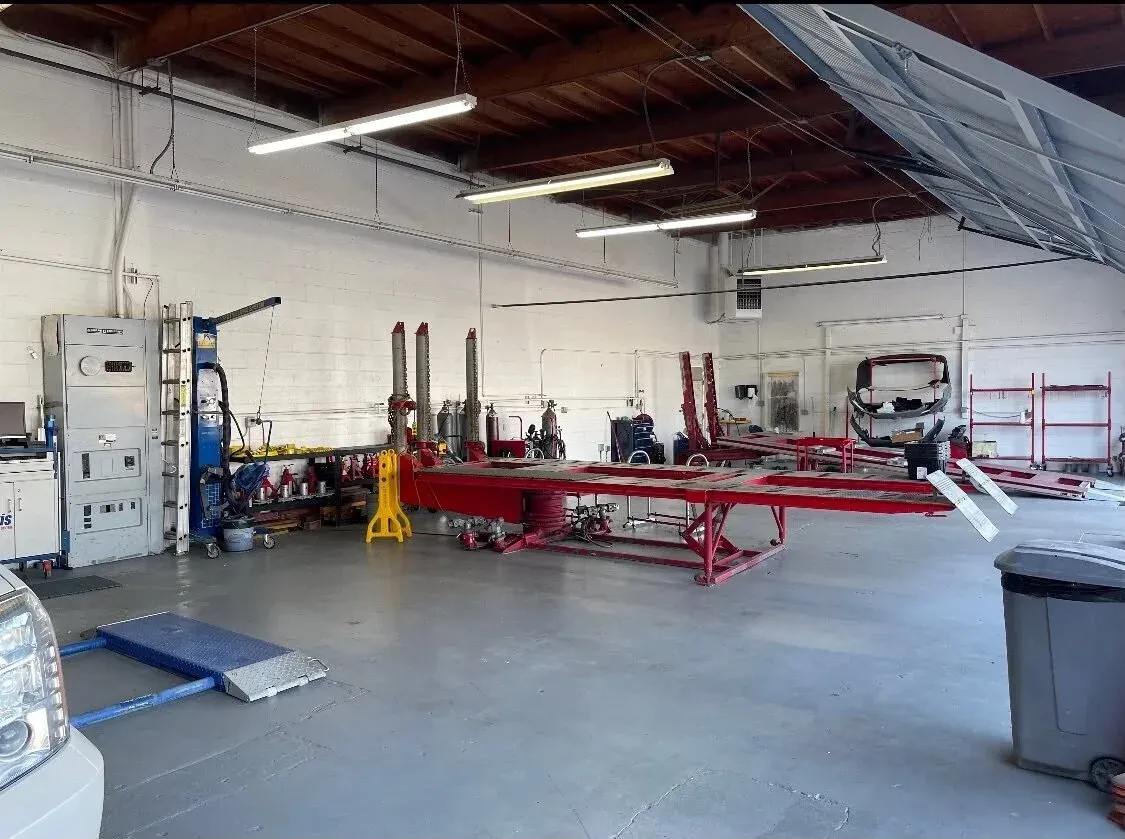
Straightening is measurement first, force second. The car goes on the bench, laser targets go on the reference points, and the readings are compared against the manufacturer’s dimensions — that comparison, not a technician’s eye, defines the damage. The pull itself happens in small, controlled stages, re-measuring between each, because metal that is dragged back in one heave is metal that has been stressed twice. Where the factory used high-strength steel that cannot be safely straightened, the section is replaced instead, using the manufacturer’s prescribed method.
Everything ends up on paper: before-readings, after-readings, and the repair procedure. That file protects you at resale — a Markham buyer running a UVIP and asking hard questions gets answers instead of shrugs — and it protects you with your insurance company, because a documented structural repair is one nobody can second-guess later. Suspension geometry is checked after the pull, since a straight body with bent mounts is only half a repair.
- Laser measurement against factory dimensions before any pull
- Staged, re-measured pulls — never one dramatic drag
- Sectional replacement where high-strength steel rules out straightening
- Full documentation of readings kept with your repair file
When the honest answer is “total it”
Structural repairs are where total-loss math lives. Ontario sets no fixed percentage; your insurance company weighs the vehicle’s actual cash value against repair cost plus salvage value, and decides from there. Our job is to make that decision honest in both directions — we have talked adjusters into repairing cars that deserved repair, and we have told Markham owners plainly when a repair would cost more than the car is worth to them, before anyone burned two weeks finding out.
Because the structural question decides everything else, we front-load it. Send photos, including one from low at each corner if the car sits oddly, and we will tell you whether this looks like bench work before you arrange anything. If the car cannot drive — and after a real structural hit it should not — the tow comes to us directly, on your instruction, and the measuring starts the day it lands. The owner walks you through the numbers himself, Monday to Saturday, 8 AM to 7 PM.