What causes paint to peel on a car roof and hood?
Quick answer
Nearly always, the layer peeling is the clear coat rather than the colour. Roofs, hoods, and trunk lids face the sky directly, so they collect far more ultraviolet and run far hotter than doors and fenders. The clear’s UV absorbers deplete, micro-cracks form, adhesion to the base coat fails, and the film lifts in sheets — spreading from every exposed edge until it is stopped.
- Drivable or not
- At fault or not
- Free written estimates
Identify what is actually lifting
Study the peeled zone up close. Colour still present underneath, but flat and matte where it used to gleam? The clear has released and you are looking at exposed base coat — by far the most common version of this failure.
If the exposed patch is grey, white, or colourless, the base went with it and primer is showing. Bright metal means every layer is gone and corrosion has already taken the field.
The distinction sets the urgency. Base coat carries essentially zero UV defence or durability of its own — exposed, it fades in weeks. Primer is porous and drinks moisture. A peeling roof is not a stable cosmetic flaw; it is a failure in progress, accelerating.
Reading the panel from best to worst:
- Flat, dull patches amid healthy gloss — clear oxidizing but intact
- Chalky haze that no polish revives — clear degrading
- A fine crack network visible up close — clear failing; refinish territory
- Matte colour where film has lifted away — base coat exposed
- Grey or white zones — primer exposed, moisture already entering
- Bright metal or brown staining — corrosion under way
Why the roof and never the doors
Geometry does most of it. A roof stares at the sky all day at the most efficient angle for absorption, while a door catches sunlight obliquely and only part-time. Compounded over a decade, the difference in accumulated UV energy between those two surfaces is enormous.
Temperature multiplies the gap. Horizontal panels run dramatically hotter — a dark hood in July sun is among the harshest environments any coating faces on a vehicle — and heat accelerates every reaction involved in tearing the film apart.
Flat surfaces also keep what falls on them. Dew, rain, droppings, sap, and pollen pool and bake in place instead of running off, and the acidic ones etch launch points for failure into the clear.
Ontario winters chip in as well: snow blankets hold the surface wet and cold for days, reflect UV back at the paint once the sun returns, and the scraper and snow brush add mechanical wear to a film already under chemical attack.
The accomplices beyond sunlight
UV leads the attack, but peeling often has help getting started:
- Thin factory clear, common over aluminum hoods and some plastic panels
- Adhesion failure between clear and base from contamination or a cure fault — original or from an earlier repair
- A past bargain respray applied without proper sanding, sealing, or UV-stabilized clear
- Years of aggressive buffing that thinned the clear to nothing
- Roof racks, cargo boxes, and magnetic signs grinding trapped grit and moisture into the surface
- Wrap or graphics peeled off after years, taking weakened clear along
- Acid etching from droppings and sap left to bake
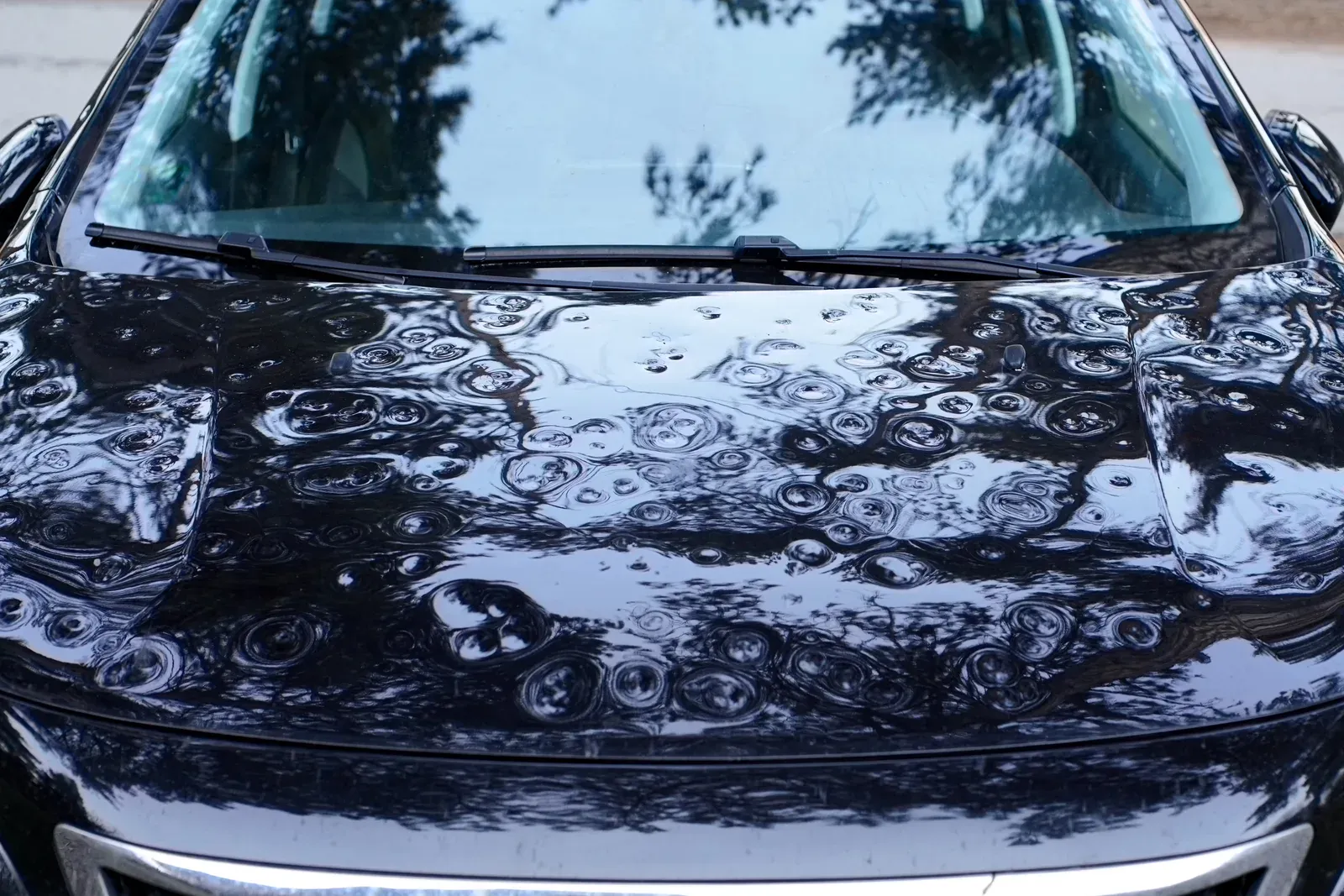
- Hail dents that cracked the film and let water work the edges
- A decade of brush-tunnel washes micro-scratching the surface
Why patching and spray bombs never hold
Delaminated clear has a failed edge, and failed edges keep going — wind, washing, and freeze–thaw all tug at them. Sand only the peeled patch and clear over it, and the weakened film around your repair fails within a season or two, usually just beside it, wearing the costume of a brand-new problem.
The bottle labelled clear coat restorer is a polish. It strips oxidation and fills micro-scratches, which honestly flatters a dull-but-intact finish — but it cannot rebuild a film that has physically let go, because there is no film left to level.
The repair that lasts takes the whole panel: failed clear sanded away, surface taken to a sound layer or primer, sealed, then fresh base and clear carried to a natural break line — because a clear edge stranded mid-panel will always announce itself.
What a proper roof or hood refinish involves
A roof rarely travels alone. With so few natural break lines, the panel is typically refinished edge to edge, with colour blended down into the pillars and the quarter tops so no transition survives for the eye to find.
The match is made against the car as it stands. On a sun-worn vehicle the doors and quarters faded right alongside the roof, so a formula mixed fresh from the factory code would leave the new roof conspicuously brighter than everything around it — measuring the real panel is the only honest starting point.
Timing matters more here than almost anywhere: refinishing over intact base coat is routine, while a panel that spent an Ontario winter down to primer often needs corrosion work before paint. Catch it while it is still a paint problem.
When more than one horizontal panel is failing, doing them together is usually the smart money. Roof, hood, and trunk aged under the same sun and tend to fail within a season of each other — one visit, one match, one bake.
Failed clear meets our work most often during accident and hail repairs on aging vehicles — it limits what blending can do, and it gets flagged on the estimate before work starts. And hail that cracked the film is claim damage in its own right: note the storm date, photograph the panel, and raise it as a comprehensive claim. Every refinish we deliver carries our lifetime paint warranty.
A word on the rattle-can weekend fix, because a peeling roof tempts everyone: aerosol clear has no isocyanate hardener, so it never builds the crosslinked film a real refinish system does. It looks passable for a month, clouds by the second season, and adds a stripping step — and its cost — to the proper repair that eventually follows. On the most visible panel of the car, the shortcut is the most expensive item on the menu.