Should I fix rock chips before winter?
Quick answer
Yes — any break in the paint that shows primer or bare metal should be sealed before the brine trucks roll, whether a stone caused it or a collision did. Paint is the only barrier between salt and steel. And if the damage came from a crash or another covered incident, open the claim now — by April the same damage is a corrosion repair.
- Drivable or not
- At fault or not
- Free written estimates
Which chips actually matter
Chips are not all equal, and a two-minute inspection with a flashlight sorts them. What you are judging is depth — how far through the paint stack the stone went.
If the mark is dull but the colour is still there, only the clear coat took the hit. That one is cosmetic; it can wait for a convenient month. If the bottom of the chip shows grey or white, the stone reached primer — and primer is porous, so it will pass moisture within weeks, not years.
A bright silver speck means bare steel, and a brown speck means the corrosion already started. Those are the urgent ones. Once GTA brine touches exposed steel, rust begins creeping outward beneath the surrounding paint, invisibly, and it does not pause for your schedule.
The triage, from most urgent down:
- Bare metal or a brown dot at the bottom — seal it now
- Grey or white primer visible — deal with it this fall
- A lifted or flaking paint edge around the chip — now; it is already growing
- Colour intact, just a dull mark in the clear — cosmetic, no clock running
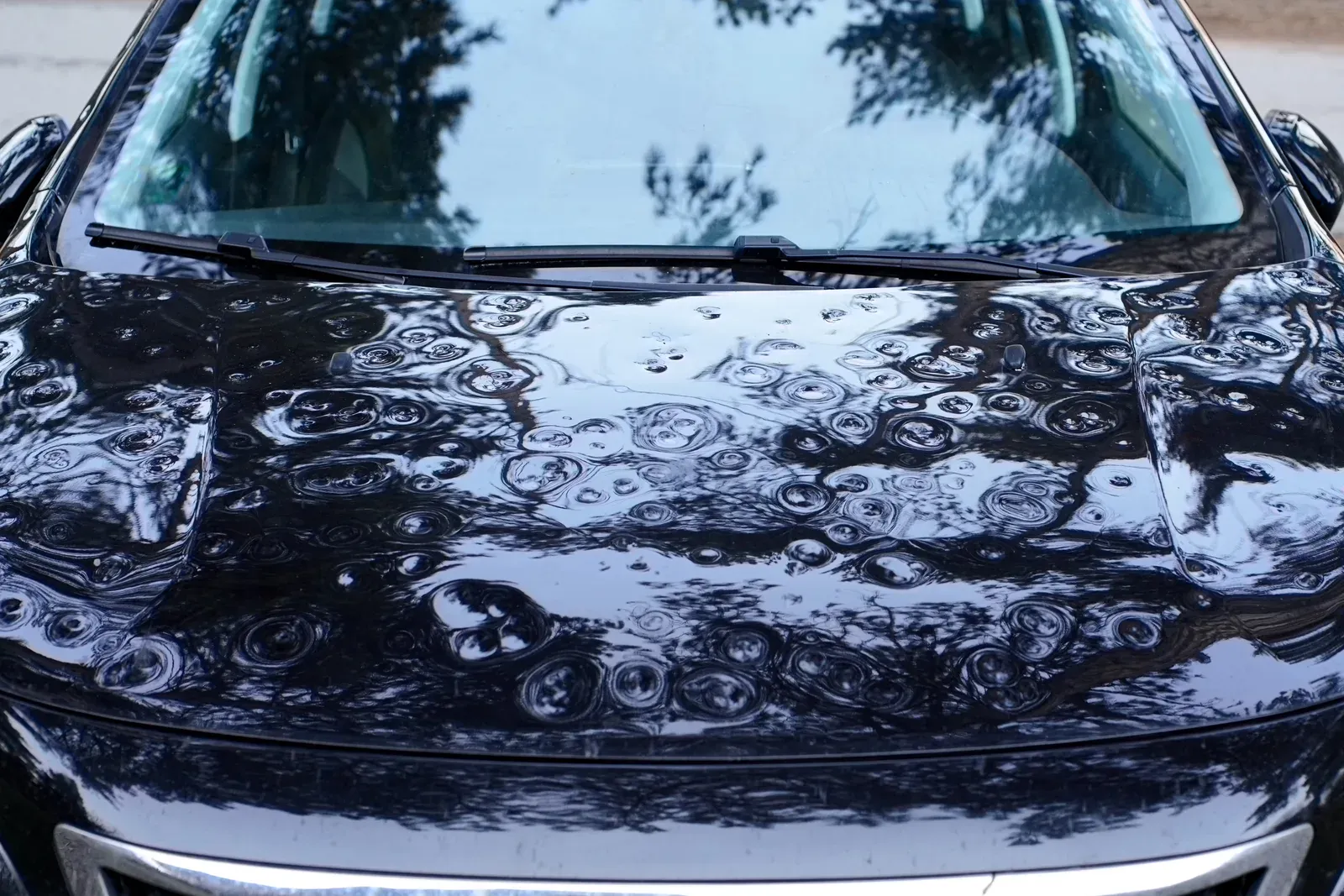
- A hood peppered with dozens of chips from one gravel incident — plan a panel refinish, and report it if an identifiable truck dropped the load
Why winter is the deadline
Three attacks land together the week the plows come out. Brine coats the car and holds moisture against every surface. Sand and salt crystals fired off truck tires at 100 km/h on the 401 punch new chips faster than any other season. And freeze–thaw cycling pumps water into every existing break in the film, then expands it.
The expansion is the killer. Water widens by roughly nine percent when it freezes, and it does so under the lifted edge of the paint around a chip — prying the film up a little more each night, letting a little more water in each afternoon. The GTA runs that cycle dozens of times between December and March.
Rust adds its own pressure from below, because iron oxide occupies more space than the steel it consumed. That is how a pinhead chip becomes a raised blister by February and a flaking crater by May, without the car being touched again.
Timing is the last argument. Sealing a chip well wants a clean, dry, warm panel and time for the paint to level — easy to arrange in October, miserable to arrange in a January parking lot. Doing it before the season is simply doing it when it can be done properly.
Where chips concentrate
Stone damage maps onto whatever meets the road spray first:
- The hood’s leading edge and the top face of the front bumper cover
- A-pillars and mirror caps, which catch highway debris at windshield height
- Lower doors and rockers, sandblasted by the front tires all winter
- The quarter panels just behind the rear wheels
- The lower corners of the front bumper, closest to the pavement
- Headlamp lenses, which pit and haze rather than chip
- The windshield — a chip there belongs with a glass shop before the first hard freeze turns it into a crack
What a proper chip repair looks like
It is not a dab of touch-up over dirt. The area gets cleaned and degreased, any corrosion in the crater comes out down to sound metal, and the bottom of the chip is sealed before any colour goes near it — because paint over live rust just hides a countdown.
Colour is matched to the panel as it has aged, not simply ordered by code, since a sun-faded finish and a fresh factory mix are two different shades. The repair is built up in thin coats until it sits flush with the surrounding clear, then levelled and polished until it stops catching light. Done well, you need to know where it was to find it.
When a hood collected a dozen or more chips in a single incident — a gravel spill off a truck on the 400-series is the classic — refinishing the panel beats scattering touch-up dots across it, and an identified vehicle losing its load is damage worth reporting to your insurance company rather than absorbing.
A touch-up pen from the dealer has one legitimate job: stabilizing a chip until it can be repaired properly. It cannot match an aged panel and it cannot lie flat, so treat it as a temporary cork, not a fix.
The math, without the sales pitch
Sealing broken paint is one of the smallest jobs a shop does. Replacing rusted-through metal in a lower quarter — cutting, welding, rebuilding corrosion protection, refinishing with a blend — is one of the larger ones. The only thing standing between those two invoices is a couple of GTA winters.
Insurance enters the picture when the damage arrived in a single covered event — a collision, hail, vandalism, or a truck losing its load. Chips that accumulated gradually rarely clear a deductible, but broken paint from an accident belongs on the claim, and whether it gets covered depends on your policy, your deductible, repair approval, and the insurance company’s decision.
Fall is also when the calendar is kindest. If accident damage is waiting on a claim decision or parts, get the exposed metal sealed before the first storm — and send photos first, so the written number and the claim conversation both happen before you drive over.
If you do exactly one thing for your car before winter, make it this: walk around it in good light, find every chip showing primer or metal, and have those sealed. Everything else can wait a season. Bare steel in brine cannot.