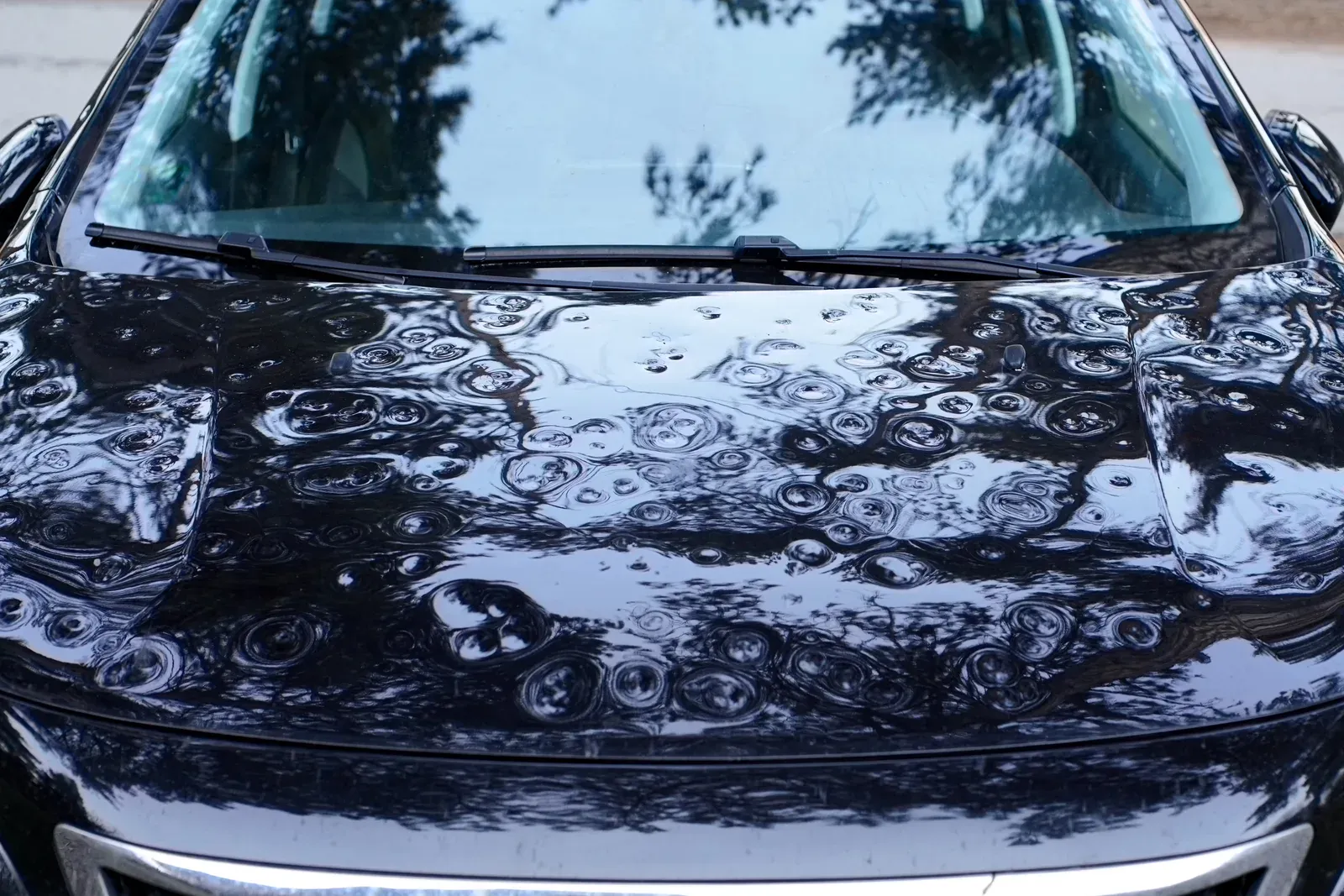
Streetsville keeps its cars outdoors, and hail knows it
The storms that matter here build on summer afternoons and cross Mississauga fast — a dark line over the Credit valley, ten loud minutes, and a neighbourhood full of dimpled hoods. Streetsville is more exposed than it looks. The GO lot holds hundreds of commuters’ cars in the open from morning to evening peak, with owners forty kilometres away when the sky turns. The village core parks on the street by design; there is no covered option on Queen South when a cell arrives during dinner. And in the subdivisions, garages long ago converted to storage leave the household’s cars sitting on the driveway through every storm of the season.
What hail leaves behind is deceptively orderly: dozens or hundreds of shallow, round dents across the horizontal panels — roof, hood, trunk lid, the top edges of the fenders — often with the paint unbroken. The temptation is to shrug it off, and for three dents that may be right. But a storm broad enough to pepper a roof is exactly what the comprehensive part of a policy contemplates, and any dent that did crack the paint is an opening Peel road salt will find within months. The honest first step is an assessment under proper light, where raking reflections show every strike a parking-lot glance misses — the same count an adjuster will want documented.
How hail repair is priced and done
Counting hail dents from photos is unreliable, so the process runs in two stages. Photos to (647) 594-3401 get you a preliminary read — enough to decide whether the damage is worth pursuing. The real estimate happens with the car under assessment lighting, panel by panel, because an accurate hail price is a count, not an impression. Shallow dents in accessible metal can often be worked back without disturbing the factory finish; strikes that creased an edge or cracked the paint need conventional repair and refinishing, blended so the panel reads as one surface. A roof or hood peppered past the point of economic repair gets replaced and refinished, and we argue for OEM panels where fit and corrosion protection justify them.
The insurance side is simpler than most people expect. Hail falls under comprehensive coverage, not collision — no other driver, no fault assigned under the Fault Determination Rules, just your comprehensive deductible against the written repair cost. That is the comparison we put in front of you before any claim is opened. If the claim proceeds, the owner handles it: the adjuster, the photo documentation of every panel, and the supplement if disassembly turns up strikes the first inspection could not see. Refinished panels carry the lifetime paint warranty; replaced panels carry the parts-and-installation warranty.
- Panel-by-panel count under assessment lighting, not a guess from photos
- Finish preserved where the metal allows; refinished and blended where it does not
- Comprehensive claim run from our office, deductible math shown first
- OEM panels argued for when replacement is the right call
After the storm: timing matters more than speed
A hailstorm creates a queue. Every affected car in western Mississauga starts hunting for repair at once, and insurance companies triage the surge. Being thirty kilometres from Streetsville turns out not to matter much in that scramble — the sequence that matters is documentation first, booking second. Photograph your car the day of the storm, in open shade if you can, and send the set to us. We put a written preliminary number on it, you make the claim decision with real information, and the car keeps being driven; hail damage is cosmetic in the short term and waits safely for its booking.
When the booking comes, the visit is one trip up Mississauga Road and the 401 to Keele, with the assessment, the adjuster’s inspection if one is needed, and the repair all happening here. If your coverage includes a rental, we time it to your drop-off. Hours are Monday to Saturday, 8 AM to 7 PM, Sundays by appointment — and after a big storm, the earlier your photos arrive, the earlier your slot lands. The owner answers the phone himself, and the person who counts your dents is the person who signs off on the finished panels.