How do I protect my car from hail in Ontario?
Quick answer
Only a roof truly protects a car from hail — a garage, a carport, an underground level. Everything else is damage limitation: severe-weather alerts on your phone so you get the warning, padded blankets or a purpose-built hail cover if you are caught outside, and comprehensive coverage, which pays for hail with nobody at fault and your comprehensive deductible as the cost.
- Drivable or not
- At fault or not
- Free written estimates
You are really managing warning time
Environment Canada’s severe thunderstorm warnings usually give GTA drivers enough lead to move a car a few blocks — and the warnings that name hail size are the ones that demand action. The window is minutes, though, so the decision about where the car goes has to exist before the sky turns green.
Make the alerts reach you: a weather app with severe-thunderstorm push notifications, and the wireless emergency alerts on your phone left switched on. Most GTA storm cells track in from the west and southwest, so a glance at radar tells you roughly how long you have.
Then pre-decide the destination. Know the nearest parking garage to your office and the nearest to home — downtown and North York alike are full of underground levels that make perfect hail shelters. Hesitating over where to go during the warning is how roofs get dimpled.
And if your garage at home currently stores everything except the car, clear it before storm season rather than during a warning. The most common hail claim we see started with a garage that had no room left in it.
What actually works, ranked honestly
The effective list is short, and the order is the whole message:
- A garage or underground parking level — the only complete protection there is
- A carport or gas-station canopy — very good, though wind can still drive hail in at the sides
- A purpose-made padded hail cover — a real reduction, if it is secured before the wind arrives
- Heavy moving blankets or duvets weighted at their edges — improvised, but padding is padding
- Floor mats laid over the roof, hood, and trunk — crude cover for the panels that take the worst of it
- Parking tight against the sheltered side of a building — useful against hail arriving at an angle
What fails, and what makes things worse
A thin fabric car cover offers no meaningful padding, and in storm wind it whips against the paint hard enough to leave its own marks. A plastic tarp is worse still — it turns into a sail and departs, sometimes taking the mirrors and wiper arms with it.
Skip the tree. Branches filter almost none of the hail, and the same cell that drops stones drops limbs; a branch across a roof is a far bigger repair than any field of dents.
Above all: never run outside to cover or move a car once hail is falling. Stones heavy enough to dent steel are heavy enough to put a person in the hospital. The roof is an insurance claim. You are not.
Caught driving when it starts? Aim for a gas-station canopy, a parking garage, or a safe, legal place to stop. Failing those, pull well off the road and angle the nose into the storm so the laminated windshield — the strongest glass on the car — takes the hits instead of the side windows, and stay inside until it passes.
Afterwards: find it, photograph it, get in line
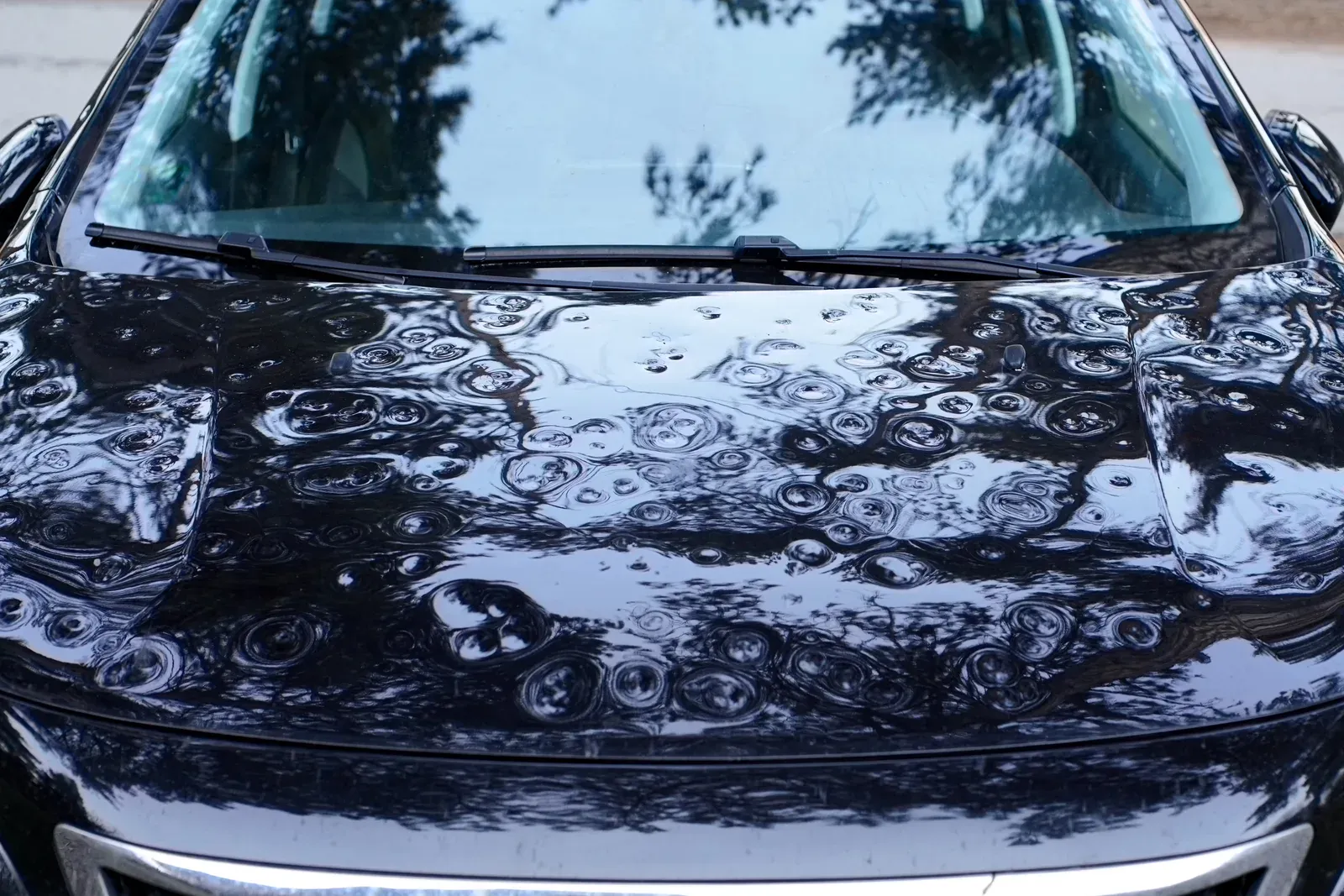
Hail dents hide well. Wait for soft, indirect light — or hold a flashlight nearly flat against the panel — so the shallow dimples throw shadows, and sight along the roof, hood, and trunk at a low angle rather than looking straight down at them.
Photograph everything with a coin or a key in frame for scale, starting with the horizontal panels, which always take the most impacts. Then work through glass, sunroof, mirror caps, and trim, and run your eye along the top surfaces of the arches.
Send those photos to a shop immediately — before the adjuster appointment, not after. When a serious cell crosses the GTA, every body shop from Etobicoke to Scarborough fills its calendar within days, and your place in line is worth more than anything else you control that week.
The panel-by-panel checklist:
- Roof, hood, and trunk lid — always inspect these first
- Fender tops and the shoulders of the quarter panels
- Windshield, rear glass, sunroof, and side windows for chips or cracks
- Mirror caps, roof rails, and the antenna
- Lamp lenses front and rear, checking for cracks
- Plastic trim and the top edges of both bumper covers
- Any dent where the paint cracked instead of just denting — those cannot wait
Comprehensive coverage is the real umbrella
Hail lands under the comprehensive section of an Ontario policy. No driver is at fault, so a hail claim generally does not carry the premium consequences an at-fault collision can; what you pay is your comprehensive deductible.
If your car sleeps outdoors year-round, carrying comprehensive coverage is your actual hail plan — and it is worth checking that deductible on your policy documents in the spring, calmly, rather than mid-claim.
Most hail damage comes out beautifully with paintless dent repair: each dimple massaged back from behind the panel, the factory finish never broken. For resale value, that makes hail one of the most completely recoverable kinds of damage a car can suffer.
GTA hail runs with thunderstorm season, late spring into early fall — which is exactly when the garage-versus-driveway habit matters most. Choosing the garage on summer nights costs nothing and outperforms every product you could buy.
One last practical note: do not pocket a hail settlement and skip the repair. Unrepaired hail can be deducted from the next hail claim on the same panels, and dealers punish hail-marked trade-ins hard. After major storms we work directly with the insurance catastrophe teams handling the surge.