When a summer cell tracks along the lake
Durham’s hail arrives the way most Southern Ontario hail does — out of a July or August thunderstorm line that builds inland and drags along the 401 corridor, dropping five minutes of ice on one band of the city and nothing two concessions away. Oshawa’s exposure is uneven in a way that matters: the mature streets of O’Neill and the downtown core keep some canopy over parked cars, while the newer subdivisions north of Taunton — Windfields, Kedron — are years away from tree cover, and their driveways hold two or three vehicles apiece in the open. One storm cell over north Oshawa can fill a shop’s book for a month.
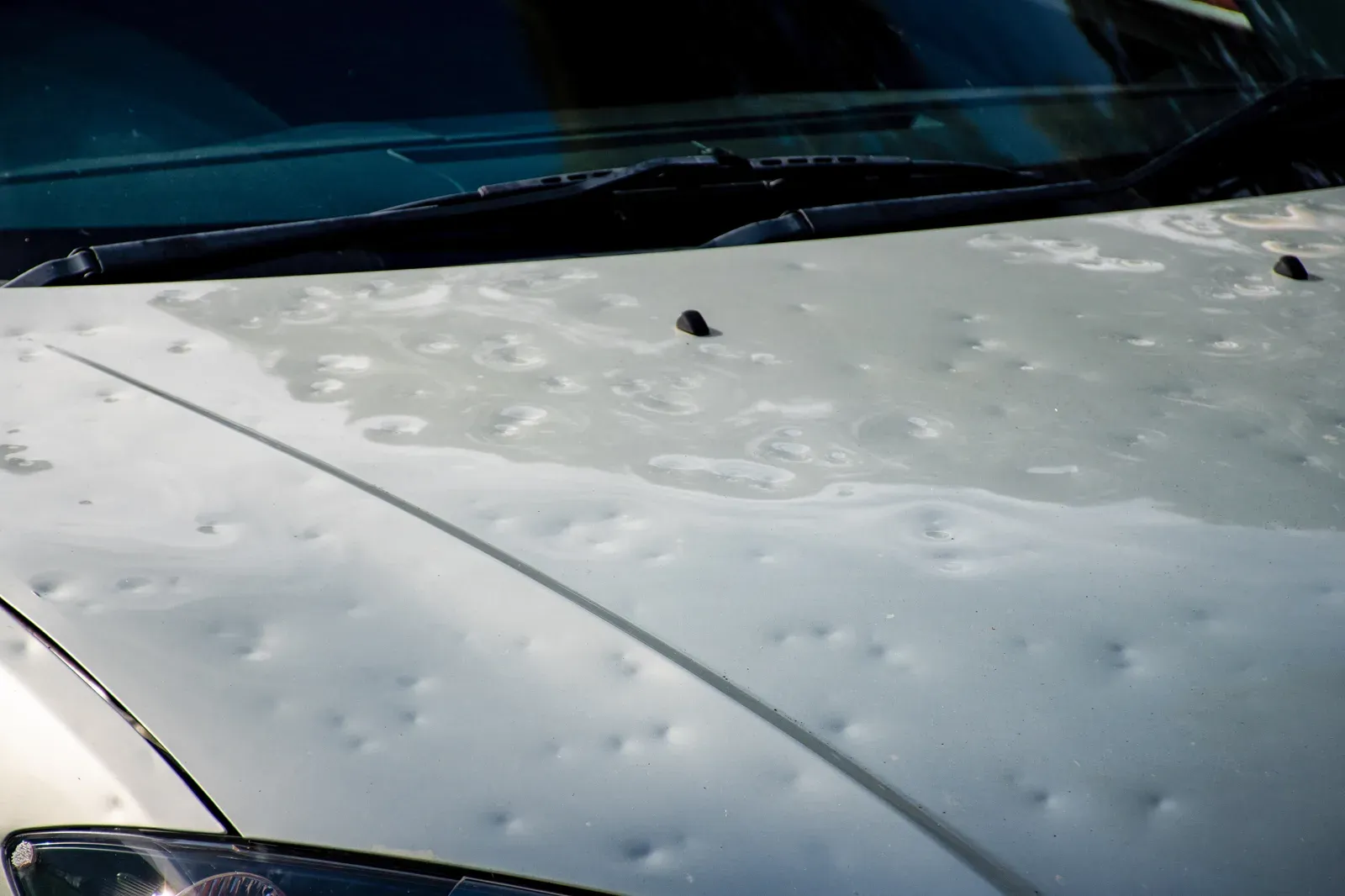
Hail damage also hides. Small strikes read clearly only under angled light, which is why a car can look fine in the driveway at noon and show forty dents under shop lamps. Roof rails, hood edges, and the top surfaces of the deck lid take the worst of it; trim, mouldings, and occasionally a windshield edge crack round out the list. The honest first step is not a repair — it is a count, done panel by panel under lighting designed to expose exactly this kind of damage.
Counted, documented, then repaired panel by panel
The inspection produces a map: every panel, every strike, photographed and logged. That map is the estimate’s backbone and the claim’s evidence, and it determines the method panel by panel — shallow strikes in sound paint can be worked from behind the panel where access allows, while deeper strikes that stretched metal or cracked paint need conventional body repair and refinish. A roof with dozens of hits is often better skinned or replaced than massaged; a hood with three shallow dents is not. The point of the count is that these calls get made from evidence, not from a walk-around guess.
Refinished panels are colour-matched to the vehicle as it stands and blended into their neighbours, and the refinish carries our lifetime warranty. One caution we give every hail customer: after a big storm, travelling “hail teams” appear in parking lots across Durham offering fast cash-price repairs. Some are competent; many leave overfilled panels and drilled access holes that rust. A hail repair is a body repair — it deserves the same documentation and warranty as a collision file, and it should survive the next owner’s inspection, not just the next week.
A comprehensive claim, without fault and without the runaround
Hail lands under the comprehensive section of your policy, with your comprehensive deductible — and because no driving was involved, there is no fault to assign under the Fault Determination Rules. Notify your insurance company promptly, photograph the car where it sat if you can, and expect appraisal capacity to be stretched right after a storm, because every insurance company in the region gets the same wave at once. That backlog is one of the quiet advantages of using a North York shop after a Durham storm: our intake is not buried under the same local surge.
Practically, it works like every Oshawa file we run: photos of each affected panel to (647) 594-3401, the claim opened with your insurance company, and the inspection appointment booked before the car makes the trip — 401 west to Keele, up to Sheppard, about 40 to 55 minutes outside the peaks. If the volume of damage justifies it, the rental through your coverage is arranged for your drop-off day. The owner walks the finished car with you at pickup, panel by panel, against the original map.
- Panel-by-panel strike map under angled shop lighting
- Repair method chosen per panel, replacement where honest
- Comprehensive claim opened and argued for you
- Walk-around against the damage map at pickup