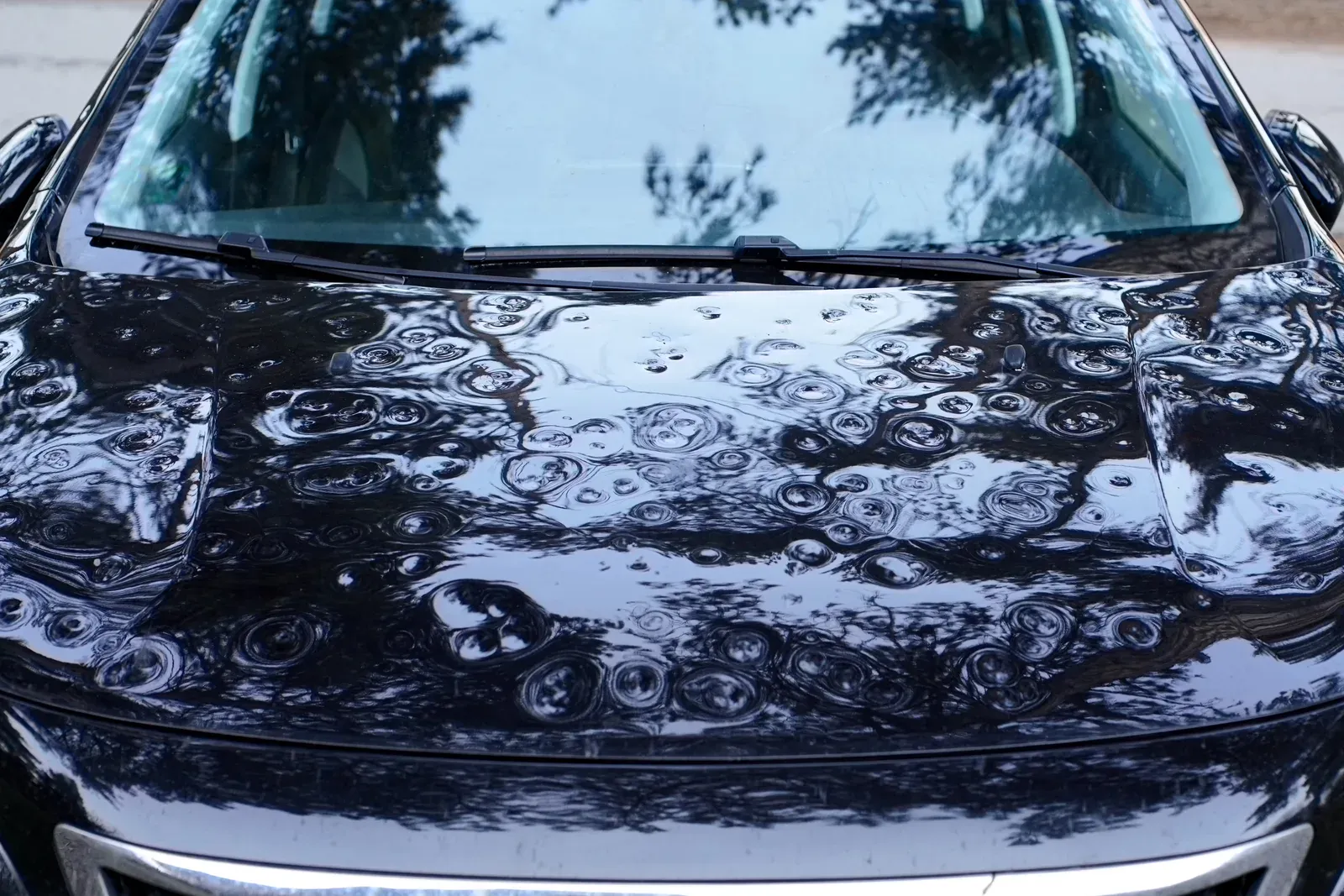
Ten minutes of weather, months of dents
Southern Ontario hail is a summer lottery. Thunderstorm cells build on humid July and August afternoons, ride over the escarpment, and drop hail on a band a few kilometres wide — one Mountain survey gets pounded while the lower city gets rain. The cars that lose are the ones with nowhere to hide, and Hamilton has plenty: the newer subdivisions toward Rymal and the east Mountain sleep their second car on the driveway, the lower city parks at the curb, and the contractor pickups and cargo vans that keep the city running sit outside by definition.
What a storm leaves behind is deceptively orderly: dozens of soft, round dents across the hood, roof, and decklid, often with paint intact, plus sharper hits on edges and creases where the paint does crack. Under a shop’s matte lighting, panels that looked mildly peppered in a driveway reveal their real count — which is why the honest first step is a proper assessment, not a guess from three steps away in the sun.
Scoped dent by dent, not panel by panel
Hail repair rewards precision in the scoping. We map every panel under directional light and separate the damage into two piles: shallow dents where the paint film survived, which can usually be worked back to shape without any refinishing, and strikes that cracked the paint or landed on a body line, which need conventional repair and a blended refinish. Aluminum hoods and roofs — common on newer trucks and SUVs — behave differently under a hail strike than steel and get scoped accordingly.
The distinction matters because it protects both the car and the claim. Panels that keep their factory paint keep their factory corrosion protection, and the refinishing budget concentrates where it is genuinely needed. On an older vehicle with heavy coverage across every horizontal panel, we will tell you honestly when the repair total is drifting toward the car’s value, because a surprise write-off three weeks in serves nobody.
- Panel-by-panel damage map under directional lighting
- Paint-intact dents worked back without unnecessary refinishing
- Broken-paint strikes repaired and blended conventionally
- Straight talk when the total approaches the vehicle’s value
The comprehensive claim, and why distance can beat the queue
Hail is a comprehensive claim, not a collision claim: your deductible applies, no fault attaches to you, and the process starts with prompt notice to your insurance company. The catch after a real storm is capacity — every affected shop between Stoney Creek and Ancaster fills with identical bookings within days, and quoted start dates slide into next season. That is when Hamilton drivers start calling us: 68 km away, outside the storm’s footprint, with a written photo estimate up front and a start date that holds.
The routine is the same one-trip design we use for every Hamilton job. Photos of each damaged panel come first — hood, roof, decklid, and the tops of the fenders — and the estimate and claim paperwork are handled before you drive anywhere. Drop the car, take the rental if your coverage provides one, and collect a finished vehicle after inspection. The phone is (647) 594-3401, staffed 8 AM to 7 PM Monday through Saturday.