Rare weather, exposed cars — a bad combination
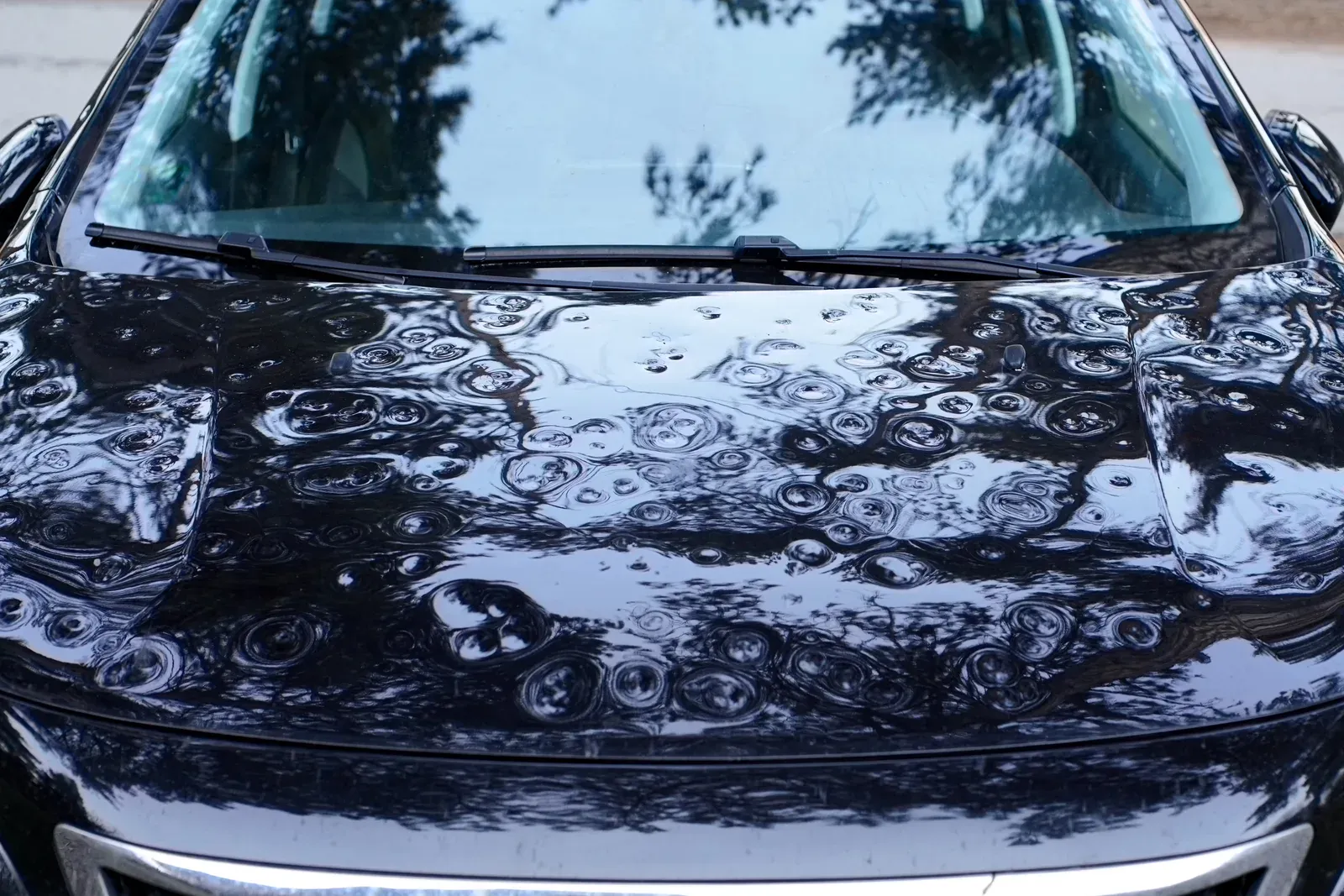
Let us be honest about the climate first: Toronto is not hail country the way the Prairies are. Most summers deliver a handful of thunderstorm cells capable of dropping hail, usually in June through August, and most of them miss. But when one tracks across the west end, High Park takes it worse than neighbourhoods with garages — the local housing stock long ago converted its garages to other uses, so the cars sit on High Park Ave, Indian Rd, and the permit streets with their hoods and roofs facing the sky. One five-minute cell can dent every second car on the block.
The park’s canopy is half a defence and half a trap. Cars under mature oaks catch less ice — and more of whatever the storm tears loose. After a violent cell we see both kinds of damage from the same street: peppered hoods and roofs on the exposed cars, and branch strikes on the sheltered ones. Both belong at a body shop, and both, usefully, fall under the same part of your insurance policy.
Counting dents is the job — repairing them is the second job
Hail assessment is a lighting exercise. Dozens of shallow, round dents across a roof, hood, and trunk lid hide easily in overcast daylight and reveal themselves under angled shop light, so the first thing we do is examine the car panel by panel under conditions that show everything. The count and depth per panel drive every decision after: shallow, scattered dents in accessible metal can be worked back to shape; a roof or hood carrying dense damage, stretched dimples, or cracked paint usually argues for a replacement skin, because massaging two hundred dents costs more than the panel and never looks quite right.
Where refinishing enters — worked panels with disturbed paint or replaced skins — the colour is matched to your car’s actual weathered finish and blended into the surrounding panels, then covered by the lifetime paint warranty. Aluminium hoods, common on newer cars, behave differently from steel under hail and get judged accordingly. You receive the panel-by-panel breakdown in writing, which is the same document your insurance company’s adjuster works from — one map, no surprises.
- Every panel examined under angled light, dents mapped and counted
- Repair versus replacement decided per panel, not per car
- Steel and aluminium judged by their different behaviour under impact
- Refinished and replaced panels blended and warranted for life
The claim is comprehensive, and the timing is yours
Hail is weather, so no Fault Determination Rules apply — the damage falls under the comprehensive portion of your policy with your normal deductible, and claiming it does not make you an at-fault driver. Whether to claim is arithmetic: a lightly peppered trunk lid may price near your deductible, while a hood, roof, and trunk together will clear it comfortably. Send photos to (647) 594-3401 in good light and we will give you a written number to weigh against your deductible before you call anyone.
One practical note from experience: when a hail cell hits the west end, every affected owner calls their insurance company the same week, and the adjuster queue stretches. Photograph your car the day of the storm — date-stamped pictures anchor the claim — then book with us while the queue clears; hail damage is stable and does not worsen while properly documented, unless paint has cracked, which we will flag. The owner handles the adjuster from there, and doors are open 8 AM to 7 PM Monday to Saturday, Sundays by appointment.