Ten loud minutes over the Don Valley
Toronto’s hail arrives inside summer thunderstorm cells — a dark hour in June or July, a sudden drumroll on the roofs along Cosburn, and then sunshine as if nothing happened. Most storms drop pea-sized ice that cars shrug off. The occasional cell drops stones the size of a toonie, and in a borough where the driveways are narrow, the garages are full of everything except cars, and half the vehicles sleep at the curb, one bad cell can bruise every third car on the block in the time it takes to find your keys.
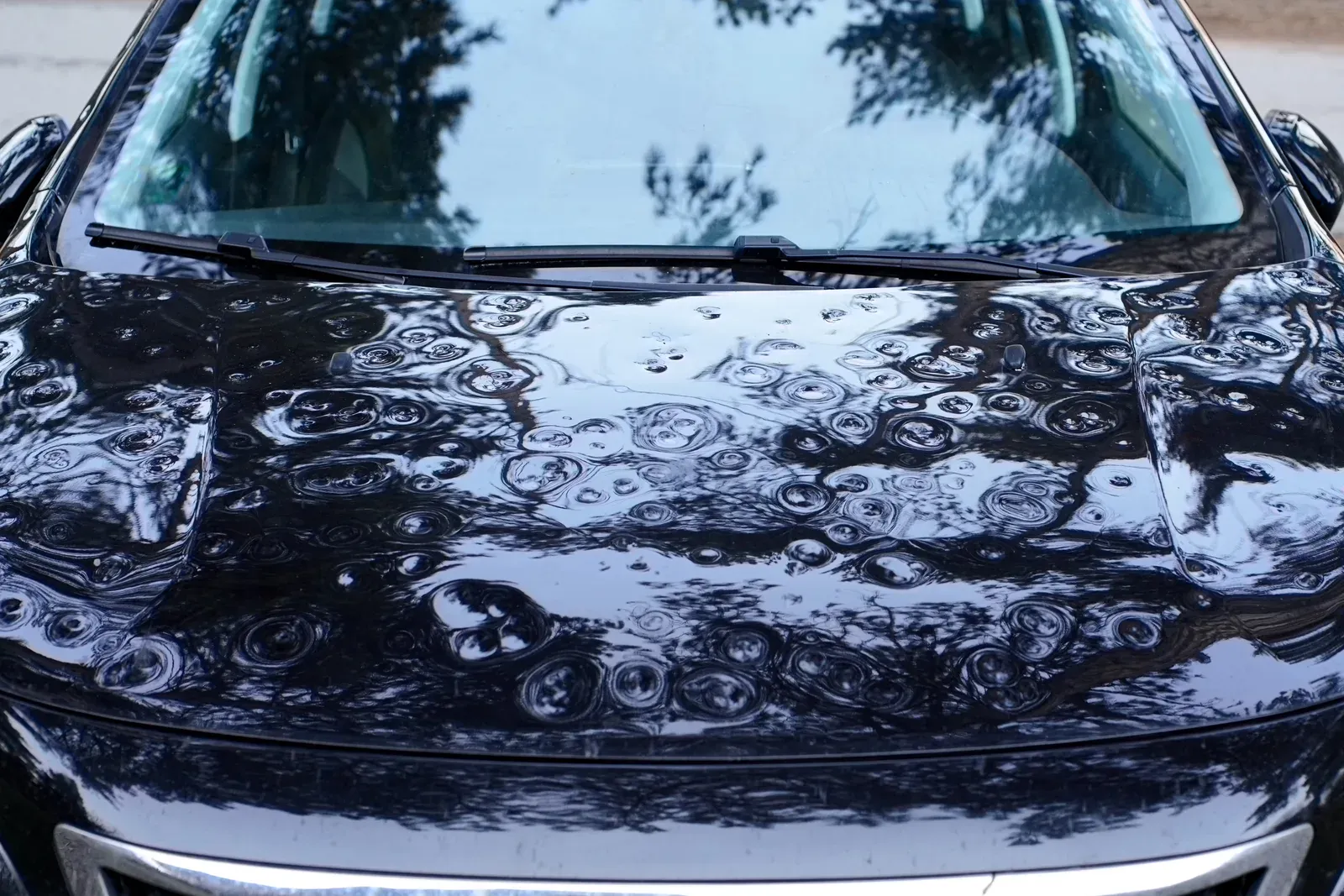
The damage hides at first. Hail dents are shallow, round, and nearly invisible under flat afternoon light — then the sun drops low over Stan Wadlow Park and suddenly the hood looks like hammered pewter. Check the car the way an estimator does: crouch so the light rakes across the hood, roof, and trunk lid at a shallow angle, and photograph what you see. Those photos, taken while the storm date is fresh and documented, are the foundation of a clean claim.
The claim runs through comprehensive — and the clock matters
Hail is a comprehensive claim in Ontario, not a collision claim: no other driver, no fault to determine, your own deductible applied. If your policy carries comprehensive coverage, the damage is covered whether the car was parked on Sammon or moving on O’Connor when the ice fell. Report it promptly — the standard policy expects notice within days — and know that glass broken by hail falls under the same comprehensive coverage with your normal deductible; Ontario has no special zero-deductible glass rule.
The practical reason to move fast is arithmetic: a hail cell damages hundreds of cars in the same twenty minutes, and every one of them starts calling body shops the same week. Photograph the panels the morning after, send the set to us, and a written estimate comes back before the queue forms. We open the claim, meet the adjuster’s questions with panel-by-panel documentation, and if the car is older and the damage broad, we tell you honestly when the numbers are drifting toward a total-loss conversation instead of letting the file discover it later.
Repairing a hundred small dents properly
Hail repair is triage, panel by panel. Shallow dents in accessible steel can be worked back to shape from behind and finished clean. Panels where the dents are deep, tightly clustered, or sitting on aluminum — most hoods now — sometimes cost less to replace than to massage, and we price both routes rather than defaulting to the expensive one. Cracked paint changes the answer too, because a dent that broke the finish will rust through an East York winter no matter how well it was shaped.
Whatever mix of repair and replacement the car needs, the refinish follows the same standard as our collision work: colour mixed to code, proven against your actual panels, blended so no boundary shows, sprayed in the booth and backed by a lifetime warranty in writing. Timelines get quoted honestly up front — a roof-and-hood job is not a two-day errand — and drop-offs work Monday to Saturday, 8 AM to 7 PM, with Sundays by appointment for households that cannot spare the car midweek.