Where Waterdown hits get structural
Structure bends when speed or leverage is involved, and Waterdown supplies both. Highway 6 between the 403 and Clappison’s Corners runs at true highway pace, so a rear-end or a lane-change strike there arrives with enough energy to move rails, not just plastic. The plaza-driveway broadsides at the Corners are worse per kilometre per hour: a hit into the side of a car loads the rocker, the B-pillar, and the floor in ways a bumper never sees. And the escarpment descents add leverage — a slide on Snake Road or Mill Street South that ends against a guardrail or rock face concentrates the impact into one corner, which is precisely how a strut tower or an apron ends up out of position while the body panels look merely scraped.
Country speed finishes the list. A deer strike on Centre Road at dusk, or a soft-shoulder drop on the concessions north of the village, can push the front structure without leaving obvious evidence beyond a folded fender. The dangerous version of any of these is the one that gets dismissed as cosmetic — because a rail that sits four millimetres off no longer crushes the way its designers intended it to.
Measured before, pulled in steps, measured after
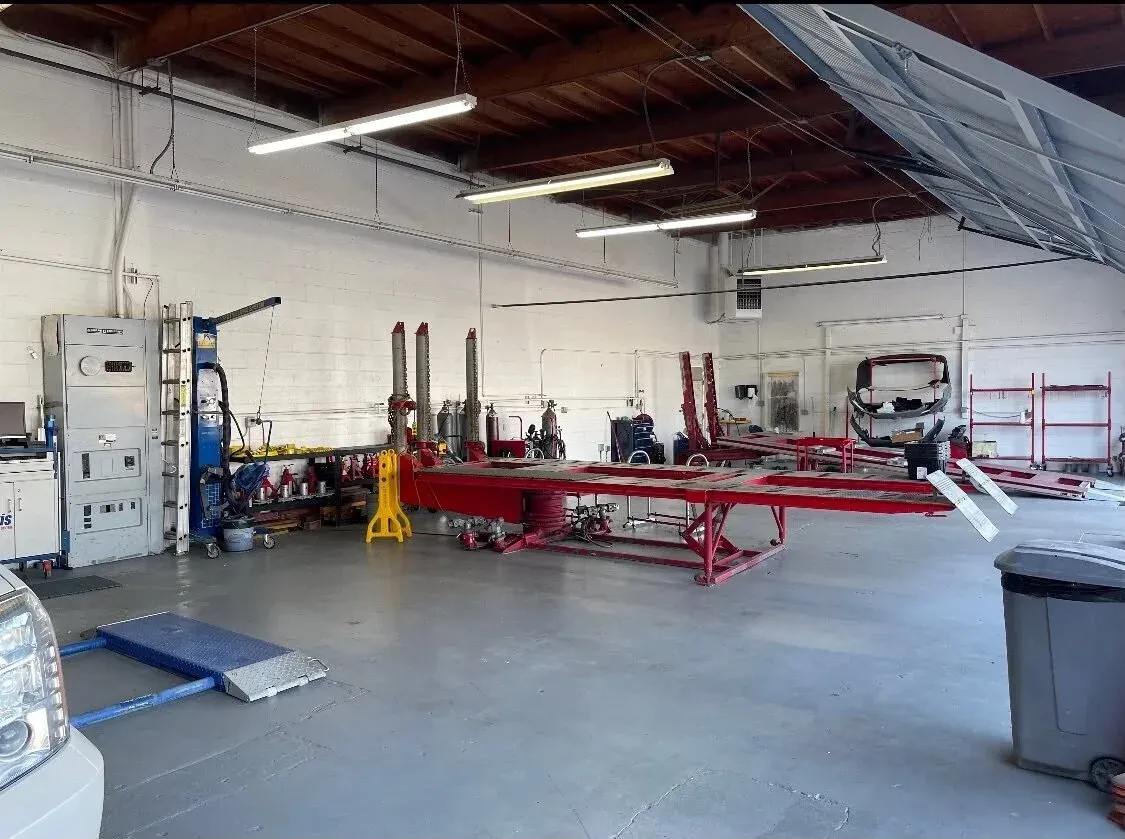
Frame work here starts with numbers, not opinions. The vehicle goes on the measuring system and its structural points are compared against the manufacturer’s data — that comparison decides whether you have a structural repair at all, and it goes into the file your insurance company sees. Modern unibody cars are engineered to sacrifice specific zones in a crash, so the repair has to respect the same design: pulls happen on the frame machine in controlled, incremental steps, checked between each pull, until the points sit back inside factory tolerance. Where the manufacturer says a rail section must be replaced rather than straightened, we replace it, with OEM parts requested for structural components.
Everything is recorded. The before measurements, the after measurements, and the photographs in between belong to the repair file, which serves you twice — your insurance company gets evidence rather than assertions when the supplement is argued, and you get documentation that the car was returned to specification, not made to look straight. Suspension geometry gets checked after any structural pull, because a frame that measures true and an alignment that fights the steering wheel are two different repairs, and the second one is how escarpment hills feel unsafe again.
- Factory-data measurement before any repair decision
- Controlled incremental pulls, checked between steps
- OEM parts requested for structural replacement sections
- Before-and-after measurements documented in the claim file
Structural files run on flatbeds and phone calls
A car with suspected structural damage should not do 60 kilometres of highway, and it does not have to. Ontario’s towing rules put the destination in your hands: name Collision Auto Center at the scene — off Keele just south of Sheppard in North York — and the flatbed brings the car while you go home. If the vehicle is already sitting in a tow yard near Hamilton or Burlington, call (647) 594-3401 and we coordinate the transfer and fold it into the claim where coverage allows. Under DCPD, not-at-fault damage is paid by your own insurance company, and no adjuster can route the car to a preferred shop over your objection.
We are also straight about the hard ending. On a heavily damaged structure the insurance company weighs repair cost plus salvage value against the car’s actual cash value, and there is no fixed Ontario percentage that decides it — some cars that look terrible repair economically, and some that look fine do not. You will hear our honest read after measurement, not a sales pitch. If the car repairs, it leaves measured, aligned, inspected, and road-tested; if it does not, you will know why, with the numbers in front of you. Hours are Monday to Saturday, 8 AM to 7 PM, Sundays by appointment.