The crash you drove away from isn’t always over
A modern unibody is built to sacrifice itself in an organized way, and it is good enough at the job to fool you. Plenty of cars take a hit at the Hanlon’s lights, shed some plastic, and drive home to the south end feeling roughly normal. The tell comes later: a steering wheel that sits off-centre on the straight run down Gordon, a front tire wearing its inside shoulder, doors that need a firmer push than they used to, a gap that widens toward one headlight. Those are structural symptoms, and no alignment appointment papers over them for long.
Guelph generates the speed for this kind of damage in known places: the Hanlon, where expressway pace meets hard red lights; the 401 interchange and the open highway east of it; Highway 7 toward Rockwood and the county two-lanes, with their ditches and deer; and the bridge decks over the Speed and Eramosa that glaze before anything else in town. Any hit from those places earns a measurement here, whether or not the car looks dramatic.
Numbers before force, and numbers after
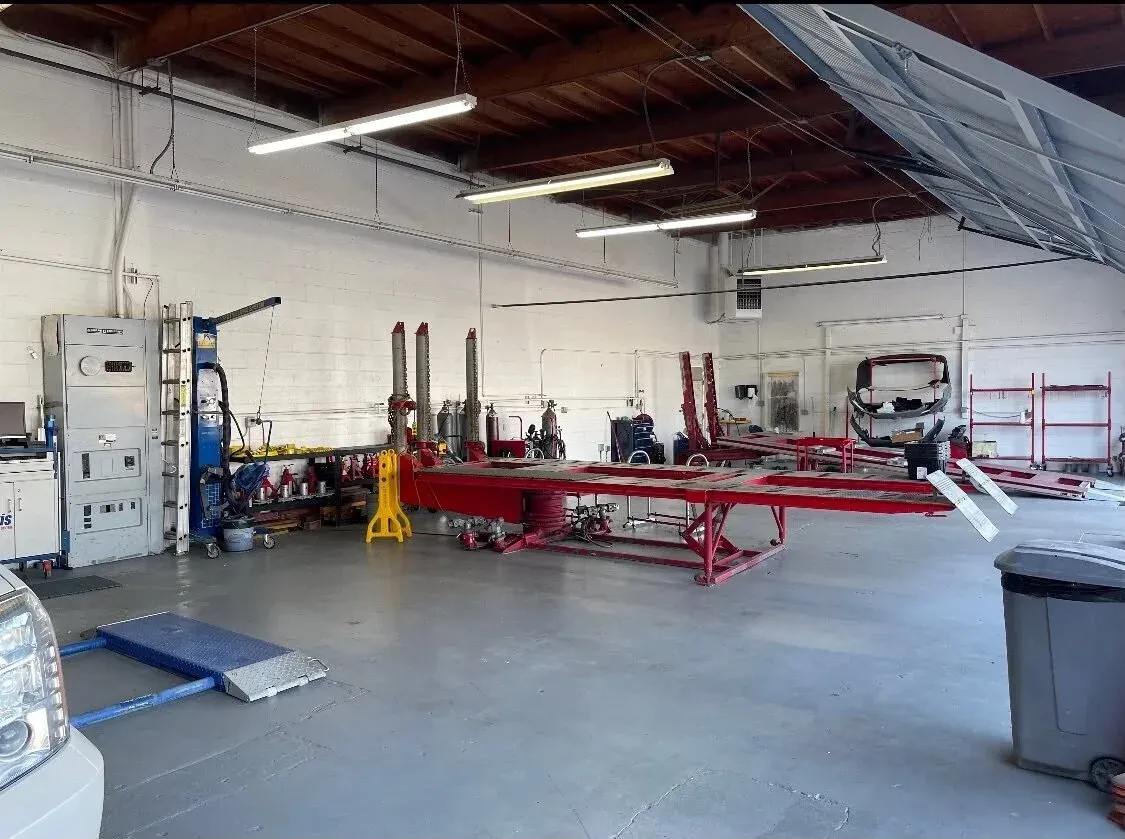
Structural repair at this shop begins with a survey, not a pull. The car is anchored to the bench, its reference points are read electronically, and every reading is laid against the manufacturer’s specifications — that comparison is the map of what moved and how far. The pulls that follow are incremental and sequenced to retrace the impact backwards, coaxing the structure to its points rather than hauling it past them.
Some components are not allowed back. Where the manufacturer designates a part as replace-only after deformation, it gets sectioned or swapped per the procedure, with OEM structural parts requested. When the readings sit inside tolerance, we print the before-and-after and file both with your claim — proof that travels with the car. Suspension and alignment close the job, because straight rails over bent arms still steer crooked, and the first road test this work faces is 75 km of highway.
- Electronic survey against factory specifications before any pull
- Sequenced pulls that retrace the impact in reverse
- Replace-only components swapped, never straightened
- Before-and-after printouts filed with the claim
The write-off conversation, had early
Structural files are where repair math gets tight, and Ontario sets no fixed percentage — the insurance company weighs the car’s actual cash value against repair cost plus salvage, case by case. Our job is to make that decision fast and honest: teardown, measurement, photos, and a documented report to the adjuster before you have spent weeks waiting on a maybe. If the file leans toward a total loss, you hear it from us in plain words while your options are still open.
When repair wins, the distance stays our problem. The flatbed collects the car from a Guelph tow yard or your street — Ontario’s towing rules put the destination in your hands — DCPD covers the not-at-fault share through your own insurance company, the rental through your coverage keeps the week intact, and progress arrives by phone from the person doing the work. (647) 594-3401; Monday to Saturday, 8 AM to 7 PM, Sundays by appointment.