The hits that bend structure in the valley
Structural damage out of Dundas has three usual authors. The first is the deer population around Cootes Paradise — a strike on Cootes Drive at signed speed puts hundreds of kilograms into the front structure, and even when the bumper and hood take the visible damage, the rails and radiator support behind them often moved. The second is the escarpment in winter: a slide on Sydenham Road or York Road that ends against a curb drives force up through the wheel into the suspension mounting points, bending what no camera can see. The third is the 403, where lane-change hits and rear-end stacks carry highway energy into unibody cars built to crumple in engineered zones.
The common thread is invisibility. A modern unibody is designed to absorb a collision by deforming, which means a car can look repaired-around and still carry rails a few millimetres out of position. Millimetres matter: they decide whether doors seal, whether tires wear evenly, whether airbags and crumple zones behave as designed in the next collision. That is why “it drives fine” is not evidence — measurement is.
Measured, pulled, measured again
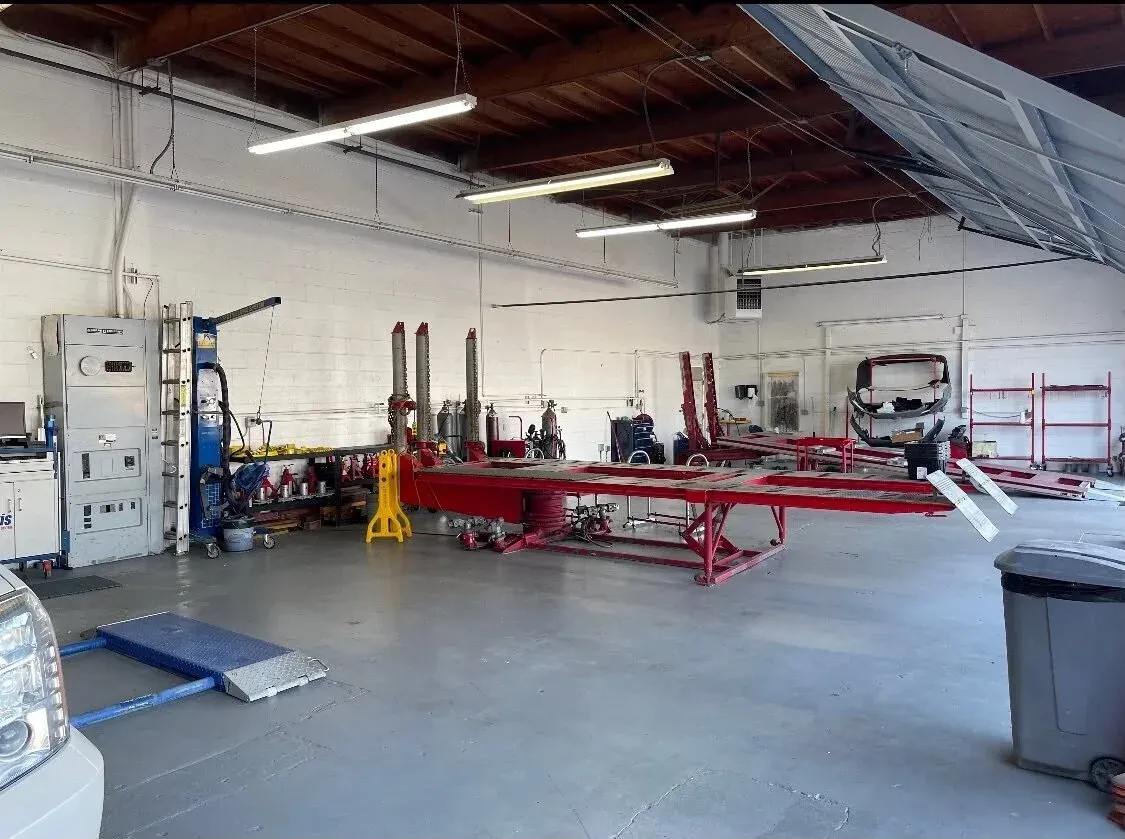
Every suspected structural file here starts on the measuring system, where dozens of factory reference points on your specific vehicle are checked against the manufacturer’s data. The result is a printed map of what moved and by how much — not an opinion, a document. That document goes to your insurance company with the estimate, which is how a structural supplement gets approved once instead of argued three times while your rental coverage drains.
The pull itself is controlled and incremental. The car is anchored, force is applied in the direction the factory data dictates, and the measurements are retaken between steps until the structure sits within specification. Where the metal has stretched or kinked beyond what a pull can honestly recover, the section is replaced following the manufacturer’s procedures, with OEM parts requested for structural components. Only when the numbers are right does the car move on to panels and paint — and the final printout stays in your file, useful the day you sell the car and a buyer asks what “accident repaired” actually meant.
- Electronic measurement against factory data before any work is quoted
- Documented pulls with measurements recorded between steps
- Sectioning and replacement per manufacturer procedures where pulling is not honest
- Final printout kept in your file as proof of a straight car
Borderline cars get a straight answer
Structural repairs are where totals happen, and Ontario has no magic percentage: your insurance company weighs the vehicle’s actual cash value against repair cost plus salvage value and decides from there. Our job is to make sure that decision rests on accurate numbers — a real teardown and real measurements, not a photo guess that flips from “repairable” to “total” three weeks in. When a Dundas car is genuinely borderline, we say so early, because a family 75 kilometres away should not burn two trips and a rental cycle on a car the numbers were always going to condemn.
Logistics run the way all our valley files do. A car with structural damage should not be driven down the 403, so it comes in on a flatbed — you name the destination under Ontario’s towing rules, and we coordinate from wherever the car sits, including a Hamilton-area storage yard. The owner handles the adjuster and the supplement from our office, and the rental through your coverage is arranged around the tow rather than around your calendar. Call (647) 594-3401 with photos and the claim number, and the file is moving before the flatbed is.