When the damage goes past the panels
Almost every car on a North York street is unibody: the “frame” is the welded steel structure of the body itself, engineered to crumple in specific zones so the cabin does not. That design saves lives, and it also means a hit hard enough to trigger it has moved structure, not just skin. The collisions that do this around here are highway-speed physics — a chain rear-end on the 401 collectors, a corner caught during a lane change at the Allen transfer, a t-bone at a plaza entrance on Wilson where someone gambled on a left turn. If the gaps around your hood changed, a door now catches, or the car tracks slightly sideways down Keele, structure has moved.
The dangerous version of this damage is the invisible one. A rail pushed twelve millimetres out of position can hide behind a bumper cover that a body shop without measuring equipment would simply replace and repaint. The car looks fixed. But the crumple zones are pre-loaded wrong for the next impact, the suspension geometry is fighting itself, and on modern cars the radar and camera systems are aimed from mounting points that are no longer where the manufacturer put them. Structural repair is the part of collision work where “close enough” is not a standard.
Measured, pulled, measured again — and documented
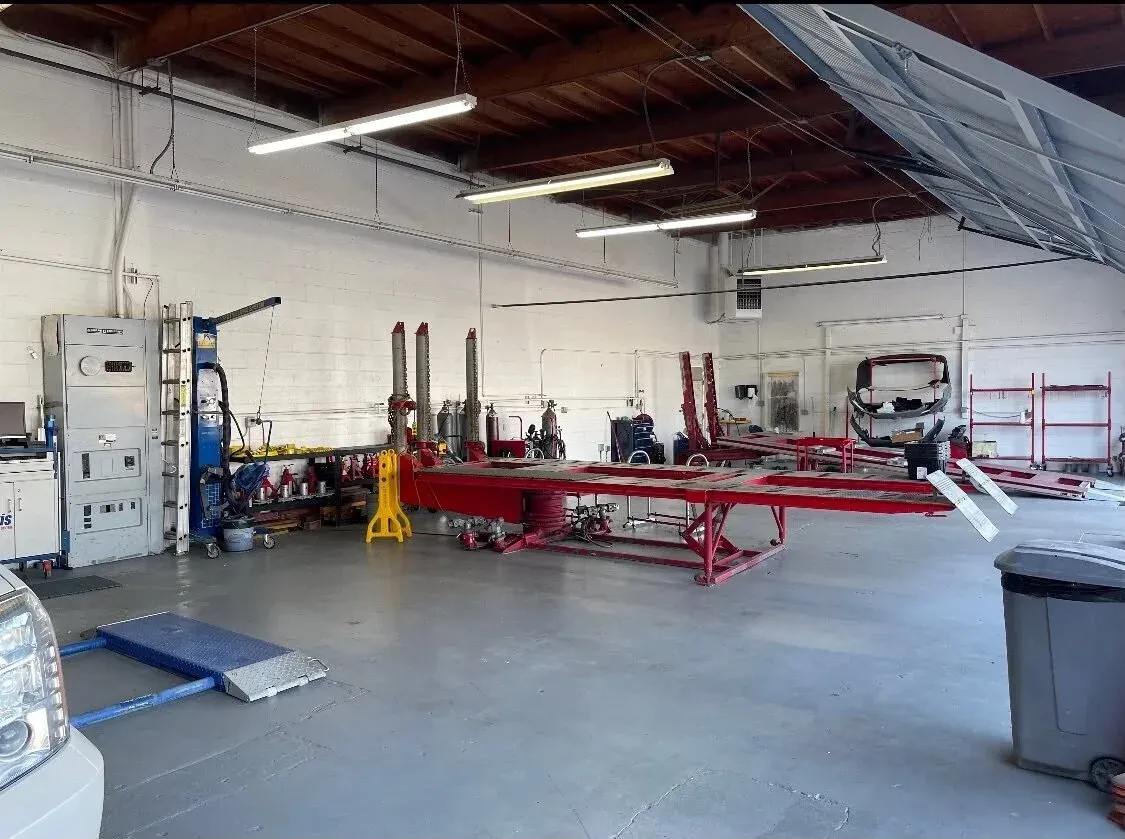
The bench does not deal in impressions. The vehicle is anchored, laser targets go on the factory reference points, and the readout says exactly which points sit where, compared against the manufacturer’s specification for that body. The pull is planned from those numbers and made in controlled stages — steel that was bent in one violent instant has to be persuaded back gradually, or it work-hardens and tears. After every stage the structure is re-measured, and the finished repair is documented with before-and-after data rather than a shrug and a fresh coat of paint.
That documentation works for you twice. It goes to your insurance company as evidence of what the repair actually required, which is how supplements get approved without a fight. And it stays with the job as proof the structure was returned to specification — which matters when the car is eventually sold, because an Ontario buyer running a used-vehicle history will see the claim, and the difference between “accident car” and “properly repaired car” is the paper trail. Panels, refinishing, and alignment come after the structure is right, never before.
Tow-ins, total-loss talk, and what happens first
A car with structural damage generally should not be driven, so this service usually starts with a phone call rather than a walk-in. Call (647) 594-3401 from the scene, the Collision Reporting Centre, or your driveway, and we coordinate the tow — Ontario’s towing rules put the destination in your hands, and “off Keele just south of Sheppard” is all the driver needs. Remember the reporting threshold while you are at it: injuries or damage that looks to exceed $5,000 means the collision must be reported, and structural hits are usually well past that line.
Sometimes the honest answer is that the car should not be repaired. Ontario has no fixed total-loss percentage; the insurance company weighs the vehicle’s actual cash value against repair cost plus salvage, and a bench-heavy repair on an older car can tip that scale. We tell you which side of the line your car is likely on before anyone is emotionally invested in the repair, and if it proceeds, one person — the owner — carries the file from measurement to road test.