Highway-speed neighbours, structural-grade hits
Living beside the 401’s widest section means Downsview’s worst collisions happen at real speed. A hit hard enough to fire the airbags on the collectors, a chain rear-end where the express suddenly compresses, a ramp crash at Keele — these reach past bumpers into the structure that holds the car square. The Allen contributes too: it dead-ends into Sheppard at the neighbourhood’s eastern edge, and the rush-hour crawl on its last kilometre produces pile-in rear-ends with more energy than their speed suggests. So can humbler incidents — a wheel dropped into a spring pothole on Wilson at 50 km/h, or a curb met sideways on black ice, can shift suspension mounting points without leaving much visible drama.
Structural damage rarely announces itself. The signals are quieter — doors that want a shove before they latch, steering that reads a few degrees off after an alignment, gaps between panels that are wider on one side, tires wearing unevenly weeks later. If any of that appeared after an impact, the car needs measuring, not guessing.
Measurement is the whole discipline
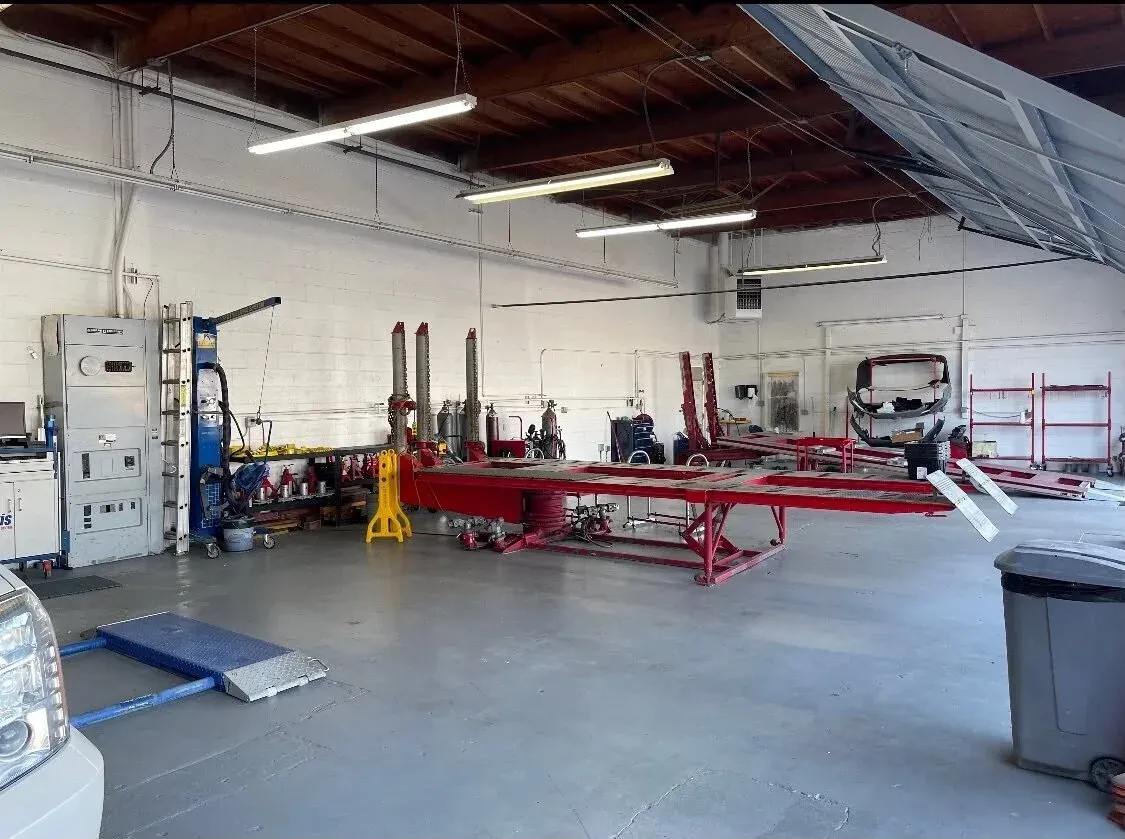
Almost every modern vehicle carries its strength in the body shell itself — unibody construction, engineered with crush zones meant to fold in a specific way. Straightening it is not persuasion with a chain — it is measurement. Control points get checked against the manufacturer’s specification, the vehicle is anchored, and the structure comes back in small monitored pulls, with the numbers verified at each step. Before and after, the readings are recorded and become part of your repair file.
That documentation matters beyond the repair itself. It goes to your insurance company as proof the structure is back within specification, it supports the claim if supplements are needed, and it answers the question a future buyer or safety inspection might raise. A repair you can prove is worth more than a repair you can only describe.
- Control points measured against factory specification
- Anchored, controlled pulls — never brute force
- Readings recorded before and after, kept in your file
- Suspension geometry checked and road-tested before return
Straight talk when the structure is involved
A structural repair is where honesty earns its keep, because sometimes the honest conclusion is that repair is the wrong investment. No statute in Ontario fixes a write-off percentage; what the insurance company weighs is the car’s cash value on one side and the repair bill plus its salvage return on the other. When teardown and measuring show the numbers heading that way, we tell you early — before your rental days drain away on a vehicle that was headed for a settlement all along.
When repair is the right call, the owner manages the file with your insurance company from our side: the claim, the adjuster conversations, the supplements as hidden damage surfaces. Cars come to us from the 401 by tow — you choose the destination under Ontario’s towing rules — and from driveways across Oakdale and the park blocks under their own power. Either way, the person who measured your car is the person who answers the phone about it.