It doesn’t take a highway crash to bend structure
The hits that reach a car’s structure around Lansing come from two speeds. The obvious ones happen on the 401 ramps at Yonge, where a queue collapses at 60 km/h and the crush zones do exactly what they were designed to do. The sneaky ones happen at Sheppard’s cross streets — Senlac, Easton, the Beecroft lights — where a t-bone at half that speed loads a b-pillar or pushes a front rail sideways. Modern unibody cars are engineered to absorb energy by deforming, which means structure can move behind panels that still look repairable.
The tell-tale signs show up later: doors that need a lift to latch, a steering wheel that sits off-centre after an alignment, tires wearing on one shoulder, panel gaps that changed width. If any of that appeared after a collision, the question isn’t whether the car looks fine. It is whether the measuring points are where the factory put them.
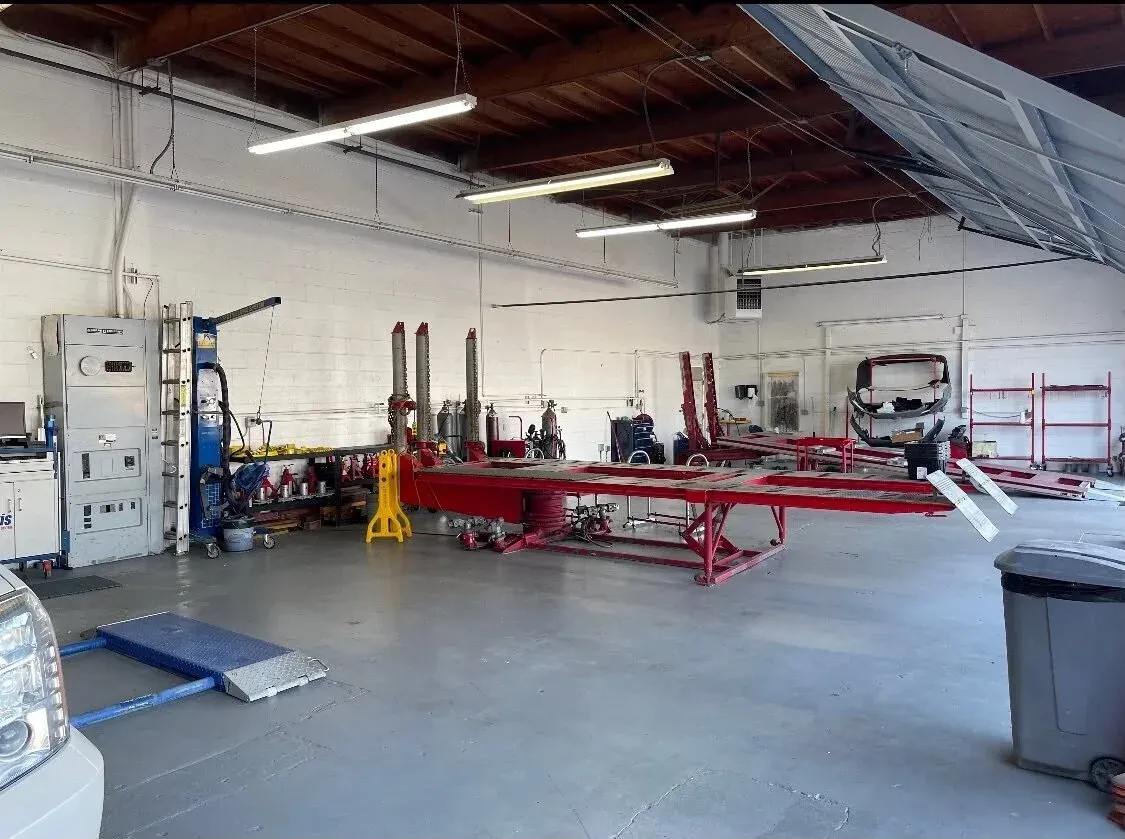
Measured, pulled, and measured again
Structural repair here is a numbers exercise before it is anything else. The vehicle goes on the bench, reference points are measured against the manufacturer’s specification, and the printout tells us exactly what moved and by how many millimetres. The pull happens in controlled increments — steel and high-strength alloys have limits on how they can be persuaded back — and the same points are measured again afterward, so the repair is documented on paper rather than declared by eye.
That documentation matters twice. It is what lets suspension geometry, panel fit, and safety systems sit where they were engineered to sit. And it is what goes to your insurance company as evidence of what the repair actually involved — useful now for the claim, and useful later if a future buyer or appraiser asks what was done. Refinishing only starts once the structure is signed off.
- Reference points measured against factory specification before any pull
- Controlled, incremental straightening — never brute force on modern alloys
- Post-pull measurements recorded and shared with your insurance company
- Suspension alignment and panel fit verified before refinish
When straightening is the wrong answer, we say so
Not every bent car should be fixed. Ontario has no fixed percentage that makes a car a write-off; the insurance company weighs the actual cash value against repair cost plus salvage, case by case. When the measurements tell us a repair would be fighting the economics — or worse, fighting the metallurgy, since some high-strength structural parts must be replaced rather than pulled — you hear that from us plainly, before anyone burns weeks on a repair that shouldn’t happen.
When repair is the right answer, we run the claim from our side: teardown documentation, supplements, adjuster conversations, all handled by the shop. The tow from Lansing is short and you choose its destination — Ontario’s towing rules put that in the driver’s hands, so name us at the scene and the car comes straight to Keele instead of a storage yard that bills by the day. Questions are welcome Monday to Saturday, 8 AM to 7 PM.