The hits around here that reach structure
Cosmetic damage happens at parking speed; structural damage needs energy, and York Mills has two reliable sources of it. The first is the 401 — a 60 km/h difference between an express lane and a stopped collector queue near the Yonge ramps is more than enough to drive a bumper beam into the rail behind it or fold a rear body panel into the trunk floor. The second is the intersection hit: a left turn misjudged at Bayview and York Mills lands square on a front corner, exactly where the rail, apron, and suspension mounting points live.
The valley adds a third, quieter source. A car sliding down an iced Hoggs Hollow grade does not need speed to bend structure — it needs something that does not move, and the neighbourhood’s stone piers and mature trees qualify. A 15 km/h slide into a solid object concentrates force in a way a highway glance does not. The deceptive part is that any of these cars can still drive, doors still close, and only the measurements say whether the structure went with the panel.
What straightening means on a modern unibody
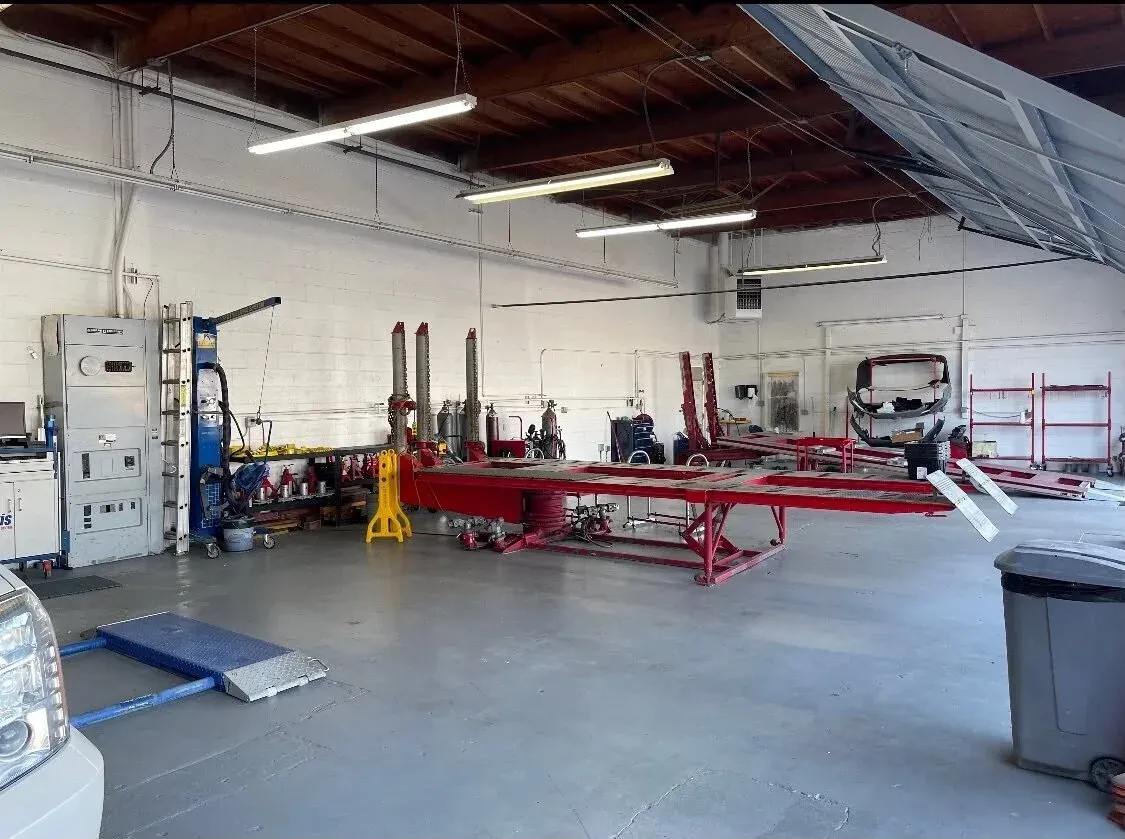
Almost nothing in a York Mills driveway has a separate frame; the body is the structure, engineered to crumple in specific zones and hold rigid everywhere else. Straightening starts with measuring, not pulling: the car goes on the bench, dozens of reference points are compared against the manufacturer’s dimensions, and the result is a map of exactly what moved and by how much. Then the metal is pulled back in controlled stages, re-measured at each step, so the fix is arithmetic rather than eyeball.
Measurement also decides what cannot be pulled. Modern structures mix ordinary steel with high-strength alloys that lose their engineered properties if heated or straightened, and the manufacturer’s repair procedures dictate which sections must be replaced instead — so a rail section is cut and a new one installed where the specification requires it, not where it would be convenient. The before-and-after measurements go into the file: your documentation that the geometry the safety systems rely on is back where the factory put it. Wheel alignment and any sensor calibration follow, because straight structure with crooked aim is half a repair.
Structural claims, and the total-loss question
Structural damage is where claims get serious, so the paperwork has to be as straight as the car. We open the claim with your insurance company, put the measurement data behind the estimate, and file supplements with photographs when teardown shows the impact travelled further than the first inspection suggested. Under DCPD, damage you did not cause is paid by your own insurance company; a slide into a fixed object runs through your collision coverage instead. Either way the shop choice is yours, whatever list you are read over the phone.
Sometimes the honest answer is that straightening is not the right call. Ontario sets no fixed percentage for a total loss — the insurance company weighs the repair cost plus salvage value against the car’s actual cash value — and on an older vehicle a bent structure can tip that balance. We tell you which side of the line the measurements put you on before anyone commits, because a customer who writes off the right car trusts us with the next one. The owner walks you through it himself, and (647) 594-3401 reaches him directly.