Highway-speed hits are Grimsby’s structural cases
Frame damage needs energy, and Grimsby’s energy source runs right through town. The QEW between Fifty Road and Casablanca mixes 100 km/h through-traffic with drivers braking for their exit, and the delta between those two speeds is what folds rear rails and shoves radiator supports backward. A chain-reaction stop in lake fog does the same work at both ends of a car at once. These are the collisions where the body looks bad and the important damage is invisible — a unibody rail that moved eight millimetres will never show in a photograph.
The escarpment writes the other half of the list. Mountain Street and the Park Road grade turn glare ice into guardrail contact, and a guardrail strike loads the front corner in exactly the way that tweaks strut towers and aprons. Deer on Ridge Road at country speed can push a front clip far enough to matter too. The rule for all of it is the same: any hit hard enough to deploy an airbag, buckle a hood, or change how the car tracks down the highway has earned a structural measurement, whatever the bumper cover claims.
Measured, pulled, measured again — and documented
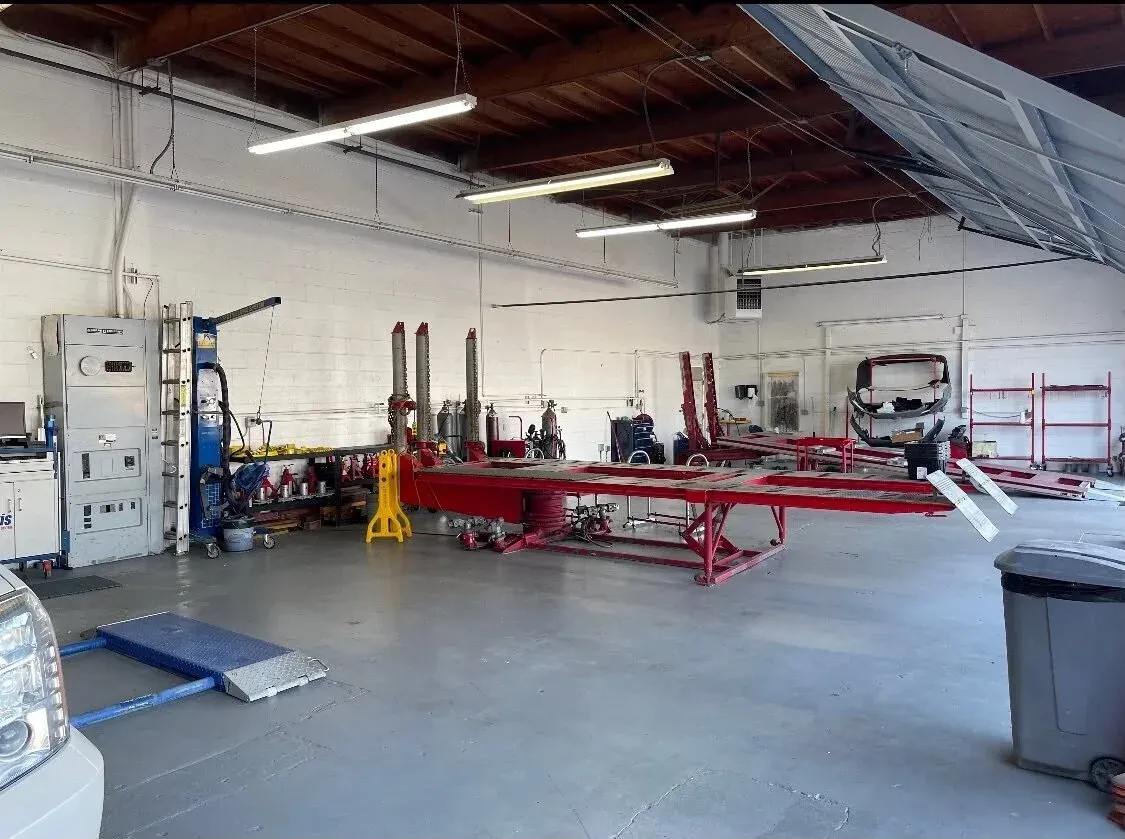
Straightening structure is a numbers job. The vehicle is anchored on the frame equipment and measured against the manufacturer’s reference points, which turns “it looks off” into millimetres at specific locations. The pull plan works those numbers back toward zero in controlled stages — steel remembers abuse, so it is persuaded in steps, not yanked once — and every stage is recorded. Where the factory calls for a section or a rail to be replaced rather than straightened, we follow the repair procedure instead of improvising past it.
The documentation is not ceremony. Your insurance company gets the before-and-after measurements as evidence for the claim, and you get them as proof the car is straight — which matters years later at trade-in, when a clean repair file separates a properly fixed car from a suspect one. Structural work also decides everything downstream: suspension geometry, panel gaps, how the paint lines up. Get the frame right and the rest of the repair follows; get it wrong and no amount of colour hides it.
- Factory reference-point measurement before any pull
- Controlled, staged pulls with numbers recorded at each step
- Sectioning and rail replacement per manufacturer procedure where required
- Final measurements documented for you and your insurance company
The total-loss line, and who argues your side of it
Structural estimates are where the repair-or-write-off decision gets made. Ontario sets no fixed percentage: the insurance company weighs repair cost against the vehicle’s actual cash value and its salvage value, and calls it. Our job is to make that decision honest in both directions. Teardown and measurement first, so the estimate reflects real damage rather than fear of it — a car that deserves repair should not be totalled by a padded guess, and a car with a bent core should not be patched because a photo estimate missed it.
For a Grimsby driver, the sequence is built around the tow. A structural car is not driving 78 kilometres anyway, so name Collision Auto Center to the tow operator — Ontario law puts that choice with you — and the file starts moving while the flatbed is still on the QEW. The owner handles the DCPD claim, the adjuster conversations, and the supplement, and requests OEM parts where safety structure is involved. When the car is finished it is measured, aligned, inspected, and road-tested before you make the one trip north to collect it.