Structural damage is a highway product, and Kitchener lives on one
Bent structure almost always has a speed behind it, and around Kitchener that speed comes from two places. The first is the 401 east of Homer Watson — dense truck traffic, sudden slowdowns near the Highway 8 split and again toward Milton, and in winter the whiteout stretch across open farmland where multi-vehicle chains form in seconds. The second is the Conestoga Parkway, where short ramps mean cars join fast traffic at an angle; an impact that starts as a sideswipe can finish against a barrier, and barriers do not give.
What makes structural damage dangerous is how quietly it hides. A unibody rail can move a few millimetres behind an intact-looking bumper, and the car will still start, steer, and drive home to Forest Heights. The tells come later — doors that need a shove, tires wearing on one shoulder, a steering wheel that sits slightly off-centre on a straight run down Homer Watson. By the time those show, the geometry has been wrong for weeks. This is why anything that hit at highway speed gets measured here regardless of how the outside looks.
Measured, anchored, pulled, measured again
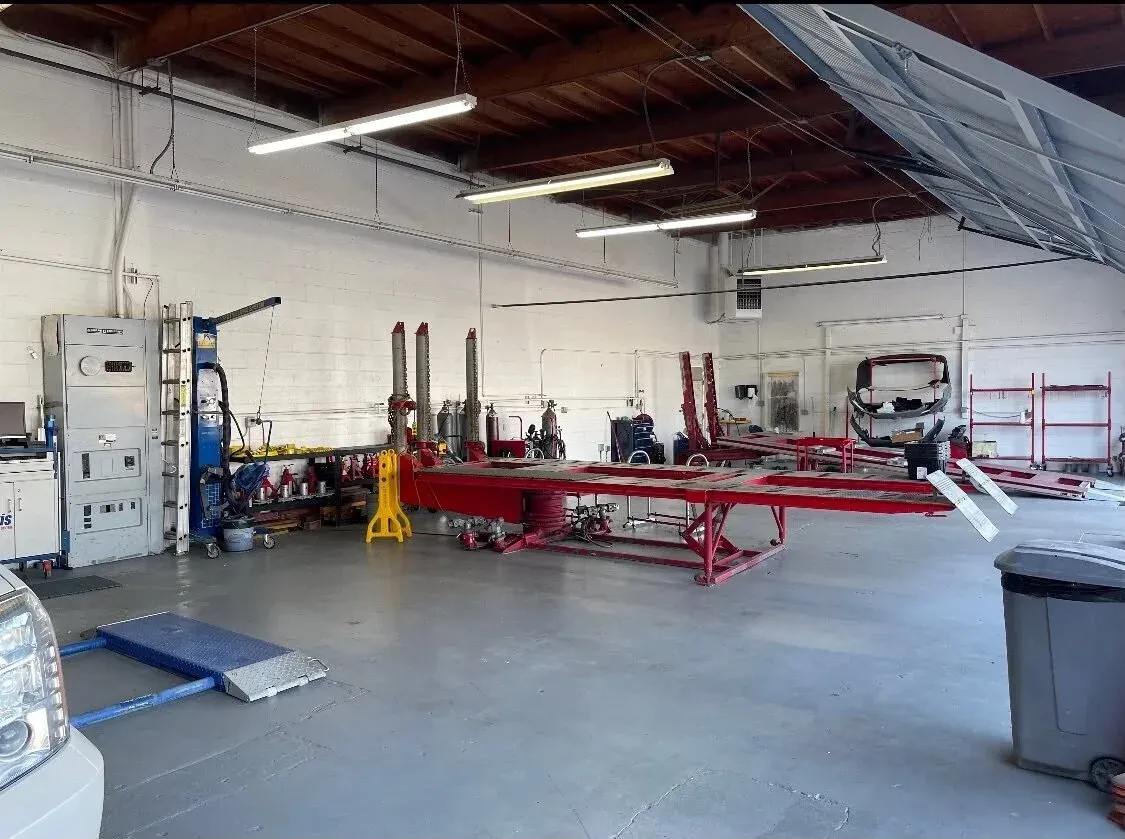
The repair is a documented sequence, not an eyeball job. The vehicle is anchored to the bench and its structural points are measured electronically against the manufacturer’s specifications — that first data set defines the whole repair, showing exactly which rails or aprons moved and by how much. Corrective pulls are made in controlled increments, in the reverse order the damage went in, so the metal is walked back rather than yanked past its limits.
When the numbers land inside factory tolerance, the after-measurements are printed into the file beside the before set — your proof, and the insurance company’s, that the structure is actually straight rather than assumed straight. Where a crash exceeded what steel can safely return from, sections are replaced following the manufacturer’s procedures, with OEM parts requested for structural components. Suspension and alignment checks follow, because straight structure with bent suspension still will not track true on the drive back up the 401.
- Electronic measurement against factory specification, before and after
- Controlled pulls that reverse the impact sequence
- Sectioning and replacement per manufacturer procedures where required
- Printed measurement records kept in your claim file
The total-loss question, answered without spin
Structural claims from 105 km away deserve straight talk, because sometimes the right answer is not a repair. Ontario has no fixed write-off percentage — the insurance company weighs the vehicle’s actual cash value against repair cost plus salvage value, case by case. Our job is to make that decision honest: teardown and measurement happen before anyone commits, the documented damage goes to the adjuster with photographs, and if the math points to a total loss we tell you before the file drags, not after.
When the car is worth repairing, the logistics stay ours. The flatbed is coordinated from the 401, a Region tow yard, or your driveway; under DCPD your own insurance company pays when you are not at fault; and the rental through your coverage is arranged so you are not stranded in Kitchener while the structure is on the bench in North York. The owner handles the adjuster directly and reports by phone — (647) 594-3401, Monday to Saturday, 8 AM to 7 PM, Sundays by appointment.