Highway speed is what moves structure
Most dents are skin-deep. Structural damage takes energy, and the energy lives on the 400 — a rear-end hit in the Friday cottage crawl at 60 km/h, a winter chain reaction near Cookstown at highway speed, an avoidance manoeuvre that ends against the median. Modern unibody cars are engineered to crumple in controlled zones and spend that energy protecting the cabin, which means a hard hit does its job precisely by deforming rails, aprons, and pillars that were never meant to be straightened by eye.
The tell-tale signs Barrie drivers describe on the phone are consistent: doors that need a shove to latch, a steering wheel that sits off-centre on a straight stretch of Essa Road, tires wearing one shoulder bald, panel gaps that open and close along their length. Any of those after a collision says the geometry moved. A car in that condition should come south on a flatbed, not on its own wheels — and Ontario’s towing rules let you name our shop as the destination from the scene or from a yard.
Measured, pulled in stages, measured again
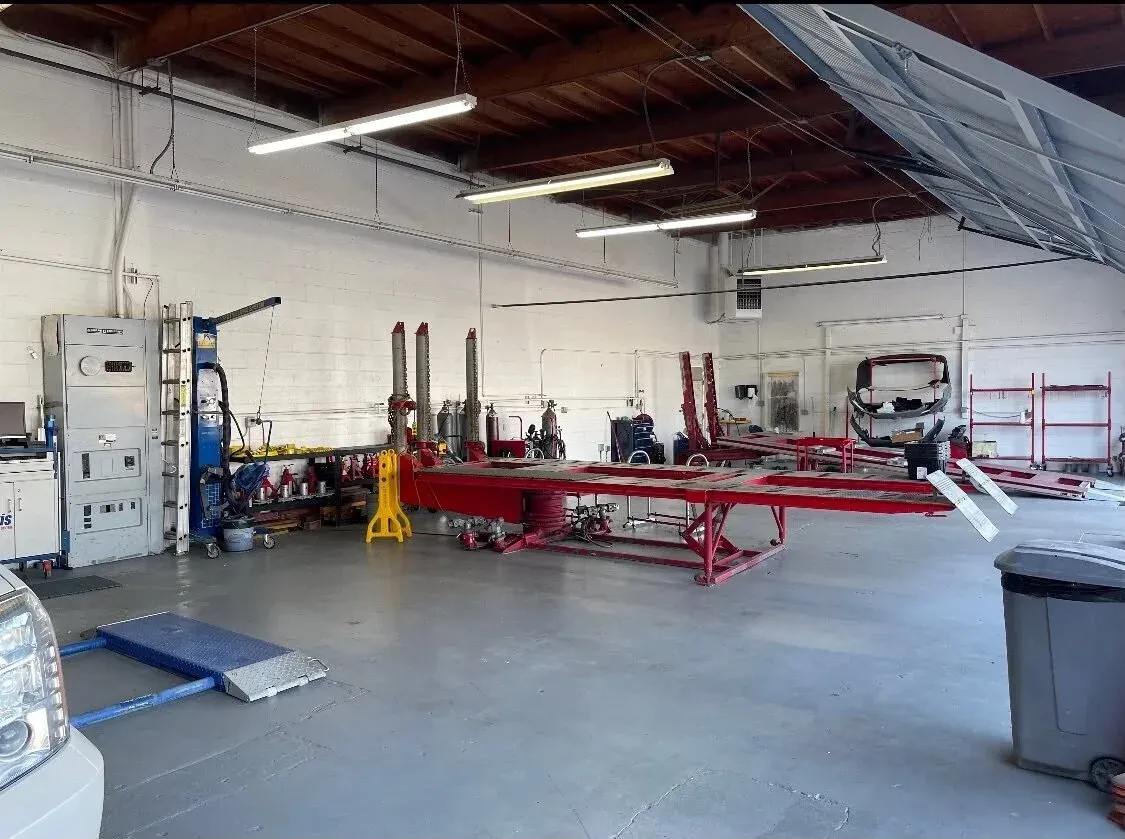
Straightening structure is a measurement exercise before it is a strength exercise. The vehicle goes on the bench, reference points are read electronically against the manufacturer’s datum tables, and the printout shows exactly which points sit out of tolerance and by how many millimetres. The pulls that follow are staged and gradual — steel that gets yanked back in one heave work-hardens and cracks — with the geometry re-read between stages until every point is back inside specification.
Where the manufacturer says a section must be replaced rather than pulled — common on high-strength steels that lose their engineered properties when re-bent — we section and weld to the published procedure with OEM parts requested, backed by our parts-and-installation warranty. Both the before and after measurements go into the file: your insurance company sees the proof, and so do you. That document also protects the car’s story if you ever sell it privately and a careful buyer asks what was done.
- Electronic measurement against factory datum points, printed before and after
- Staged pulls, never a single heave
- Manufacturer-mandated sectioning and replacement respected
- Alignment and road test before the car goes home
The tow-in, the claim, and the total-loss question
Structural jobs from Barrie almost always begin with a phone call rather than a visit — the car is on the 400 shoulder, in a Simcoe County tow yard, or sitting crooked in a driveway. Call (647) 594-3401 with photos and the claim number and we take it from there: flatbed arranged, file opened with your insurance company under DCPD if you were not at fault, adjuster met at our shop, supplements argued from the measurement printouts rather than opinions.
One honest caution belongs on this page. When repair cost plus salvage value approaches the vehicle’s actual cash value, the insurance company will weigh writing it off — Ontario sets no fixed percentage, it is an economic call. We read that early, from the first teardown, and tell you which way the file is leaning before you emotionally commit to a repair the numbers will not support. If it repairs, it repairs to specification. If it does not, you hear it from us first, in plain language, with your options laid out.