The hits around Streetsville that reach structure
Structural damage needs force, and the force around Streetsville comes from three places. The first is the 401 — the merge from Mississauga Road puts accelerating commuters into the tail of stopped express traffic, and those are the collisions that bend rails, not just covers. The second is the winter geometry of the Credit valley: Creditview Road’s curves hold black ice near the river long after the arterials have dried, and a slide that ends against a curb drives the impact through a wheel straight into the suspension mounting points. The third is pothole season, when a square-edged crater on Britannia at 60 km/h can do the same thing without any other car involved.
The tell-tale signs rarely announce themselves as frame damage. The car pulls to one side on a road it used to track straight on. A door that closed with one finger now needs a push. Tire wear goes uneven within a month. Panel gaps open at one corner and pinch at another. Any of these after a hard hit — or a hard winter — is a reason to measure, because a unibody that is even a few millimetres out of specification steers, wears, and crashes differently than the factory intended. Measuring is the only honest way to know; eyeballing structure is guessing with your safety.
Measured, pulled, measured again — and documented
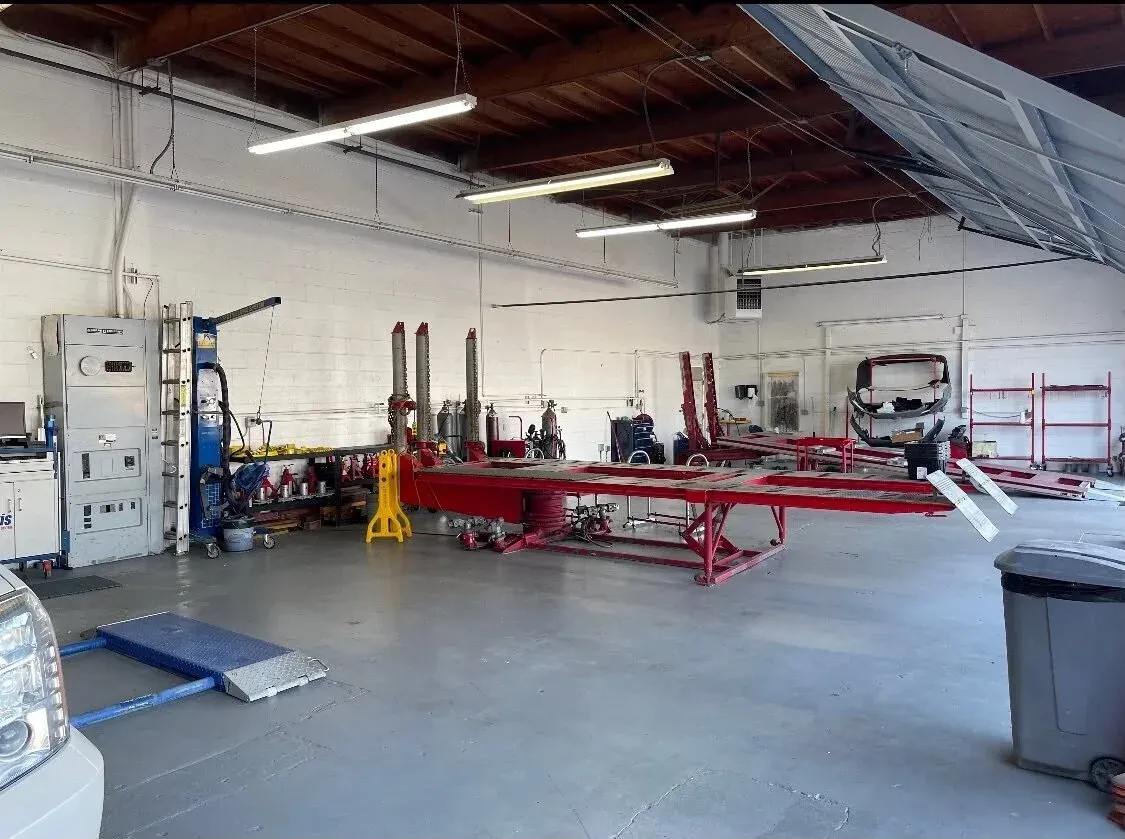
Nearly everything Streetsville drives is unibody: the body shell is the frame, and the crumple zones that protected you in the collision are the same structures that must be returned to specification afterward. The process here does not improvise. The shell goes on the bench and is measured against the manufacturer’s reference dimensions, so the conversation starts with numbers instead of impressions. Pulls are made in controlled increments — metal moved gradually returns to shape without new stress — and the shell is re-measured after, with before-and-after figures recorded in the file your insurance company sees.
Honesty matters most in this corner of the trade. Structural sections that have folded or torn are replaced rather than persuaded, because some metal does not come back. And when the repair cost climbs toward what the car is worth, we say so early: Ontario has no fixed statutory total-loss percentage — the insurance company weighs actual cash value against repair cost plus salvage — and a straight answer in week one beats a dispute in week six. Where the structure is repairable, it leaves here measured, documented, and backed by our parts-and-installation warranty on everything replaced.
- Laser measurement against factory reference dimensions before any pull
- Controlled, incremental pulls — re-measured and recorded after
- Folded or torn sections replaced, never disguised
- Documentation filed with your insurance company, not just kept in a drawer
Getting an unsafe car out of Streetsville
A car with suspected structural damage should not be driven thirty kilometres up the 401, and we never ask you to. Call (647) 594-3401 from the scene or your driveway and we coordinate the flatbed. Two things Ontario law puts firmly on your side: tow operators are provincially certified and must give you an itemized invoice, and the destination of the tow is your decision — which keeps the car out of a storage yard that charges by the day while the claim finds its feet. The tow comes here, to our shop off Keele just south of Sheppard.
The claim runs in parallel. If anyone was hurt or the combined damage will clear $5,000 — and a structural hit clears it comfortably — the collision gets reported through a Collision Reporting Centre. Your insurance company gets its notice promptly, DCPD determines whose policy pays according to the Fault Determination Rules, and the owner handles the adjuster, the measurements, and the supplements from our office. If a rental is in your coverage, it gets timed to the drop so you are not stranded in Streetsville while the paperwork moves. Hours: Monday to Saturday, 8 AM to 7 PM; Sundays by appointment.