Where the sensors live, and why bodywork touches them
Nearly every driver-assist feature is anchored to a body panel. Forward radar hides behind the grille badge or inside the bumper. Cameras sit on the windshield, in the mirrors, in the grille, and in the tailgate handle. Ultrasonic parking sensors are pressed directly into the bumper covers. So the front-end tap that looks like a simple cover-and-paint job has usually disturbed two or three of these components — and most owners cannot say which, because the features were sold to them by name, never by hardware.
The whole game is aim. These systems judge distance and closing speed from a fixed vantage point, and a sensor sitting a few millimetres off its designed angle quietly reports a slightly wrong world. The car will not necessarily light a warning for it — it just brakes a beat late in stop-and-go on the 401, or nudges you back from a lane line that is not where it thinks. In a city where automatic emergency braking earns its keep in DVP traffic every single week, sensor position is a repair operation, not a reassembly afterthought.
How we handle them through a repair
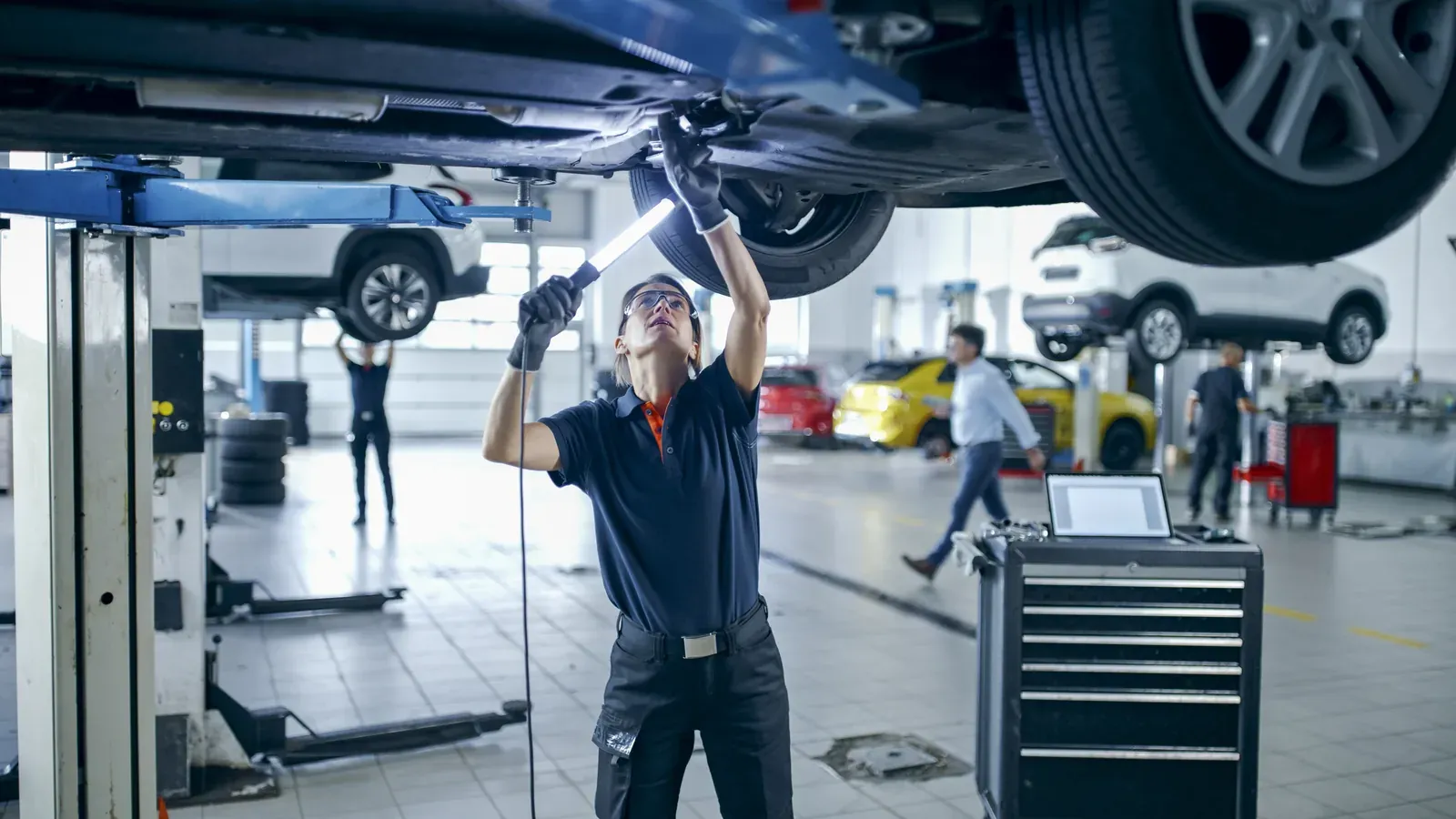
Sensors and cameras come off before their panels do, stay married to their brackets and hardware, and are transferred to the replacement part — never forced into whatever position a new part happens to allow. Every bracket is inspected on removal; a cracked or bent one is replaced outright, because a straightened bracket puts the sensor back at an angle nobody can verify. Wiring goes back exactly as the factory routed it. That routing is not cosmetic: a harness looped around the wrong side of a bracket chafes through within a year, and a half-seated connector becomes the intermittent fault no one can ever reproduce.
Once the car is back together, every affected system gets verified: warning lights cleared and confirmed to stay clear, parking sensors proven through their detection range, cameras checked for a clean and correctly framed image, and the vehicle scanned for stored fault codes. Where the manufacturer specifies a recalibration for the operations performed, that calibration is completed as part of the repair, before you get the keys. It is not an option we upsell and not an errand we leave you to run at a dealership afterward.
- Sensors, cameras, and brackets removed and kept with their hardware
- Damaged or distorted brackets replaced, never straightened and reused
- Components refitted to factory position on the replacement part
- Harness routing and connectors restored as the factory ran them
- Systems function-checked and the vehicle scanned before delivery
- Manufacturer-required recalibration completed as part of the job
What this means for your estimate and your claim
Sensor operations belong on the estimate as named line items. A write-up showing a bumper cover and paint but no sensor work — on a car with park assist and adaptive cruise — is not a cheaper estimate; it is an incomplete one. We write those operations in from the start with the reason beside each, which is also exactly what gets them approved when an insurance company’s first estimate leaves them out. The documentation does the arguing so nobody has to.
Here is a question worth asking any shop before you hand over a modern car: what happens to my driver-assist systems during this repair, and how will you prove they work before I pick it up? The answer should be specific to your make and model, and it should end with a verification you can see recorded on the invoice. Ours does. A shop that answers in generalities about putting things back the way they came off has just answered a different question than the one you asked.