Highway speed is what bends structure
Frame and unibody damage in Pickering traces back to the fast roads. A hit at 100 km/h on the 401 between Whites Rd and Brock Rd does not stop at the bumper — the energy runs through the rails, the aprons, and the mounting points that hold the suspension where the factory intended it. Brock Rd’s constant truck traffic raises the stakes of any collision on it, and the rural roads north of Taunton add their own class of structural hit: a deer strike or a ditch excursion on a dark sideline road loads one corner of the car in a way a city fender-bender never does.
The tell-tale signs show up after the visible repair is “done” somewhere else: doors that need a lift to latch, a steering wheel that sits off-centre on a straight stretch of Bayly, tires wearing one shoulder bald in a season. Those are geometry problems, and geometry cannot be fixed by eye. If your car had a hard hit and drives even slightly differently than before, the structure deserves a measurement, not an opinion.
Measured before, pulled in stages, measured after
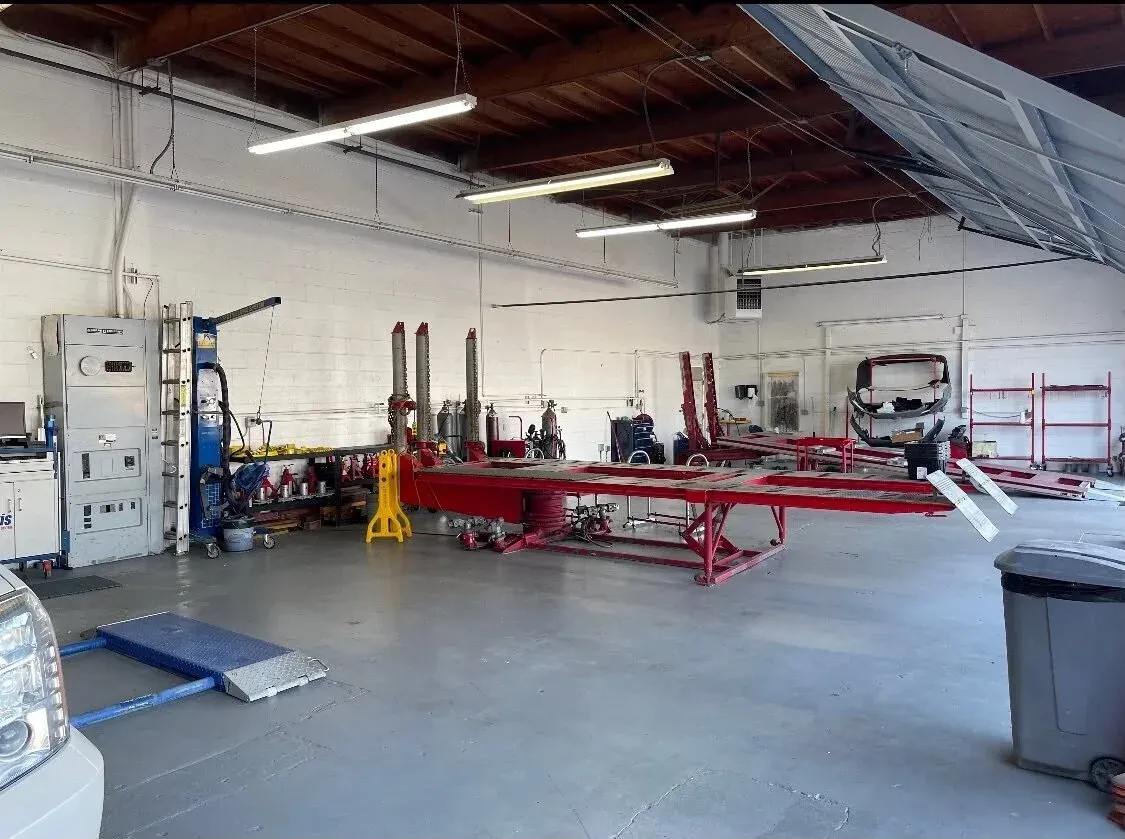
Structural repair here is a numbers exercise from start to finish. The vehicle goes onto the measuring system and its key points are compared against the manufacturer’s data, so the damage is defined in millimetres rather than impressions. Corrections happen as controlled pulls in sequence — metal moved gradually back to specification, not yanked to “close enough” — and the readings from before and after both live in your file, where your insurance company and any future buyer can see the repair was verified.
Modern structure complicates the work in ways that reward doing it properly. High-strength steels in crash zones have strict repair-versus-replace rules from the manufacturer, and sections that may not be straightened get replaced instead — a distinction we hold to even when a shortcut would be cheaper to write. Suspension mounting points get checked, alignment follows the structural work, and driver-assist sensors that aim from the bumper or windscreen only hold their calibration if the metal under them is truly back where it belongs.
- Key structural points measured against factory data before any work
- Controlled, sequenced pulls — documented, never eyeballed
- Replacement instead of straightening where the manufacturer requires it
- Alignment and sensor positioning verified after the structure is corrected
When the honest answer is “don’t repair it”
Structural jobs are where repair costs climb fastest, and Ontario sets no fixed percentage for a write-off — the insurance company weighs the car’s actual cash value against repair cost plus salvage value, case by case. We run that math with you early. If teardown and measurement point toward a total loss, you hear it from the owner before weeks are lost, because a Pickering driver whose car sits in our shop is also a Pickering driver paying attention to rental limits and claim timelines.
Logistics matter more on structural jobs than any other kind, because the car often cannot drive. If yours is sitting at a Durham storage yard after a 401 tow, remember that Ontario’s towing rules put the next destination in your hands — call (647) 594-3401 and we arrange the tow straight here, with an itemized invoice, before storage fees eat into the claim. The measurement happens promptly on arrival, the claim gets opened from our office, and the repair-or-write-off answer comes back in days, not weeks.