The hits that bend structure, and where Newmarket supplies them
Structural damage needs energy, and the 404 provides it. A rear-end collision at highway speed near the Davis or Mulock ramps does not stop at the bumper — the force runs through the absorber into the rear rails, and a trunk floor that sits two degrees off is the tell. Front-end versions come from the same commute: the queue near Aurora Road compresses without warning, and the car that cannot stop puts its front rails into the one ahead. Off the highway, the fast rural crossings — Leslie at St. John’s Sideroad, the concessions east of the 404 — supply intersection hits that load one corner of the structure diagonally, which is the hardest damage to spot from outside and the most important to measure.
Deer strikes belong on this list too. At 80 km/h on Vivian Road, an adult deer is enough mass to shift a radiator support and tweak the upper rails even when the airbags stay in. The consistent theme: a car can look repairable from the kerb, drive almost normally, and still be several millimetres out of specification at points that decide how it crashes next time. That is not a judgment anyone should make by eye — ours included — which is why every suspected structural file here goes on the measuring system before a repair plan exists.
Measured, pulled, measured again — and documented in between
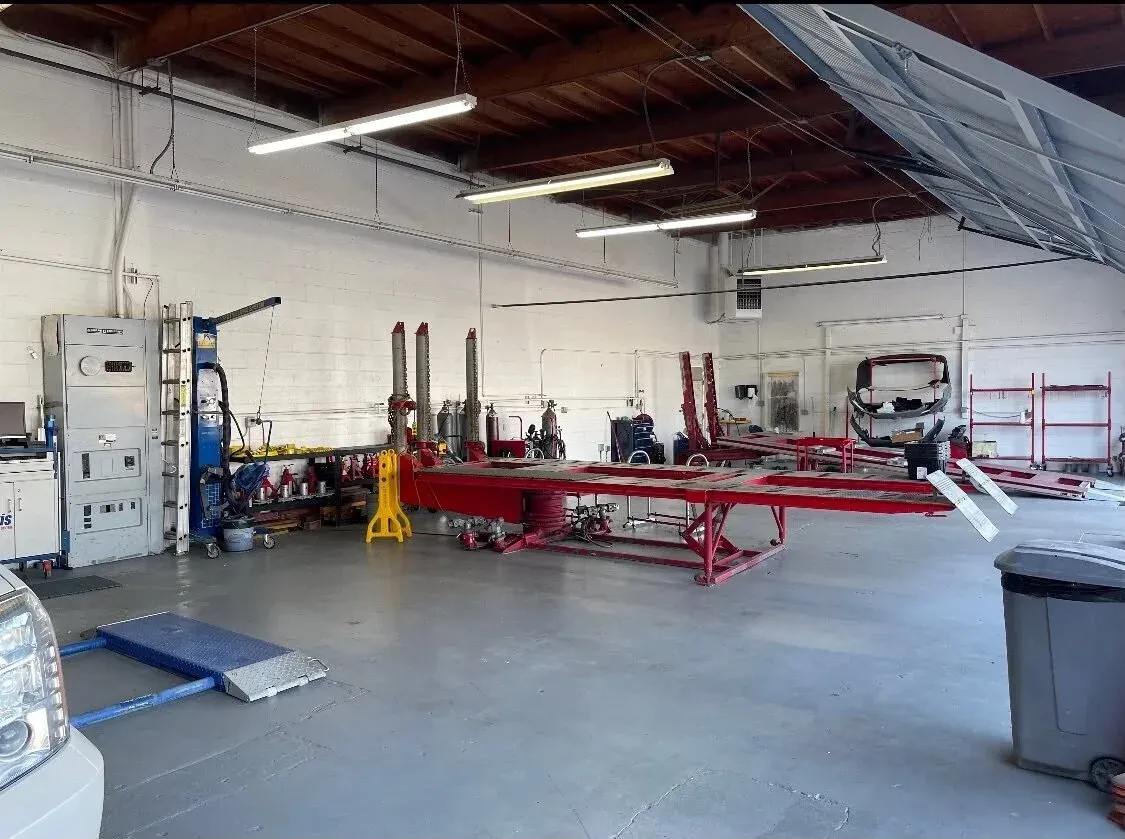
Modern cars are engineered structures: crumple zones meant to fold, high-strength zones meant not to, and factory reference points with tolerances in millimetres. Straightening one is therefore a measuring exercise before it is a pulling exercise. The vehicle is anchored, measured against the manufacturer’s data, and only then pulled — in controlled increments, re-checking as the metal moves, because steel that is dragged past its target does not simply come back. Sections that the manufacturer designates as replace-only get replaced, not persuaded; high-strength steels have repair rules, and we follow them.
Everything is recorded. The before-measurements, the pull sequence, the after-measurements — all of it goes into the file, for two audiences. Your insurance company gets evidence that the structural labour on the estimate was real and necessary, which is how supplements get approved instead of argued. And you get proof, in numbers rather than reassurances, that the structure sits where the factory intended before a single cosmetic panel goes on. Suspension geometry is checked after any structural work, because a straight frame with a bent knuckle still drives crooked down the 404.
- Factory reference-point measurement before any repair decision
- Controlled pulls with re-measurement at every increment
- Replace-only structural sections replaced, never shortcut
- Before-and-after documentation shared with you and your insurance company
Getting a car that cannot drive from Newmarket to our floor
Structural damage and a 33-kilometre trip usually means a flatbed, and Ontario’s towing rules were rewritten for exactly this moment: the operator must give you an itemized invoice, and the destination is your call, not theirs. Name Collision Auto Center in North York — off Keele just south of Sheppard — and call (647) 594-3401 from the scene or the next morning; we coordinate the rest, including the claim with your insurance company and a rental through your coverage so the lost car does not cost you a lost week.
One honest caution belongs here. Heavy structural damage is where total-loss decisions live: Ontario has no fixed write-off percentage, and the insurance company weighs the car’s actual cash value against repair cost plus salvage value. We tear down, measure, and document before that decision gets made, so it is made on real numbers — and if the math says the car is done, we will say so plainly rather than sell you a repair the vehicle does not deserve. When it is repairable, you get the structure back to specification, OEM parts requested where safety systems are involved, and the paperwork to prove all of it at resale time.