Most Newmarket collisions happen on the way out of Newmarket
The town empties south every weekday morning. From the Davis Drive, Mulock, and Green Lane ramps, the 404 southbound is a slow-moving queue by seven, and slow-moving queues manufacture rear-end collisions — a glance at a phone near Aurora Road, and a bumper that looked fine at the scene turns out to be hiding a crushed absorber and a buckled rear body panel. The same highway supplies the harder hits at open-road speed further down, where a late lane change near the 407 interchange creases a door and quarter in one stroke. Either way, the car is already pointed at us: the 404 to the 401 west, off at Keele, and the tow or the limp-in finishes at our door.
Inside town the pattern is slower but steady. The Davis Drive rapidway put buses in the centre lanes and squeezed everything else, so sideswipes and clipped mirrors cluster between Yonge and the hospital. Left turns into Upper Canada Mall across Yonge produce the classic intersection corner hit. And out past the lights — St. John’s Sideroad, Vivian, the concessions toward Holland Landing — autumn deer strikes deliver crumpled hoods and front clips at rural speed. We see each of these often enough from Newmarket that the estimate conversation usually starts with us guessing the road correctly.
The number is written after the covers come off
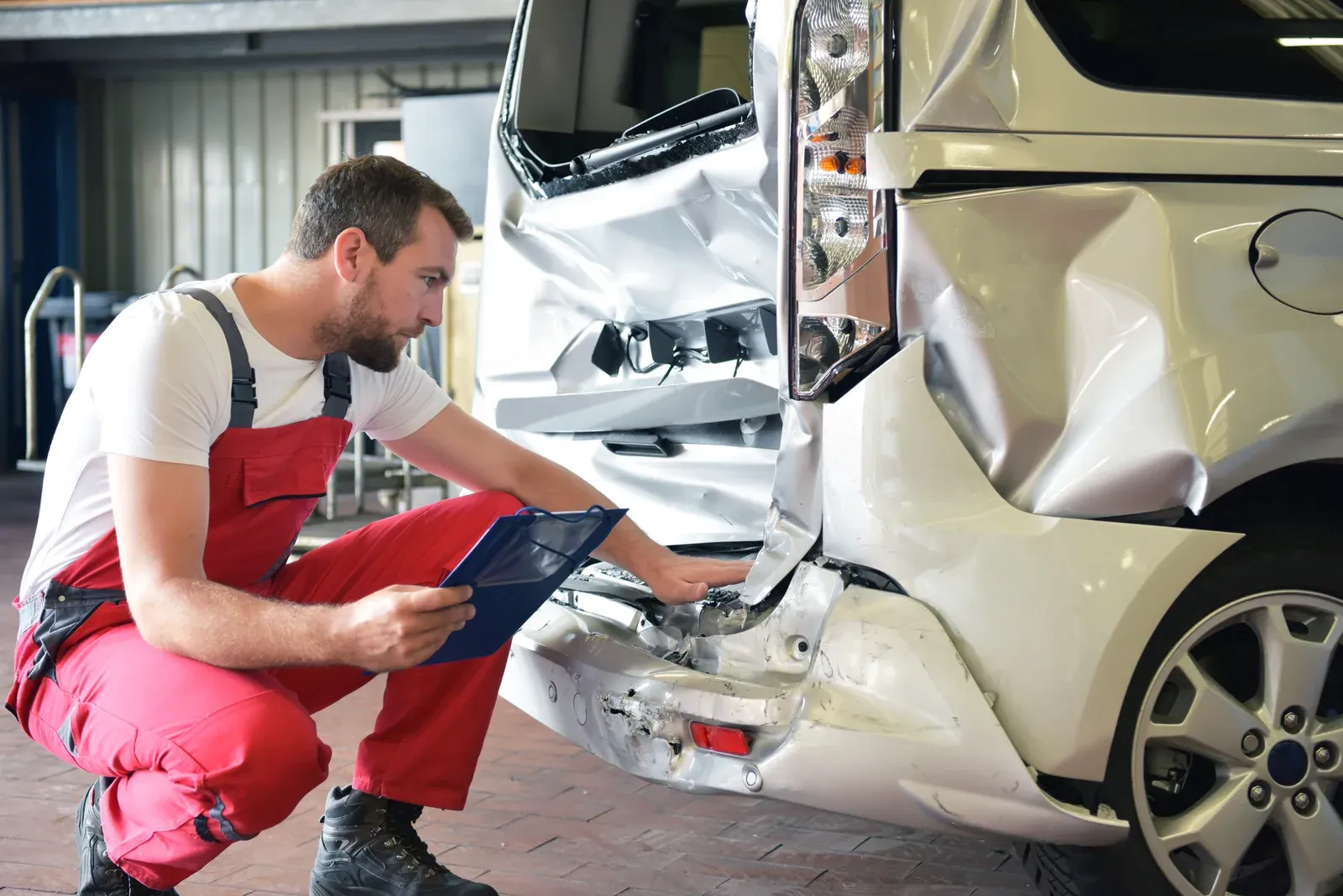
A collision estimate written in a driveway is a photograph of the outside of the problem. Here the damaged area comes apart first — bumper cover, liners, lamps, trim — so the absorber, reinforcement, brackets, and sensor mounts behind it are documented before anything is final. On a highway-speed hit we measure whether the structure moved, because a few millimetres at a rail decides whether this is a cosmetic file or a structural one. Writing the estimate in that order means the supplement to your insurance company is filed once, early, with photographs behind it — instead of the repair stalling in week two while someone debates damage nobody recorded.
The repair itself follows factory data: structure measured and pulled in documented steps, panels repaired where the metal allows and replaced where it does not, OEM parts requested wherever the work touches a safety system. Paint is mixed to your colour code, test-sprayed, checked against the panel it has to live beside, and blended into the neighbouring panels so the repair has no visible edge in July sun. Before you make the drive up the 404, the car gets a final inspection and a road test — the trip home should not be its shakedown run.
- Damaged area disassembled and photographed before the estimate is finalized
- Structural measurements recorded before and after any pull
- OEM parts requested where safety systems are involved
- Lifetime warranty on paint and refinish work
The claim runs from our office while the car is still in Newmarket
Ontario handles collision damage through DCPD: when you are not at fault, in whole or in part, your own insurance company pays for your vehicle, with percentages set by the province’s Fault Determination Rules. Notify your insurance company promptly — the standard policy expects notice within about seven days — and go through a Collision Reporting Centre when anyone is hurt or the combined damage across vehicles looks likely to pass $5,000, a threshold two modern bumpers can clear on their own. If an adjuster steers you toward a preferred shop closer to home, remember the choice is yours by law, full stop.
Send us the claim number with your photos and the file moves here before the car does. The owner talks to the adjuster, argues the supplement when teardown finds what the first estimate missed, and books your rental through your coverage so it begins the moment you hand over the keys — important when the shop is 33 kilometres from your driveway. Updates come from the person planning the repair. Hours are Monday to Saturday, 8 AM to 7 PM, Sundays by appointment; the number is (647) 594-3401.