Country speed, canal geometry, highway energy
Structure bends when energy arrives faster than the skin can spend it, and the roads around Bradford supply that energy three ways. The concessions run at 80 km/h between stop signs whose sightlines shorten behind summer corn; the marsh lanes border drainage canals, so a moment’s drift can drop a wheel — or a whole car — somewhere that loads the suspension mounts and subframe far harder than the sheet metal shows; and the 400 delivers highway-speed hits, including the fog pileups the marsh stretch is known for.
The signs that structure moved are quiet but consistent. A door that latches only with a shove. Panel gaps that taper. A steering wheel held off-centre to track straight on a road you know is straight. Front tires wearing one shoulder. Any of those after a hard hit means geometry, not bodywork — and a car in that condition should travel to the shop on a flatbed, not under its own suspension. Under Ontario’s towing rules the destination on that flatbed is your decision, from the scene or from a yard.
Millimetres, printed twice
On the bench, the conversation stops being visual. Electronic measuring reads the vehicle’s reference points against the manufacturer’s datum tables and prints exactly which points sit outside tolerance and by how many millimetres — before anything is pulled. The pulls themselves happen in stages, with the structure re-measured between them, because steel dragged back in one heave hardens and cracks instead of returning. The job is finished when the printout says it is, not when the panels look right.
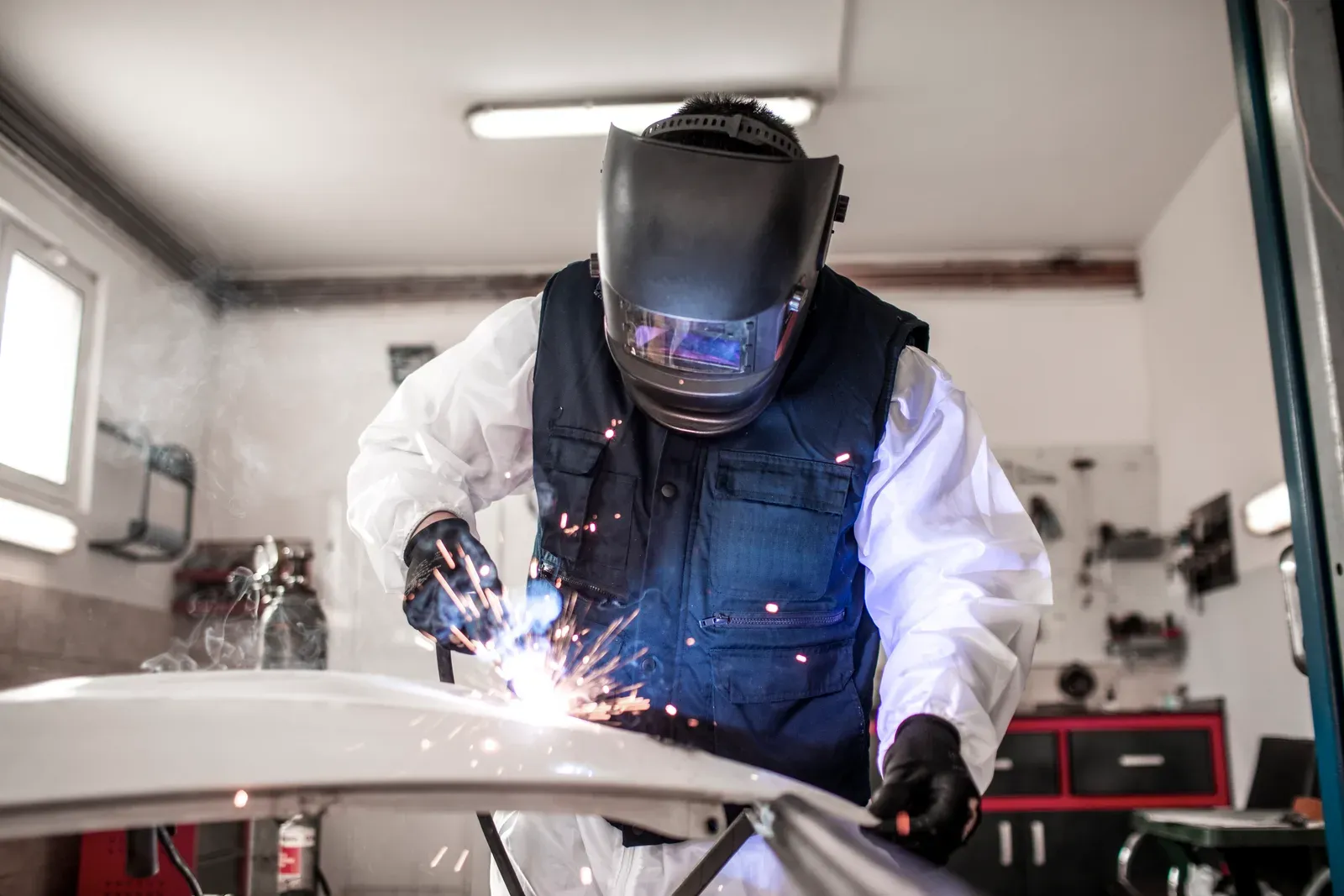
Modern structures also contain steels the manufacturer forbids re-bending — grades that lose their engineered crash behaviour when straightened. Where the procedure says section and replace, we section and replace, welded to the published specification with OEM parts requested and the parts-and-installation warranty behind them. Both measurement printouts, before and after, go into your file: proof for your insurance company today, and an honest answer for whoever asks about the car’s history years from now. Alignment and a road test close every structural job.
From a Simcoe County tow yard to a decision
Most Bradford structural files start with a phone call about a car that is somewhere else — a yard near the 400, a ditch off a line road, a driveway it limped home to. Call (647) 594-3401 with photos and the claim number and the logistics become ours: flatbed arranged, file opened under DCPD where you were not at fault, adjuster met at the shop, supplements argued from measurements instead of adjectives. Yards bill storage by the day, so the sooner the car moves, the less the claim leaks.
The other thing we do early is the honest arithmetic. Ontario sets no fixed write-off percentage; the insurance company weighs repair cost plus salvage value against the car’s actual cash value and makes an economic call. We can usually see which way that decision is leaning from the first teardown, and we tell you before you are emotionally committed to a repair the numbers will not carry. If it repairs, it repairs to specification. If it will not, you hear it from us first, with your options in plain language.