Structure moves before panels look bad
Almost everything on a Whitby driveway is unibody construction — the body shell is the frame — and it is engineered to crumple in a hard hit so the people inside decelerate gently. That design saves lives and complicates repairs: energy from a 70 km/h rear-end in the 401 collector lanes travels past the bumper into the rails, the trunk floor, and the quarter structure, and the panels over top can look almost respectable while the geometry underneath is wrong. The same is true of a winter ditch drop on the roads out toward Ashburn or Myrtle, where the impact arrives through one wheel and twists a strut tower instead of denting anything obvious.
The tells are worth knowing. Doors that need a shove to latch, a hood gap wider on one side, a steering wheel that sits off-centre on a straight road, tires wearing one shoulder — each is the car reporting that something structural moved. A vehicle doing any of that after a Whitby collision should be measured, not eyeballed, and preferably before anyone declares it fine. Crash protection, suspension geometry, and the aim of driver-assistance sensors all assume the structure sits where the factory put it.
Measured, pulled in steps, measured again
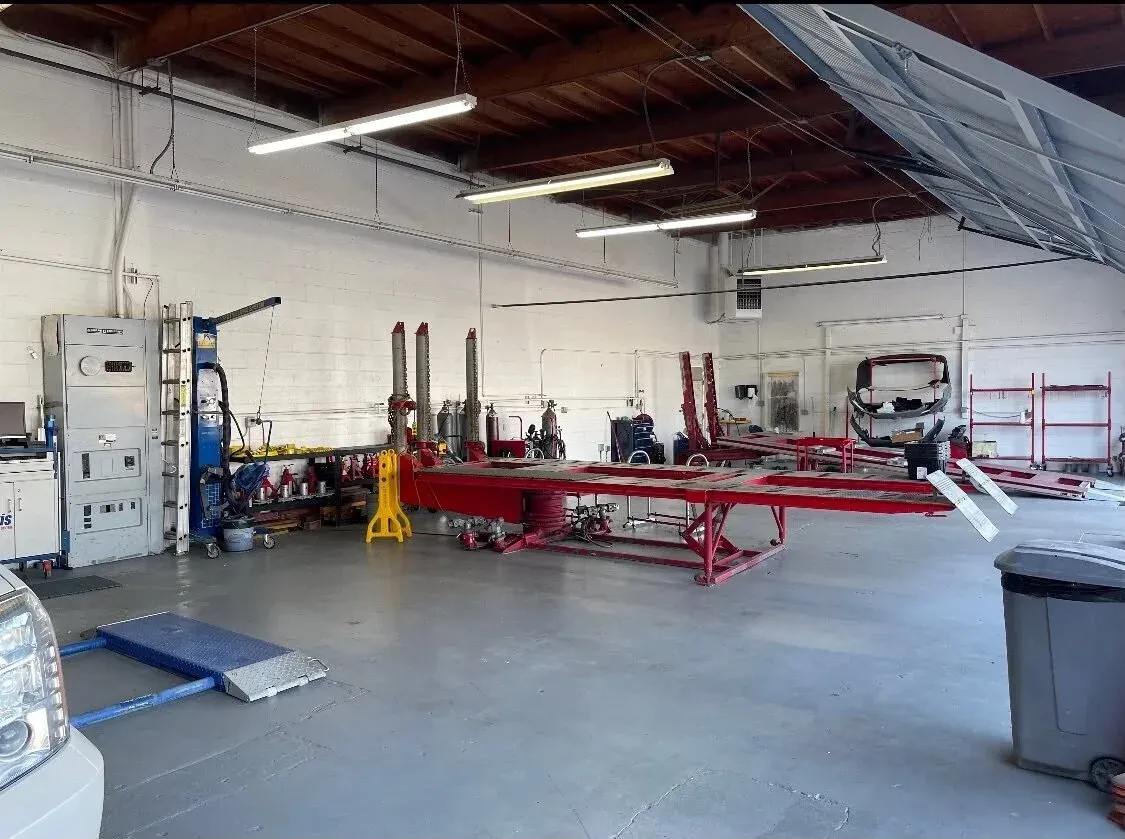
Frame work here is a documentation exercise as much as a mechanical one. The car goes on the bench, and its structural points are measured against the manufacturer’s dimensional data — actual numbers, not a technician’s eye. Anything out of tolerance is pulled back in controlled increments, with the measurements recorded before and after so the correction is provable. Where the factory procedure calls for sectioning or replacing a damaged member rather than straightening it, we follow the procedure; modern high-strength steels have rules about what may be pulled and what must be replaced, and shortcuts there are invisible right up until the next collision.
That measurement file does double duty on the insurance side. Structural repair is where total-loss questions live, and Ontario has no fixed statutory percentage — the insurance company weighs the vehicle’s actual cash value against repair cost plus salvage value. A documented, measured damage assessment means that decision gets made on evidence, and if the car is worth saving, the file proves the repair returned it to factory dimension. Where cameras or radar are involved, calibration follows the structural work, because sensor aim is only as good as the metal it bolts to.
- Structural points measured against factory dimensional data
- Pulls made in documented increments, re-measured after each
- Sectioning and replacement per manufacturer procedure — no forbidden pulls
- Measurement records shared with you and your insurance company
Getting an undrivable car out of Durham
Most frame candidates cannot or should not drive 50 kilometres, so the Whitby version of this repair usually starts with a flatbed. Ontario’s towing rules put the destination in your hands: from the collision scene, a Collision Reporting Centre lot, or a storage yard, you can name Collision Auto Center in North York and the car comes to us. If it is already sitting in storage, call (647) 594-3401 quickly — daily storage fees complicate claims, and we would rather spend that money on your repair. The tow cost itself belongs in the claim file, and we make sure it lands there.
While the car travels, the claim moves. The owner opens the file with your insurance company, walks the adjuster through the measurement findings, and files the supplement when teardown shows what photographs could not. Your rental, if your coverage includes one, is booked from the day you lose the car rather than the day someone gets around to it. You make one trip west when the car is finished, inspected, and road-tested — and the drive home on the 401 is the proof the geometry is right.