Straight is a measurement, not an opinion
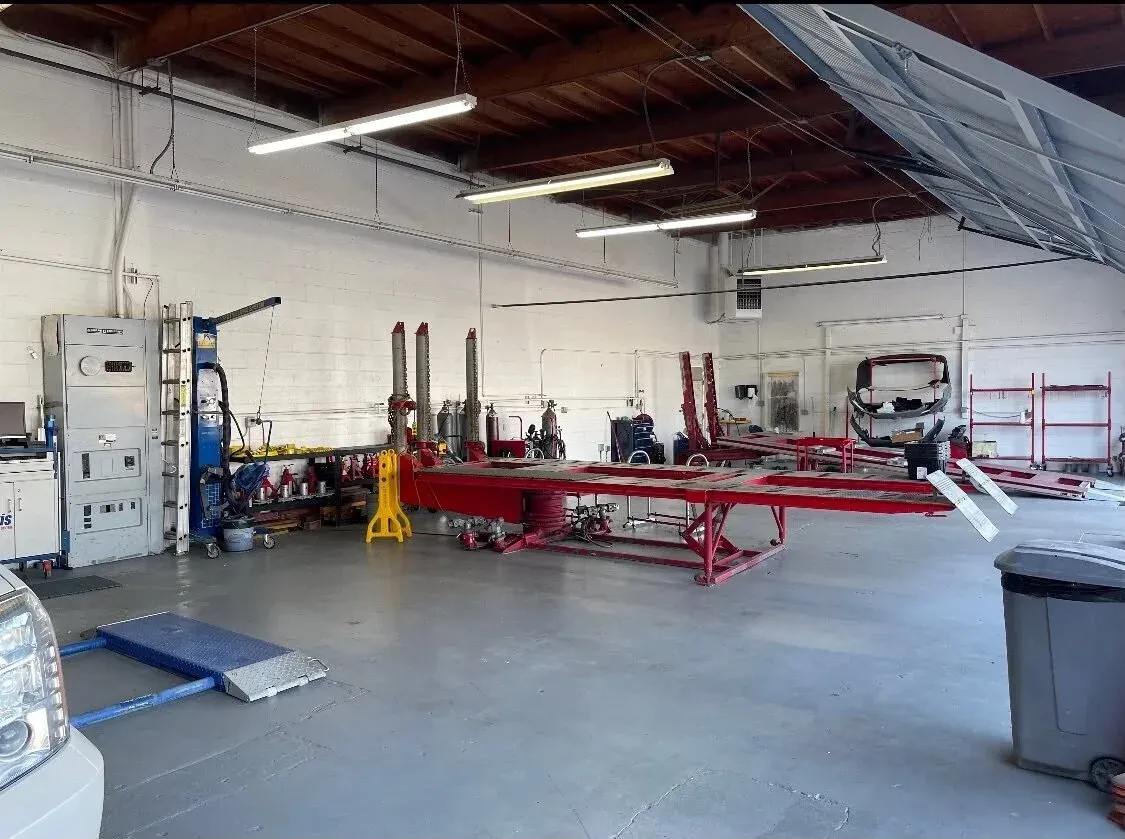
A unibody car is one welded structure, and an impact anywhere on it can move mounting points millimetres from where the factory put them — far past what an eye or a tape measure can catch, and well within what changes how the car crashes next time. So structural work here begins and ends with measurement: the vehicle goes on the bench, reference points are compared against the manufacturer’s dimensions, and the readings are recorded before the first pull and again after the last one. The file that results is proof the repair happened, not a promise that it did.
Between those measurements, the structure is pulled back in controlled steps rather than wrestled in one, because steel that is dragged too far too fast work-hardens and tears. Sections the manufacturer says must be replaced rather than straightened get replaced — that call is written by the engineers who designed the crush zones, and we follow it. Where safety is in play, we specify OEM structural parts and put the reasoning in writing for your insurance company.
How Agincourt bends its cars
The heavy structural files from this part of Scarborough come off the 401 — collector-lane chains where the third car in line meets the second at real speed, and ramp crashes at Kennedy or Brimley where a merge went wrong. But the quieter local source is the curb strike. Black ice at an intersection off Midland, a swerve around a February pothole on Huntingwood, a windrow that threw the wheel sideways: each can shove a control arm into its mounting and move the pickup point without cracking a single panel.
The tell is behaviour, not appearance. A car that pulls on the 401’s straight sections, wears the inside edge of one tire, or needs the steering wheel held slightly off-centre after a hit is telling you something moved. An alignment can mask those symptoms for a while; it cannot relocate a mounting point. Measurement answers the question in millimetres, and the answer is sometimes reassuring — plenty of frightening-looking hits turn out to have spent themselves in the bumper system.
The claim, the tow, and the honest total-loss conversation
Structural repairs are the expensive end of collision work, which makes them the end where documentation and advocacy matter most. We open the claim with your insurance company, put the measurement data behind the estimate, and file supplements with photographs when disassembly reveals more movement than the first inspection could see. If the arithmetic points toward a total loss — repair cost against the vehicle’s actual cash value, with no fixed Ontario percentage deciding it — we tell you before the teardown gets expensive, not after.
Most structurally damaged cars should not drive 16 km of highway, and they do not have to. Call (647) 594-3401, name us as the destination — Ontario’s towing rules make that your call — and the flatbed brings the car to Keele just south of Sheppard. From there the file runs on our side: adjuster, parts, measurements, and updates from the owner, Monday to Saturday, 8 AM to 7 PM.
- Factory-dimension measurement before and after every pull, documented
- Manufacturer repair procedures decide what is straightened versus replaced
- OEM structural parts specified where safety is involved
- Straight answer on repair versus total loss before costs pile up