How a midtown car earns its dents
Park nose-to-tail on Manor, Soudan, or Balliol and your bumpers and doors are in other people’s hands twelve hours a day. Park under a Broadway or Redpath tower and the stalls are tight enough that the neighbouring door reaches yours before its owner can stop it. Add the jockeying rows at the Yonge Eglinton Centre grocery run, weekend crowds squeezing around June Rowlands Park, and the twice-daily school scramble on the streets off Avenue Road, and a door ding stops being a question of whether — only of when.
Winter then runs up the score. Plows seal the Village’s driveways and permit spots behind windrows that freeze into something structural, and nosing through one creases valances and lower doors. Snowbrush handles and shovel edges leave their signatures on hoods and roofs. Any of these is a small repair on its own; the costly version is the dent that cracked its paint and then sat through a salted midtown winter, because by April the cosmetic problem has grown a corrosion problem underneath it.
First we settle the money, then we touch the car
Most single dents land close enough to a typical deductible that claiming them is a coin toss, so the first thing you get from us is a number rather than a booking. Text photos of the damage and a written price comes back. If that price sits at or under your deductible, we will say so and you keep the claim off your record. If the damage is clearly beyond it — several panels, a deep crease, broken paint — a claim likely makes sense and the paperwork becomes our job, not yours.
One midtown-specific wrinkle: a dent put in your parked car by an identified driver runs through DCPD, meaning your own insurance company pays and no deductible may apply depending on the fault split. An unidentified driver shifts it to your own collision or all-perils coverage. We walk through which situation you are actually in before anything is filed, because the answer changes whether filing is worth it at all.
The metalwork is half the repair; the refinish is the other half
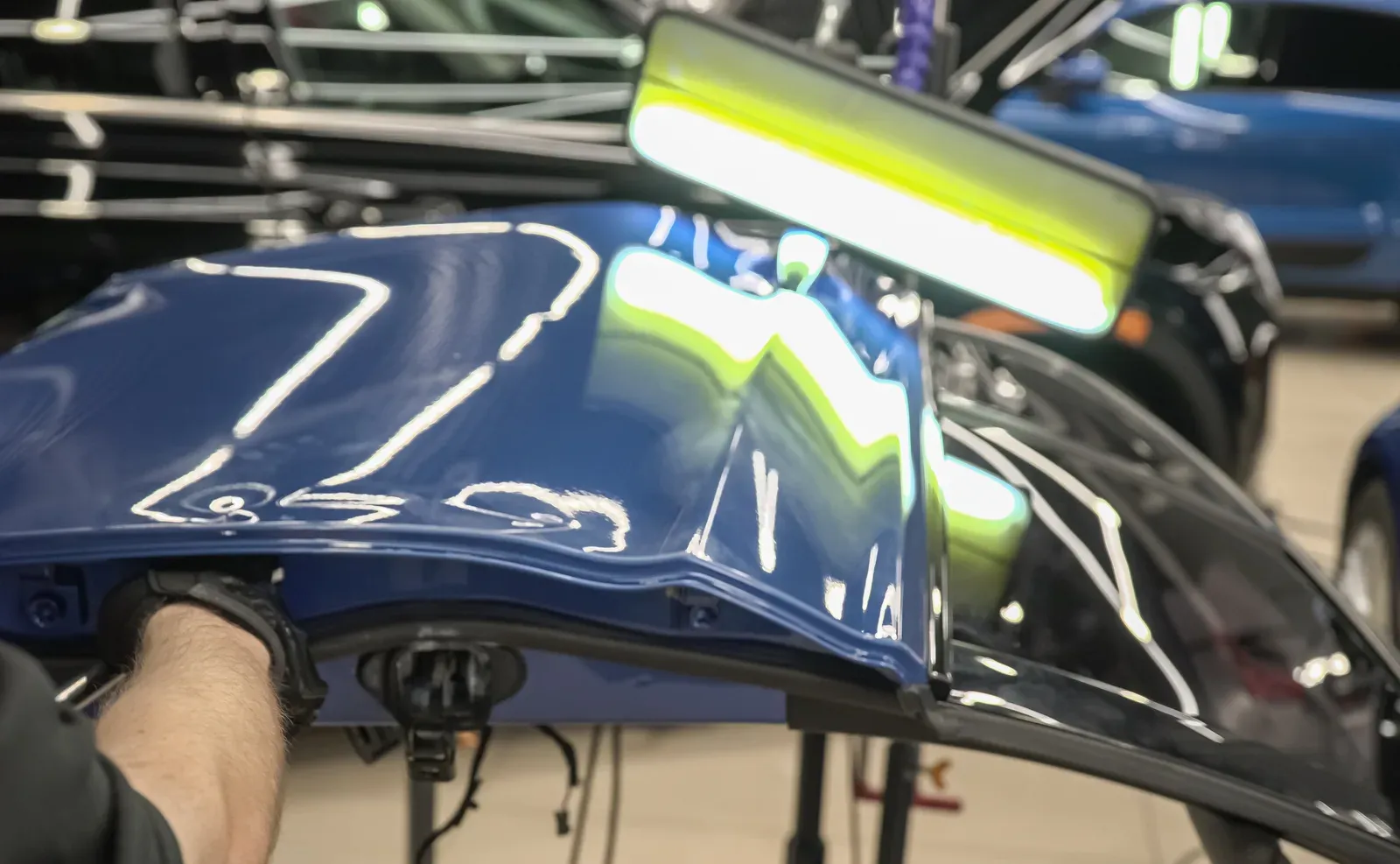
Where the back of the panel can be reached, the dent is worked out from behind — metal persuaded back toward its stamped shape, high spots eased down, and the thinnest possible skim of filler carrying the final surface. Creases along a body line take longer because the stiffest part of the panel has stretched and has to be rebuilt true, and when a skin has stretched past saving we say so and price the replacement without theatre. Aluminum doors and hoods, common on midtown’s newer SUVs, behave differently from steel and are assessed with that in mind.
Then the panel is refinished: colour matched to the car as it exists today, blended into its neighbours, and covered by the same lifetime paint warranty as our collision work. Because materials are staged before you arrive, a typical dent has the car back within days — drop off any morning from 8 AM, Monday through Saturday, and catch Line 1 home from Sheppard West.