Stalls drawn in 1978, doors swung in 2026
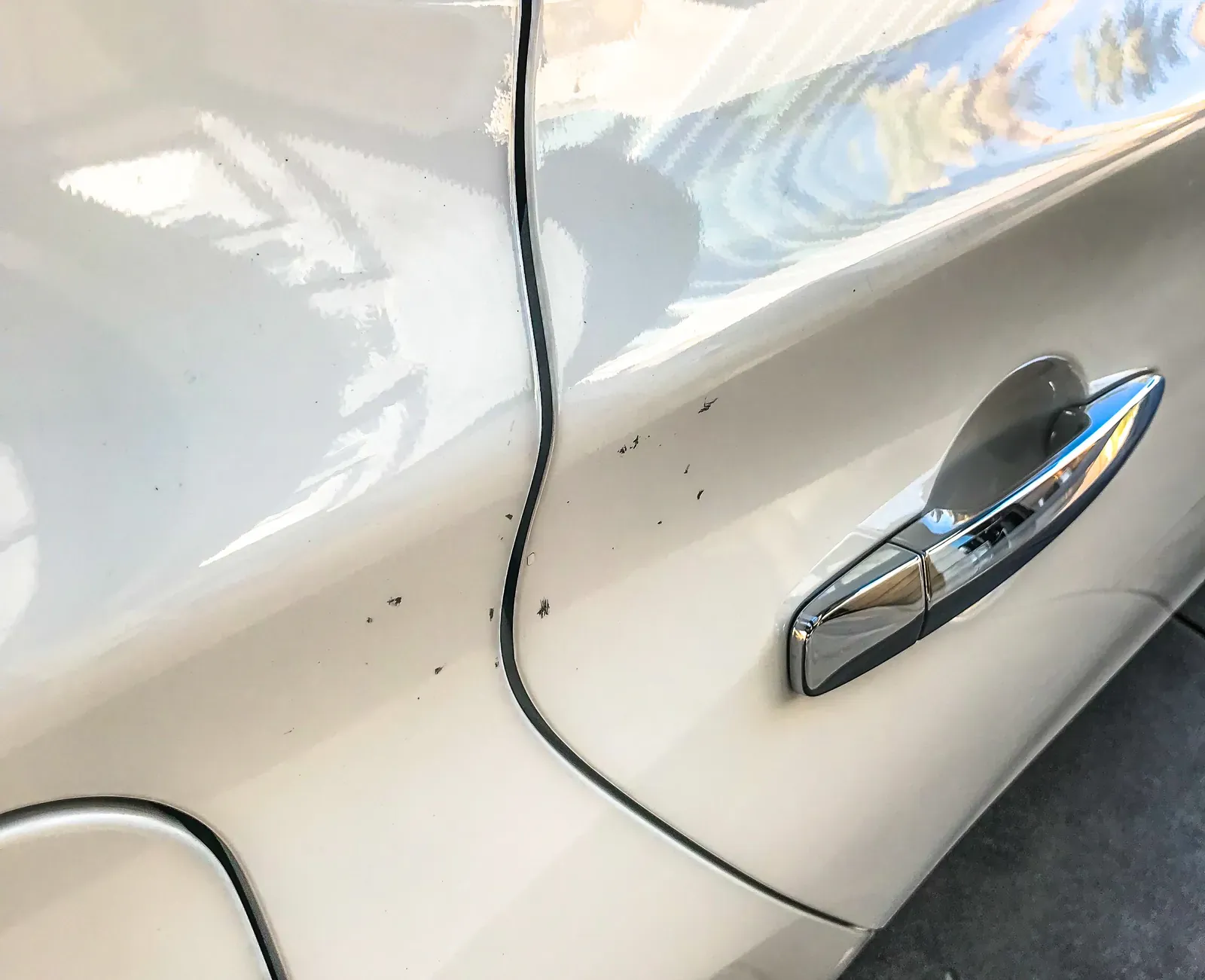
Most Yorkville dents are born stationary. The underground stalls beneath the older towers and the Cumberland Green P were striped for cars two sizes smaller than what parks in them now, so every arrival is a negotiation between your door and your neighbour’s — and their door and your fender. Add shopping-district turnover, where the car beside yours changes four times a day, and the odds compound. The dings arrive one at a time: a crescent in a door skin, a crease along a fender line, a knuckle-sized dent where a careless door met your quarter panel.
The laneways add their own category. Squeezing behind Hazelton or Scollard past bins and brick produces the long shallow crease — a dent stretched across half a panel rather than punched into one spot — and those are deceptive, because a crease that crosses a body line is far harder to make disappear than a deeper, rounder dent in open metal. Where the dent sits determines the repair as much as how big it is, which is why photos of the location on the panel tell us almost as much as photos of the dent itself.
Repair the metal or replace the panel — the honest fork
Steel is forgiving: it remembers its shape, and a skilled repair can work most dents back until filler is minimal and the panel is genuinely straight, not merely smoothed over. Aluminium — common on the hoods, doors, and fenders of the German and British makes these blocks favour — is not. It work-hardens as it moves, and past a certain point the metal will not come back without compromising it. On those panels the honest recommendation is sometimes replacement where a steel panel would have been repaired, and we make that call openly, with both prices, before anything starts.
Either route ends in the booth. The repaired or replaced panel is primed to suit the substrate, matched to your colour with sprayed test cards, and blended into the surrounding panels so the finish reads as one surface. That refinish is covered for life. What we will not do is skim a dent with filler and shoot it — a repair like that photographs well on pickup day and telegraphs through the paint within two winters, and on the resale-sensitive cars Yorkville drives, that shortcut costs you real money later.
Deductibles, small dents, and when to skip the claim
A single door ding usually prices below or near a collision deductible, and claiming it would gain you nothing — we will tell you that plainly rather than let you burn a claim on a $600 repair. Where dents have accumulated, the arithmetic changes: three or four repaired in one visit share preparation and booth time, and the combined number often surprises people pleasantly. If another party is identifiable — a note on the windshield, building camera footage of the stall — the damage may run through their side instead, and we will document the repair to support that.
Logistics are the easy part. Photograph each dent straight on and at an angle, send the set, and a written price comes back without a trip. Book when it suits you — Monday through Saturday, 8 AM to 7 PM, Sundays by appointment — and the drive is Avenue Rd north to the 401, two exits west to Keele. Most dent repairs are measured in days, not weeks, and we will give you the realistic window with the estimate so you can plan the week around it.
- Photos first: location on the panel decides as much as size
- Steel worked back where it can be; aluminium replaced where it must be
- Multiple dents repaired together share prep and booth time
- Straight advice on claim versus out-of-pocket before you decide