The 404 commute writes most of the repair orders
Richmond Hill empties southward every weekday morning, and the 404 is where its collisions concentrate. The queue that forms from 16th Avenue down to the 401 basketweave moves in pulses, and a pulse misjudged by half a second becomes the rear-end tap that folds a bumper cover, crushes the absorber behind it, and knocks a radar sensor off its aim without leaving much for a phone camera to see. The on-ramps at Major Mackenzie and Elgin Mills add merge clips; the collector-express transfers add lane-change scrapes along doors and quarters.
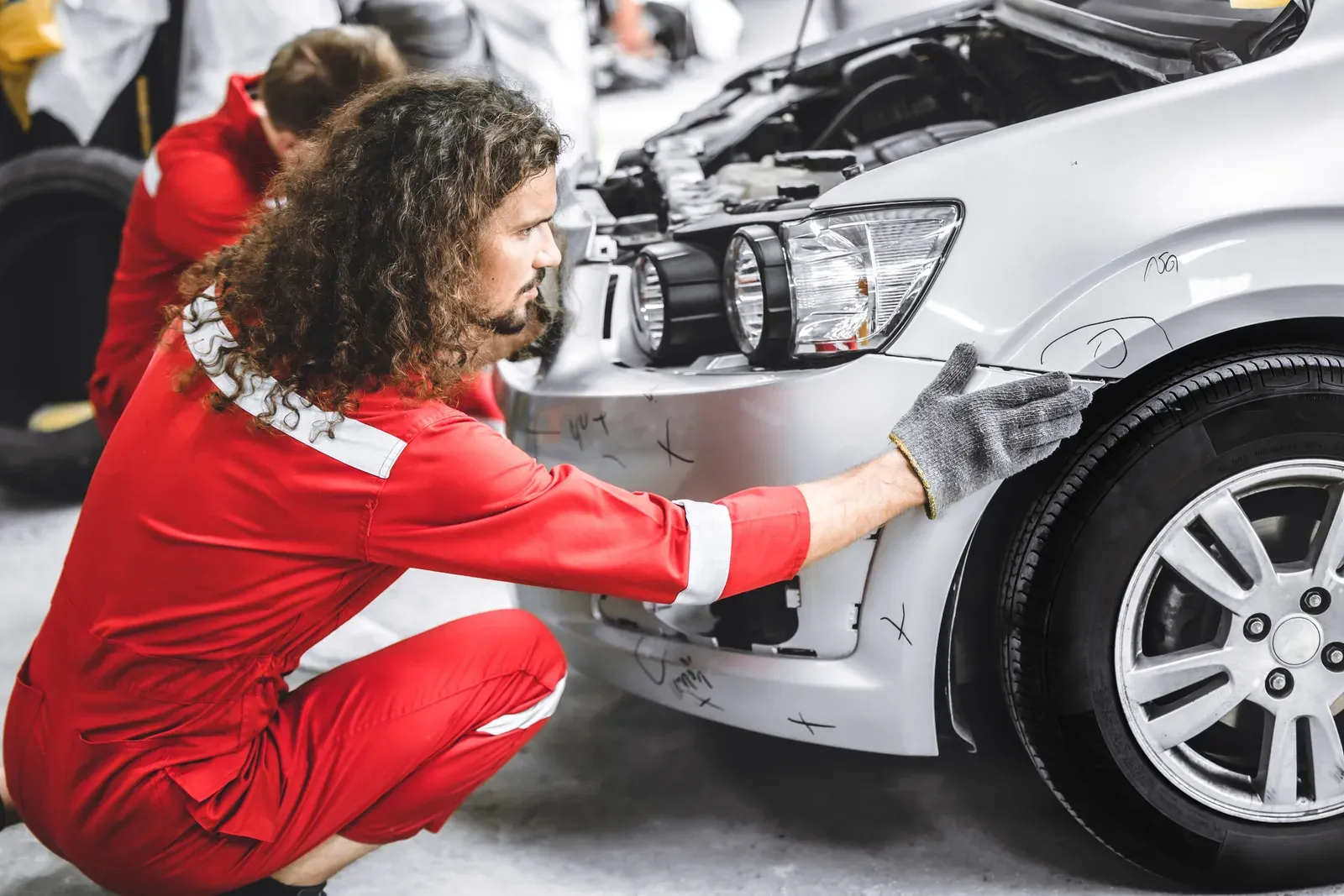
Yonge Street contributes a different file. With through traffic compressed beside the rapidway, the left turns across it — Carrville, Weldrick, Major Mackenzie through the old village — are where front corners get caught, and a corner hit is rarely just cosmetic. Steering components, wheel bearings and lamp mounts sit right behind that sheet metal. This is why our first number from photos is a starting point and the final estimate is written only after the damaged area is stripped and photographed: the claim gets settled on documented damage, not on what the sidewalk view suggested.
How the repair actually runs
Once teardown has mapped the damage, the plan splits into structure, panels and finish. Anything the impact pushed out of position is measured against factory specification and corrected before cosmetic work begins. Panels are straightened where the metal allows and replaced where it does not, and we push your insurance company for OEM parts wherever the repair touches safety — bumper reinforcements, sensor brackets, anything the next collision would depend on. Refinishing is matched to your paint code, test-sprayed, and blended into the neighbouring panels so the repair has no visible edge in July sun on your driveway.
Before handover the car is road-tested and inspected, and the paperwork you leave with includes a lifetime warranty on the paint and refinish plus a parts-and-installation warranty on replacements. If a sensor or camera sat in the damage zone, its calibration is confirmed before the keys come back — a lane-keep camera that is a degree off matters more on the 404 at 100 km/h than anywhere else you drive.
- Teardown and photographed damage map before the estimate is final
- Structural measurement against factory specification where the impact reached
- OEM parts argued for where safety is involved
- Calibration, road test and inspection before pickup
The claim is our job, not your evening project
Ontario handles vehicle damage through DCPD: when you are not at fault, in whole or in part, your own insurance company pays for the repair, with the split assigned under the Fault Determination Rules. Report promptly — your policy expects notice within seven days — and go through a Collision Reporting Centre if anyone was hurt or the combined damage looks likely to pass $5,000. From there, hand the file to us. We open the claim, deal with the adjuster directly, and file supplements with photographs when teardown finds what the first estimate missed.
One person owns your repair here. The owner writes the estimate, plans the work, and answers the phone when you want a status. If the car is not drivable after a 404 or Yonge Street hit, call (647) 594-3401 from the scene or the Collision Reporting Centre lot and we will coordinate the tow to our shop; in Ontario, where the truck takes your car is your decision.