Where the Danforth’s collisions actually happen
The west end of the avenue feeds the DVP, and the DVP feeds this shop a steady diet of rear-end work. The pattern is always the same: traffic compresses without warning somewhere past the viaduct, the car ahead stops harder than expected, and a following distance that felt fine at 90 km/h turns out not to be. What comes off the Parkway ranges from a creased bumper cover to a trunk floor that has quietly shortened — and from outside, the two can look nearly identical.
Back on the surface, the avenue produces a different file. Left turns across Danforth at Pape or Jones happen through gaps in one thin lane of oncoming traffic, with a cyclist track to clear on top; misjudge either and two front corners meet. The squeeze past stopped delivery vans generates sideswipes at 15 km/h that still rake a full body side. And the side streets add reversing collisions — out of laneways, out of permit spots, out of the Green P behind the shops — where neither driver saw the other until the crunch.
The number gets written after the cover comes off
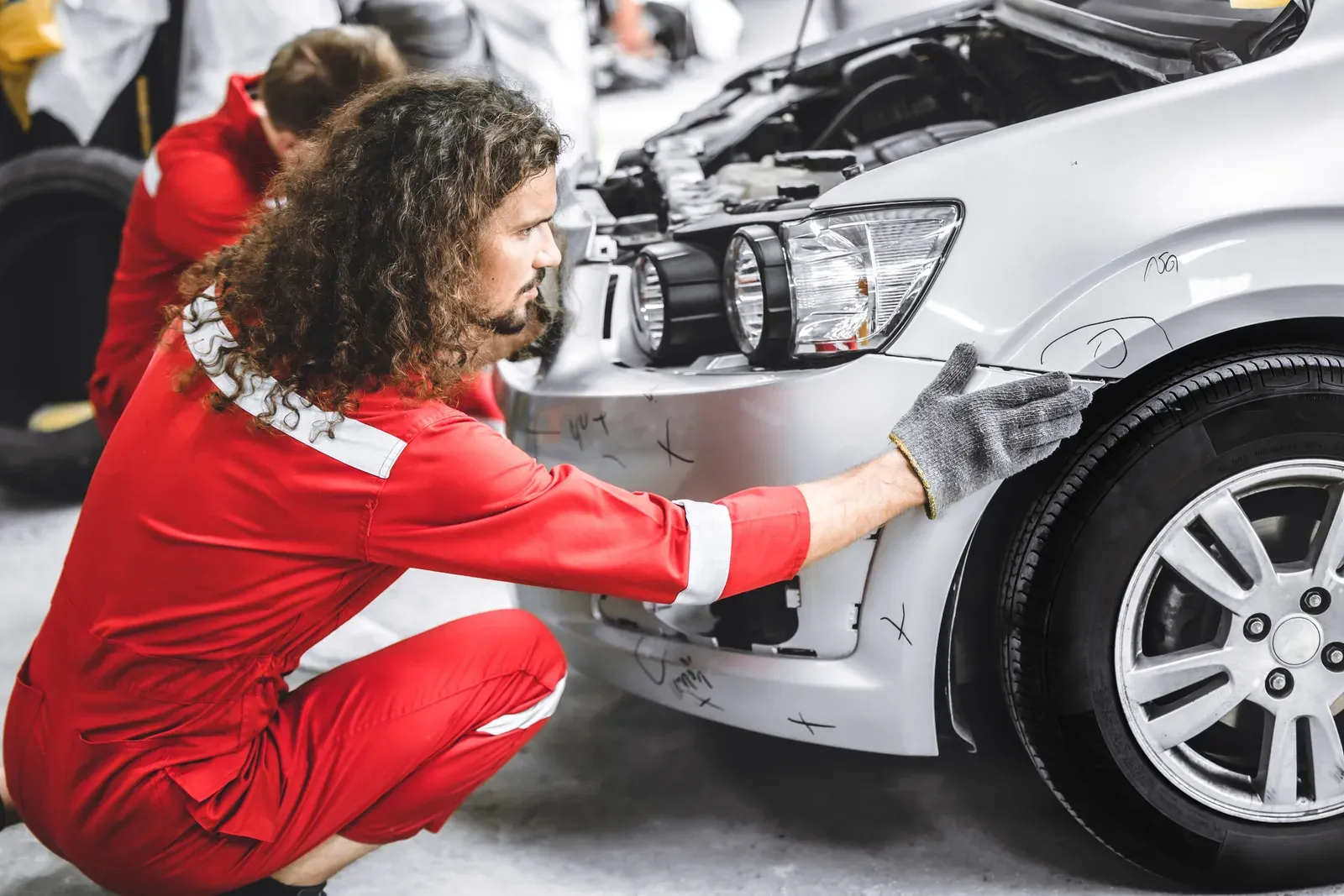
A camera sees paint; a collision spends its energy on what the paint hides. So before any estimate here is final, the damaged corner comes apart — cover, liner, trim — and everything behind it gets photographed. That single habit is what separates a repair that finishes on schedule from one that stalls mid-job while a missed absorber or bent bracket becomes an argument. When the first insurance estimate was written from photos, ours is the evidence that corrects it, filed as a supplement with pictures attached.
From there the repair follows the manufacturer’s published procedures: structure measured where the hit reached it, panels repaired where the metal cooperates and replaced where it will not, colour matched to your car as it is today and blended past the repair so no edge shows. Where a part matters to how the car protects you, the owner pushes your insurance company for OEM. The finished car gets an inspection and a road test before you see it, and the paint work is warranted for as long as the vehicle is yours.
- Crushed absorbers and cracked brackets behind covers that still look straight
- Radiator supports and lamp mounts nudged out of position by “minor” taps
- Sensor and camera brackets knocked off their aim
- Rail movement measurable only in millimetres on the bench
What Ontario’s rules mean for your file
When you are not at fault — wholly or partly — your own insurance company pays for your vehicle’s damage under DCPD, with the percentages set by Ontario’s Fault Determination Rules rather than by whoever argued loudest at the scene. Report promptly; the standard policy expects notice within seven days. If anyone was hurt, or the combined damage across the vehicles looks likely to pass $5,000, the collision also needs to go through police or a Collision Reporting Centre — a bar modern repair costs clear more easily than drivers expect.
None of those rules pick your shop. That choice is yours in Ontario, whatever preferred-shop suggestion arrives with the claim number. Choose us and the file moves into our office: the owner opens the claim if you have not already, deals with the adjuster directly, and keeps you updated while the work happens. Drop-offs run Monday to Saturday, 8 AM to 7 PM, with Sunday appointments for subway commuters who only see their car on weekends.