Where the core’s collisions actually happen
Downtown crashes have a geography. The Gardiner’s short on-ramps — Spadina, Jarvis — feed accelerating cars into lanes that are frequently stopped, which is how a commute ends with a folded bumper and a radar bracket knocked off its aim. The DVP adds its own rhythm of sudden braking around the Bloor curve. Down on the grid, Richmond and Adelaide run quick and end abruptly, King is a slalom of taxis and rideshares stopping mid-block, and left turns across streetcar tracks on Spadina and College produce the front-corner hits that bend more than plastic.
Then there is the version nobody witnesses: the parked hit. Street-parked cars on the Kensington and Queen West blocks get clipped by vans that never stop, and garage-parked cars come upstairs wearing damage from a neighbour’s bad morning. Parked-car damage is still collision damage — it gets photographed, torn down, and estimated the same way, and if the other driver is unknown we help you sort out which coverage responds before anyone commits to anything.
Why the estimate is written after teardown, not from the sidewalk
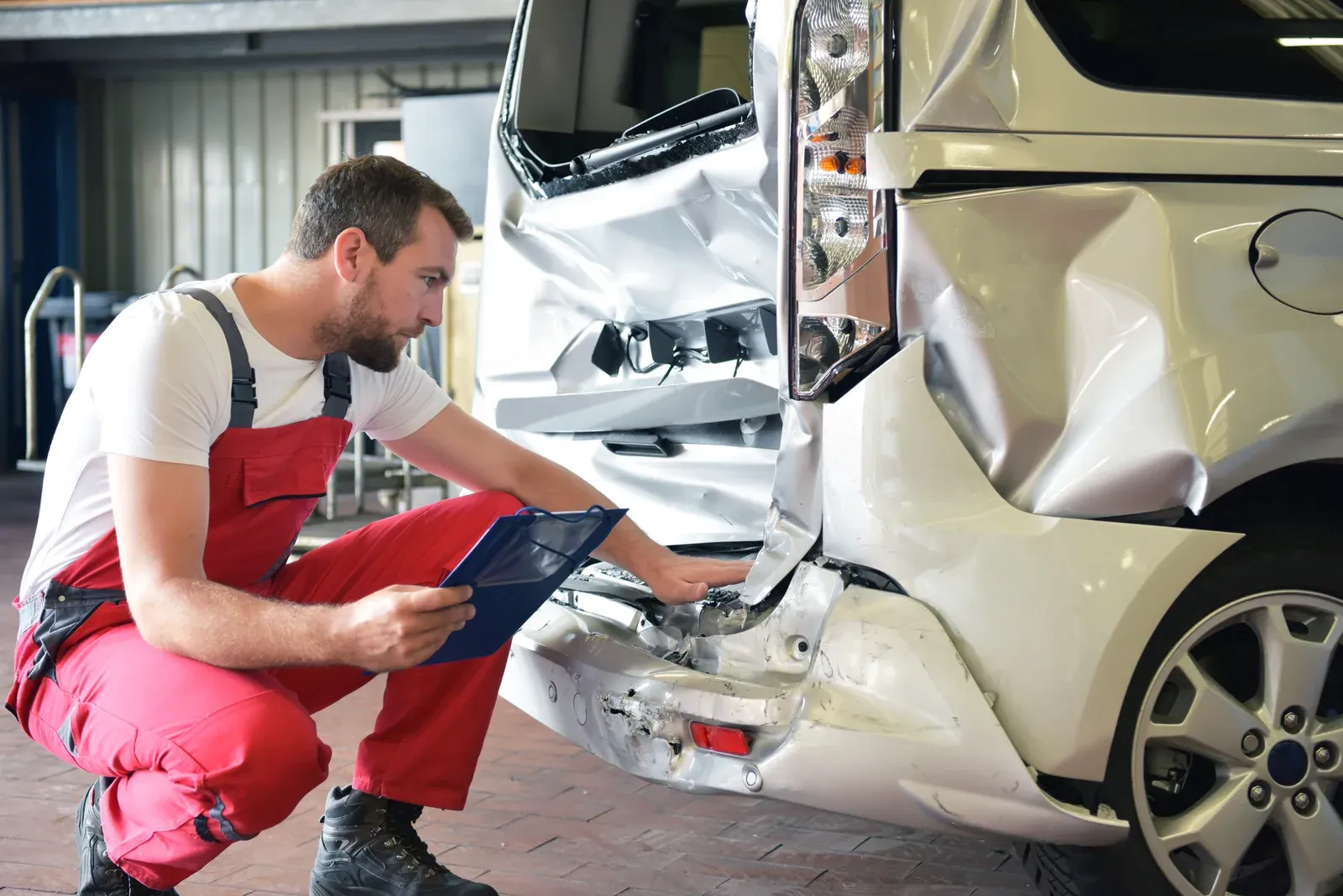
A modern bumper is designed to look fine after a hit that cost real money. The cover flexes back; the crushed foam absorber, the cracked brackets, and the parking sensors pushed out of position stay hidden behind it. So the sequence here never changes: your photos produce a fast written starting number, and the final estimate is written once the damaged area is apart and every broken piece is photographed. Your claim gets settled against documented damage instead of a guess, and the parts list is complete before the repair begins rather than growing halfway through.
Structure gets the same discipline. Any impact that could have reached a rail or apron puts the car on the measuring bench, where reference points are checked against the factory’s published dimensions and corrected in documented steps. Refinishing is matched to your paint code, adjusted against the panel as it exists today, and blended into its neighbours — then covered by a lifetime warranty on the paint work, with a parts-and-installation warranty on anything replaced.
- Written photo estimate first, final number after teardown
- Hidden damage — absorbers, brackets, sensors — documented with photos
- Structural points measured against factory specification when an impact reached them
- Lifetime warranty on paint and refinish, in writing at pickup
The claim is our job; the subway is your ride home
Ontario handles most vehicle damage through DCPD: when you are not at fault, in whole or in part, your own insurance company pays for your car’s repair, with the split set by the province’s Fault Determination Rules. Notify your insurance company promptly — policies expect notice within seven days — and report through a Collision Reporting Centre when anyone is hurt or combined damage looks likely to pass $5,000. From there, we take the file: claim opened, adjuster handled, supplements sent with photographic backup, OEM parts argued for wherever safety is involved.
Logistics favour downtown more than people expect. Drop the car off Keele just south of Sheppard, walk into Sheppard West station, and Line 1 delivers you back to St George or Union without a transfer. If the car is not drivable, leave it where it stopped — garage, ramp, or curb lane — and call (647) 594-3401; we coordinate the tow, and under Ontario’s towing rules you direct where it goes. The owner answers the phone himself, Monday to Saturday, 8 AM to 7 PM.